Ethereum’s Critical Bottom Window Emerges as Stablecoin Reserves Plunge 14%
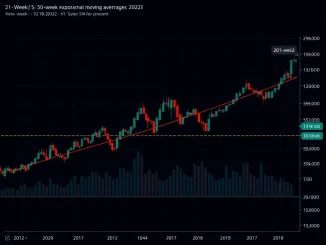
Global, May 2025: The Ethereum network is flashing a significant technical signal as the total value of stablecoin reserves held on major centralized exchanges has fallen sharply by 14%, dropping to approximately $64.5 billion. This substantial withdrawal of liquidity, a key on-chain metric, is leading analysts to identify what they term a “bottom window”—a historical price zone where accumulation has often preceded substantial rallies. The current ETH price, down roughly 37% from recent highs amid a broader cryptocurrency sell-off, is now entering a zone that mirrors pivotal moments from previous market cycles, most notably the structure observed in 2022.
Ethereum Approaches a Historic Bottom Window
Market analysts are closely monitoring Ethereum’s price action as it converges with a steep decline in on-exchange stablecoin reserves. A “bottom window” refers not to a single price point, but to a zone where multiple technical, on-chain, and sentiment indicators align to suggest a high probability of a trend reversal from bearish to bullish. The current 37% correction in ETH’s value has brought it into a region that historically has acted as a springboard for long-term investors. This pattern recognition is not based on speculation but on quantifiable data from past cycles, where similar contractions in exchange-held stablecoins coincided with local and macro price lows. The parallel to the 2022 cycle is particularly instructive, as that period established a foundational low before a sustained recovery phase.
Analyzing the 14% Drop in Stablecoin Reserves
The movement of stablecoins—digital assets pegged to fiat currencies like the US dollar—serves as a critical gauge of market liquidity and investor intent. When these reserves on exchanges decrease, it typically signals one of two actions: investors are converting stablecoins into other cryptocurrencies like Ethereum (buying pressure), or they are withdrawing capital from the crypto ecosystem entirely (capital outflow). The current 14% drawdown to $64.5 billion is a significant shift. Data aggregators track this metric across all major trading platforms, providing a transparent view of available purchasing power. To understand the scale, consider the following recent changes in reserve levels for major stablecoins:
- Tether (USDT): Reserves decreased by approximately $5.8 billion across tracked exchanges.
- USD Coin (USDC): Saw a reduction of nearly $3.1 billion in exchange holdings.
- Dai (DAI): Experienced a smaller but notable decline in on-exchange supply.
This collective exit of stablecoin liquidity from trading venues often precedes increased volatility and can mark a sentiment extreme, a common characteristic of market bottoms.
The 2022 Cycle Blueprint and Current Parallels
The comparison to the 2022 market cycle provides crucial context. Following the collapse of several major industry entities in late 2022, Ethereum’s price found a long-term bottom. Leading into that low, analysts observed a similar pattern: a prolonged downtrend, peak fear sentiment, and a notable decline in exchange stablecoin reserves as sidelined capital began to deploy. The current environment shares structural similarities, including macroeconomic headwinds like persistent inflation and adjusted monetary policy, which have pressured risk assets globally. However, key differences exist, such as Ethereum’s matured ecosystem post-Merge, higher institutional adoption, and a more robust regulatory framework in several jurisdictions. These factors may influence the depth and duration of the bottoming process compared to the previous cycle.
Broader Market Context and the 37% ETH Sell-Off
Ethereum’s price decline does not exist in a vacuum. It is part of a correlated sell-off across the digital asset space, driven by a complex mix of macroeconomic and industry-specific factors. Rising traditional market volatility, shifts in investor risk appetite, and profit-taking after earlier quarterly gains have all contributed. Furthermore, the market is digesting the ongoing implications of Ethereum’s successful transition to a proof-of-stake consensus mechanism. While this upgrade fundamentally improved the network’s sustainability and economic model, it also altered issuance and yield dynamics, which the market continues to price in. The 37% pullback, while significant, remains within the range of historical corrections for a major crypto asset during periods of market stress.
Expert Insights on On-Chain Signals and Market Structure
Professional analysts emphasize that no single indicator guarantees a market bottom. The declining stablecoin reserve is a powerful piece of the puzzle, but it must be corroborated. Experts point to other on-chain metrics now being watched, including Ethereum’s Net Unrealized Profit/Loss (NUPL), which measures the overall profitability of the network, and the MVRV (Market Value to Realized Value) Z-Score, which identifies periods when an asset is significantly over or under-valued relative to its historical norm. Currently, these metrics are approaching levels historically associated with long-term buying opportunities. The convergence of these data points—price entering a historical support zone, stablecoins leaving exchanges, and on-chain metrics flashing oversold signals—creates the multi-factor analysis behind the “bottom window” thesis.
Implications for Investors and the Ethereum Ecosystem
The potential formation of a market bottom carries significant implications. For investors, it highlights a period of heightened opportunity and risk, where thorough research and risk management are paramount. For the Ethereum ecosystem itself, a period of price consolidation or recovery could reinvigorate developer activity and user adoption across decentralized finance (DeFi) and non-fungible token (NFT) applications. A stable or rising ETH price improves the economic security of the proof-of-stake network and can lead to increased transaction activity and fee revenue. It is critical to note that market cycles are inherent to cryptocurrency, and identifying a bottom window is an exercise in probabilistic analysis, not prediction.
Conclusion
The cryptocurrency market is demonstrating a classic sign of a potential trend inflection as Ethereum nears a key bottom window. The 14% decline in stablecoin reserves on major exchanges, bringing the total to $64.5 billion, represents a substantial mobilization of sidelined capital, a phenomenon that has historically coincided with pivotal market turns. While the broader 37% sell-off in ETH reflects ongoing macroeconomic uncertainty, the alignment of this price action with specific on-chain data creates a scenario that seasoned analysts are monitoring closely. The parallels to the 2022 cycle offer a valuable, though not definitive, framework. Ultimately, the evolving relationship between exchange liquidity, price, and network fundamentals will determine whether this window marks the beginning of a new accumulation phase for Ethereum.
FAQs
Q1: What does “stablecoin reserves on exchanges” mean?
This metric refers to the total amount of dollar-pegged cryptocurrencies (like USDT and USDC) held in wallets controlled by centralized trading platforms. It is considered a measure of readily available buying power within the crypto market.
Q2: Why is a decline in stablecoin reserves considered a potential bullish signal?
A decline suggests these stablecoins are being moved off exchanges. This often means investors are using them to purchase other assets like Ethereum (increasing buy-side pressure) or could indicate capital rotation. Historically, large drawdowns have preceded market recoveries.
Q3: What is a “bottom window” in cryptocurrency trading?
It is a price zone, not a single point, where multiple technical and fundamental indicators suggest a high probability that a sustained downtrend is ending and a period of accumulation or reversal may begin. It is identified in hindsight but projected using historical patterns.
Q4: How does the current situation compare to Ethereum’s 2022 low?
Both periods feature a significant price decline, negative market sentiment, and falling exchange reserves. Key differences include Ethereum’s post-Merge fundamentals, different macroeconomic conditions, and a more mature institutional presence in 2025.
Q5: Should the decline in reserves be the only factor for making an investment decision?
Absolutely not. This is one data point among many. Responsible investment requires considering macroeconomic factors, personal risk tolerance, portfolio strategy, and a diverse set of on-chain, technical, and fundamental indicators. This analysis provides context, not financial advice.
Related News
- Binance MEGA Perpetual Futures: A Strategic Move in Crypto Derivatives
- NR7 Miner Cloud Mining: Your Path to Effortless Daily Crypto Earnings
- Dogecoin Price to Rise Above $0.7, but RCO Finance Will Hit $2 from $0.07 Much Sooner
Related: Cardano ETF Countdown Begins: CME Futures Launch Triggers 75-Day Regulatory Clock
Related: Stablecoin Reserves Plunge: A $10.5 Billion Exodus from Crypto Exchanges in 90 Days
Related: Bitcoin Realized Loss Hits Historic Peak: A Crucial Signal the Bottom May Be Near