Crypto Market Sentiment Plummets to Extreme Fear as Sector Struggles Amid Volatility
Global, May 2025: The cryptocurrency sector faces a significant test of confidence as a wave of extreme fear engulfs investor sentiment. Despite isolated resilience from major assets, the broader market landscape reveals deepening concerns. The total cryptocurrency market capitalization has retreated to approximately $2.33 trillion, according to data from leading aggregators. This decline occurs even as Bitcoin (BTC) and Ethereum (ETH) post modest, albeit fragile, gains. Concurrently, key ecosystem metrics tell a complex story: the Total Value Locked (TVL) in decentralized finance (DeFi) protocols shows marginal movement, while non-fungible token (NFT) sales volumes experience a notable dip. This confluence of factors points to a market grappling with macroeconomic pressures, regulatory uncertainty, and a cautious recalibration of risk appetite.
Decoding the Extreme Fear Sentiment in Crypto Markets
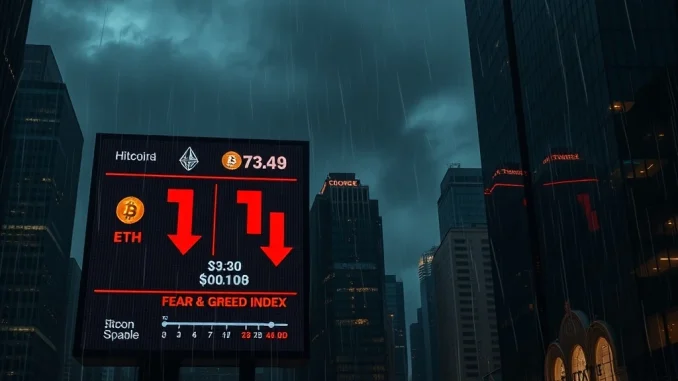
The “Extreme Fear” designation originates from the widely monitored Crypto Fear & Greed Index. This metric synthesizes multiple data points—including market volatility, trading volume, social media sentiment, and dominance trends—into a single numerical indicator. A reading below 25 typically signifies “Extreme Fear.” Historically, such periods have correlated with significant price corrections and heightened volatility. The current sentiment shift is not an isolated event. Analysts point to a combination of triggers: renewed concerns over global inflation and interest rate policies, geopolitical tensions affecting risk assets, and sector-specific anxieties around upcoming regulatory frameworks. This fear often becomes a self-fulfilling prophecy, as nervous investors sell holdings, creating downward pressure that validates the initial caution. However, veteran market observers note that prolonged fear phases have often preceded major accumulation periods, setting the stage for subsequent rallies.
Market Cap Contraction and the Leadership Paradox
The drop in total market capitalization to $2.33 trillion represents a meaningful pullback from recent highs. This metric aggregates the value of all tracked cryptocurrencies and serves as a barometer for the industry’s aggregate valuation. The contraction suggests capital is exiting the space or being reallocated to less volatile asset classes. The paradoxical element lies in the performance of the two market leaders. Bitcoin, often viewed as a digital gold and a relative safe haven within crypto, has managed to cling to modest gains. Its performance suggests some investors are rotating into what they perceive as the most established and secure asset in the sector. Similarly, Ethereum’s slight upward movement may reflect ongoing confidence in its network’s upcoming protocol upgrades and its foundational role in the DeFi and NFT ecosystems. This divergence highlights a “flight to quality” within the digital asset space, where capital seeks refuge in the largest and most liquid projects during times of stress.
Behind the Numbers: DeFi and NFT Ecosystem Stress Tests
The stagnation in DeFi TVL is a critical data point. TVL represents the total capital deposited into smart contracts across lending, trading, and yield-generating protocols. When TVL plateaus or declines during a fear phase, it indicates that users are withdrawing funds or becoming hesitant to lock capital in decentralized applications. This can reduce liquidity, increase borrowing costs, and stifle protocol innovation. For the NFT market, the sales dip is equally telling. NFT transactions are often driven by speculative enthusiasm and discretionary spending. A decline in sales volume and floor prices for major collections signals a cooling of speculative fervor and a reduction in risk-on behavior. These micro-trends within DeFi and NFTs provide a granular view of the fear impacting not just traders, but also participants in the blockchain economy’s most innovative sub-sectors.
Historical Context and Sentiment Cycle Analysis
Cryptocurrency markets are notoriously cyclical, and sentiment oscillates between extreme greed and extreme fear. Examining previous fear-dominated periods, such as those in mid-2021, early 2022, and late 2023, reveals common patterns. These phases are frequently marked by:
- Increased Correlation: Cryptocurrencies often move more in sync with each other and with traditional risk assets like tech stocks.
- Liquidity Crunch: Trading may thin out, leading to sharper price moves on smaller orders.
- Media Narrative Shift: Coverage tends to focus on losses, regulatory crackdowns, and project failures.
- Developer Activity Divergence: While prices fall, core development on major protocols often continues unabated, laying groundwork for the next cycle.
The duration and depth of the current fear phase will depend on external macro factors and internal sector developments, such as the clarity of new regulations or the successful deployment of major technological upgrades.
Conclusion: Navigating the Fear and Greed Cycle
The cryptocurrency market’s descent into extreme fear sentiment underscores its volatile and emotionally driven nature. The decline in total market cap to $2.33 trillion, juxtaposed with the hesitant gains of Bitcoin and Ethereum, paints a picture of a bifurcated market seeking direction. The stagnant DeFi TVL and falling NFT sales further illustrate how fear permeates from core assets into adjacent ecosystems. For investors and observers, understanding these sentiment cycles is crucial. Periods of extreme fear, while challenging, historically represent moments for disciplined evaluation and potential long-term opportunity, albeit amid high risk. The market’s next direction will hinge on its ability to absorb this negative sentiment, demonstrate fundamental utility, and navigate an increasingly complex global financial landscape. The current crypto market sentiment serves as a stark reminder of the asset class’s inherent volatility and the psychological forces that continually shape its path.
FAQs
Q1: What does “Extreme Fear” mean in cryptocurrency markets?
A1: “Extreme Fear” is a classification on the Crypto Fear & Greed Index, a composite indicator scoring from 0 to 100. A score below 25 suggests market participants are driven primarily by fear, panic, or negative sentiment, often leading to selling pressure and high volatility. It is based on data like volatility, momentum, social media, and surveys.
Q2: Why is the total crypto market cap falling if Bitcoin and Ethereum are up slightly?
A2: The total market cap includes thousands of cryptocurrencies. While Bitcoin and Ethereum (the two largest) may be flat or slightly positive, significant declines across a wide range of smaller altcoins and tokens can drag the aggregate valuation down. This shows a “flight to quality” where money moves out of riskier assets into perceived safer ones within the sector.
Q3: How does extreme fear sentiment affect DeFi and NFT markets?
A3: In DeFi, fear can lead users to withdraw funds from protocols, reducing Total Value Locked (TVL) and liquidity, which can increase costs and slow activity. For NFTs, fear typically reduces speculative trading, leading to lower sales volumes, falling floor prices, and less new project momentum, as discretionary spending dries up.
Q4: Has the market been in “Extreme Fear” before?
A4: Yes, the market experiences these sentiment cycles regularly. Notable periods of extreme fear occurred during the COVID-19 market crash of March 2020, the major bear market of 2022, and several other corrections. These phases are a recurring feature of the volatile crypto asset class.
Q5: What usually happens after a period of extreme fear?
A5: Historically, prolonged periods of extreme fear have often marked local price bottoms or accumulation zones. When fear is exhausted and selling pressure subsides, markets can stabilize and eventually begin a new upward trend, driven by improving fundamentals, positive news flow, or a shift in macro conditions. However, timing this transition is extremely difficult and not guaranteed.
Related News
- GET READY TO UNLOCK NEW HORIZONS IN ASIA – SPiCE Central Asia 2025
- When is Bitcoin Halving 2024? A Manual for What's in store
- Solana About to Crash to $120? Why Is SOLX The Best ICO Alternative?
Related: Parabolic SAR Indicator: The Essential Guide to Spotting Trends and Reversals
Related: Bitdeer Stuns Market: Sells All Bitcoin Holdings While Overtaking Marathon as Top Miner