Exclusive: BlockDAG’s COINBASE Code Unlocks First Access for 10,000 Wallets as Solana and Tron Stabilize for 2026
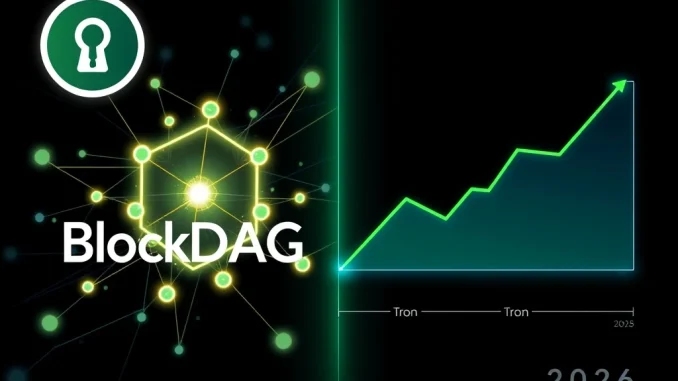
Global, May 2025: A significant development in cryptocurrency access is unfolding as BlockDAG initiates the first phase of its COINBASE code distribution, granting exclusive early entry to a curated list of 10,000 digital wallets. This strategic move occurs against a backdrop of evolving market maturity, with established assets like Solana (SOL) and Tron (TRX) demonstrating notable price stabilization as analysts project trends into 2026. The convergence of a new access model and maturing asset performance highlights a shifting phase in the blockchain ecosystem, moving from speculative volatility toward structured utility and sustained growth.
BlockDAG’s COINBASE Code: Mechanics and Market Implications
The activation of BlockDAG’s COINBASE code represents a targeted approach to network growth and user onboarding. Unlike public sales or airdrops, this method involves distributing unique access codes to a limited cohort. The “COINBASE” designation, while a common industry term for a foundational allocation, refers specifically to BlockDAG’s mechanism for initial coin distribution. The selection of 10,000 wallets suggests a focus on cultivating a dedicated early community, potentially comprising developers, node operators, and long-term stakeholders. Industry analysts note that such controlled access models can help mitigate immediate sell pressure post-launch, fostering a more stable initial trading environment. The technical implementation likely involves smart contract verification, where the code must be submitted through a dedicated portal to claim the allotted assets, a process designed for security and auditability.
Solana’s Path to 2026: Analyzing the Stabilization Thesis
As BlockDAG executes its access strategy, attention remains on the performance trajectories of major layer-1 networks. Solana has weathered significant network stress tests and market downturns since its inception. Current analysis for its 2026 price prediction hinges on several foundational factors. Technically, the continued optimization of its proof-of-history consensus mechanism and the successful rollout of key scalability upgrades like Firedancer are critical. Adoption metrics provide another pillar; growth in daily active addresses, total value locked in decentralized finance (DeFi), and non-fungible token (NFT) volume serve as key health indicators. Macroeconomic conditions, including interest rate trajectories and institutional cryptocurrency adoption rates, will also play a decisive role. Most institutional forecasts for 2026 avoid pinpoint price targets, instead projecting a range based on continued utility growth and a potential reduction in the high volatility that has characterized its past.
The Infrastructure and Developer Ecosystem Factor
Beyond pure price, Solana’s stabilization narrative is deeply tied to its real-world utility. The network has established a strong foothold in areas like decentralized physical infrastructure networks (DePIN) and consumer-facing applications. The resilience and expansion of its developer ecosystem, measured by grants, hackathon participation, and mainnet deployments, provide a leading indicator of long-term viability. A stable 2026 price outlook, therefore, is less about dramatic appreciation and more about the asset finding a sustainable valuation floor supported by verifiable, recurring use cases, distancing itself from purely speculative trading patterns.
Tron (TRX) Price Dynamics: Seeking Equilibrium in a Mature Market
Parallel to Solana’s journey, the Tron network presents a case study in maturation. Known for its high throughput and focus on the entertainment and content-sharing economy, Tron’s TRX price has shown periods of notable stability relative to other major cryptocurrencies. This stability is underpinned by consistent, high transaction volumes, primarily driven by its dominance in the stablecoin transfer space, particularly for USDT. Network revenue from fees and energy/bandwidth models creates a fundamental economic loop. As the broader market evolves, Tron’s price action is increasingly analyzed through the lens of its yield-generating capacity for stakeholders and its role as a cost-effective settlement layer. Predictions for 2026 suggest a continued emphasis on this utility-driven stability, with price movements more closely correlated to network usage metrics and broader stablecoin adoption trends than to general market sentiment alone.
Comparative Landscape: Access, Stability, and the Next Market Phase
The simultaneous occurrence of BlockDAG’s exclusive access event and the stabilization trends of Solana and Tron is not coincidental but reflective of the cryptocurrency market’s lifecycle. Newer projects like BlockDAG are experimenting with innovative distribution and consensus models (Directed Acyclic Graph) to solve scalability issues, entering the market with controlled, community-focused strategies. Meanwhile, established networks like Solana and Tron are transitioning into a phase where metrics of utility, network revenue, and developer activity become primary valuation drivers, reducing reliance on hype. This creates a multi-tiered market structure:
- Innovation & Access Tier: New protocols (e.g., BlockDAG) focusing on technological differentiation and curated community building.
- Utility & Stability Tier: Established networks (e.g., Solana, Tron) where price discovery is increasingly linked to verifiable on-chain activity and economic output.
This bifurcation suggests a healthier, more nuanced ecosystem where different assets cater to different risk profiles and investment theses.
Conclusion: A Market Maturing on Multiple Fronts
The activation of the BlockDAG COINBASE code for 10,000 wallets marks a strategic moment for a new entrant, emphasizing secure and measured growth. Concurrently, the analytical focus on Solana price prediction for 2026 and the steady state of the Tron TRX price underscores a broader industry trend toward stabilization and fundamentals-based valuation. For participants, this environment demands a shift in perspective: from chasing short-term volatility to understanding long-term utility, network economics, and access mechanics. As the market progresses toward 2026, the interplay between innovative access models for new projects and the hardening utility of established ones will likely define the next chapter of digital asset adoption.
FAQs
Q1: What is the BlockDAG COINBASE code?
The BlockDAG COINBASE code is a unique access key distributed by the BlockDAG network to a select group of 10,000 wallets. It functions as a claim mechanism, allowing recipients to securely obtain an initial allocation of the project’s tokens as part of its controlled launch strategy.
Q2: What factors influence Solana’s price prediction for 2026?
Key factors include the successful implementation of scalability upgrades (like Firedancer), growth in real-world adoption (DeFi, DePIN, NFTs), the strength of its developer ecosystem, overall cryptocurrency market maturity, and broader macroeconomic conditions affecting institutional investment.
Q3: Why is Tron (TRX) often considered stable?
Tron’s relative price stability is frequently attributed to its high, consistent transaction volume—largely from stablecoin transfers like USDT—which generates steady network revenue. This utility-driven demand creates a foundational economic layer that can dampen pure speculative volatility.
Q4: How does a limited access model benefit a new project like BlockDAG?
A limited, code-based access model helps build a committed early community, allows for a more controlled and auditable distribution of tokens, and can prevent the immediate market flooding that often leads to high volatility and price depreciation post-launch.
Q5: Are price predictions for 2026 reliable?
Price predictions, especially for a dynamic asset class like cryptocurrency, are inherently speculative and should not be considered financial advice. Reliable analysis focuses on project fundamentals, technology roadmaps, adoption trends, and market structure rather than providing specific price targets. Investors should conduct thorough, independent research.
Related News
- Robinhood CEO Breaks Silence On US SEC's Wells Notice Over Crypto Operations
- Bitcoin Rally: Stealthy Accumulation Signals Powerful Uptrend
- Bitcoin Selloff: Arthur Hayes Reveals the Shocking Macroeconomic Trigger
Related: Bitcoin Liquidations Reveal Stunning 'Burj Khalifa' Towers on Market Liquidity Map
Related: Claude Code Security Triggers Devastating $15B Cybersecurity Stock Plunge
Related: DOGEBALL Presale 2026: Analyzing the $100K+ Stage 1 Fundraise and Market Context