Fake Crypto Ads: Uniswap Founder’s Urgent Warning After Devastating Six-Figure Loss
Global, May 2025: A stark warning from Uniswap founder Hayden Adams has ignited a critical conversation about the pervasive threat of fake crypto ads following a devastating incident where a user lost an entire mid-six-figure portfolio. The event underscores a growing and sophisticated form of digital fraud targeting cryptocurrency investors through seemingly legitimate search engine advertisements.
Uniswap Founder Issues Critical Warning on Fake Crypto Ads
Hayden Adams, the creator of the leading decentralized exchange Uniswap, took to social media to alert the community after a user reported a catastrophic financial loss. The victim’s wallet, containing several hundred thousand dollars in cryptocurrency, was completely drained after they interacted with a fraudulent advertisement impersonating the Uniswap platform. This incident is not isolated but represents a peak in a long-standing trend of scam ads that exploit trusted brand names to deceive users. Adams’s public statement serves as a powerful, authoritative reminder of the vigilance required in the decentralized finance (DeFi) space, where transactions are irreversible and security is paramount.
How the Search Ad Scam Operates
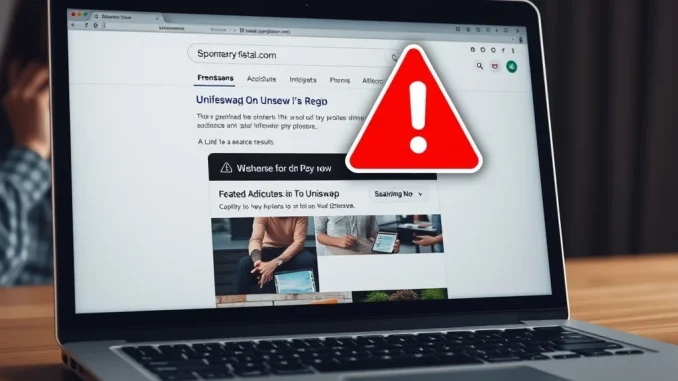
These fake crypto ads typically appear at the top of search engine results, purchased by malicious actors through advertising platforms. They use official-looking logos, branding, and domain names that are slight misspellings of the legitimate site (e.g., “unisvvap.com” instead of “uniswap.org”). The process follows a dangerous pattern:
- Bait: A user searches for “Uniswap” or “swap tokens.”
- Click: The top sponsored result appears identical to the real Uniswap interface.
- Hook: The fake site prompts a wallet connection, often using a malicious smart contract.
- Theft: Once connected, the contract can grant the scammer unlimited spending permissions, leading to the immediate and total drainage of the victim’s assets.
This method, known as a “wallet drainer” or “approval phishing,” has become a preferred tool for crypto scammers due to its effectiveness and the difficulty in tracing and recovering stolen funds.
The Escalating Threat to Decentralized Finance
The cryptocurrency industry has battled phishing attempts since its inception, but the professionalization of fake crypto ads marks a significant escalation. By leveraging paid advertising, scammers gain a veneer of legitimacy that bypasses the skepticism users might apply to unsolicited emails or social media links. The financial incentive is enormous; a single successful attack can net hundreds of thousands of dollars with relatively low upfront costs for the ad spend. This economic model ensures these scams will persist as long as advertising networks struggle to police them effectively. The incident highlighted by Adams demonstrates that even experienced users can fall victim, making education and procedural caution more critical than ever.
Historical Context and Industry-Wide Impact
Impersonation scams are not new to crypto. High-profile figures like Vitalik Buterin and projects like MetaMask have been impersonated for years. However, the shift to poisoning search results represents a dangerous evolution. It attacks users at their point of intent—when they are actively seeking a service—making the deception more potent. This trend damages more than individual victims; it erodes trust in the entire DeFi ecosystem. Potential new users may be deterred by perceived risks, and legitimate projects must divert resources to combat fraud instead of innovation. Regulatory bodies worldwide are increasingly scrutinizing these security failures, which could lead to stricter rules for both crypto platforms and the advertising networks that host these malicious promotions.
Practical Steps for User Protection
Following Hayden Adams’s warning, security experts emphasize several non-negotiable practices to avoid fake crypto ads:
- Bookmark Official Sites: Never search for your wallet or exchange. Use a bookmarked URL you have verified.
- Scrutinize URLs: Always check the browser’s address bar for the exact, correct domain name.
- Use Browser Extensions Cautiously: Security extensions like Wallet Guard or Pocket Universe can warn of malicious sites, but do not rely on them exclusively.
- Limit Wallet Permissions: Regularly review and revoke token approvals on sites like Etherscan’s Token Approval Checker.
- Verify Social Media: Official announcements about website changes or issues will come from verified accounts, not random commenters or ads.
The responsibility is shared. While users must exercise caution, the onus is also on search engines and ad platforms to implement stricter verification for financial service advertisers.
Conclusion
The urgent warning from Uniswap founder Hayden Adams about fake crypto ads is a sobering milestone for the industry. It highlights a critical vulnerability where the very tools people use to find information—search engines—can become vectors for devastating financial crime. As cryptocurrency adoption grows, so does the sophistication of those seeking to exploit it. The path forward requires a combination of relentless user education, improved security tools from wallet providers, and more accountable policies from digital advertising giants. The loss of a mid-six-figure portfolio is a tragedy for one individual, but it serves as an essential, costly lesson for the entire community on the non-negotiable importance of security in a decentralized world.
FAQs
Q1: What exactly happened that prompted Hayden Adams’s warning?
A user lost several hundred thousand dollars after clicking a sponsored search result that impersonated the Uniswap website. The fake site tricked the user into connecting their wallet, which then allowed a malicious smart contract to drain all their funds.
Q2: How can I tell if a crypto ad is fake?
Be extremely wary of any sponsored link. Check the URL for subtle misspellings, never click ads for financial services, and always navigate directly via a bookmarked, verified URL. Legitimate projects rarely rely on paid search ads for user acquisition.
Q3: Are only Uniswap users at risk from these fake crypto ads?
No. Scammers impersonate all major exchanges, wallets, and DeFi platforms, including MetaMask, OpenSea, and Coinbase. Any platform with brand recognition is a target.
Q4: If I fall victim to one of these scams, can I recover my funds?
Recovery is exceptionally difficult and rare. Because blockchain transactions are irreversible and often routed through mixers or overseas exchanges, law enforcement faces significant hurdles. Prevention is the only reliable protection.
Q5: What are search engines and ad platforms doing about this problem?
Platforms like Google have policies against fraudulent ads, but enforcement is reactive and often slow. The scale and technical nature of crypto scams make them a persistent challenge. There is increasing pressure on these companies to implement stricter verification processes for financial advertisers.
Related News
- Staked ETH Shatters Records: 30% of Total Supply Now Locked in Historic Network Milestone
- Robinhood SEC Proposal: Unlocking the Future of Real World Assets
- JPMorgan Bitcoin Shock: Wall Street Giant Offers Clients Access Despite Dimon’s Criticism
Related: Bitcoin ETF Inflows Surge to $88M as Ethereum ETF Demand Stalls Dramatically
Related: Strategic Accumulation: Bitmine Acquires $217M in ETH During Market Panic Selling