Crypto Market Holds Steady: Defying Extreme Fear with Measured Gains
Global, April 2025: The cryptocurrency market presents a study in contrasts this week. Despite a prevailing atmosphere of extreme fear gripping investor sentiment, the aggregate market capitalization has edged upward to approximately $2.33 trillion. Leading assets Bitcoin (BTC) and Ethereum (ETH) are posting modest but notable gains, suggesting a complex interplay between psychological indicators and on-chain fundamentals. This divergence raises critical questions about market maturity and the signals traders should prioritize during periods of heightened uncertainty.
Crypto Market Holds Steady Amid Sentiment Divergence
The total valuation of digital assets has demonstrated resilience, climbing to the $2.33 trillion mark. This movement occurs against a backdrop of significant macroeconomic crosscurrents and sector-specific developments. Analysts observe that this steadiness is not uniform across all assets. While major cryptocurrencies like Bitcoin and Ethereum show strength, many altcoins and newer tokens experience heightened volatility. This behavior often indicates a flight to perceived quality during uncertain times. Market participants are closely watching trading volumes and liquidity metrics, which provide a more nuanced picture than headline capitalization figures alone. The current stability, therefore, may reflect a consolidation phase where capital rotates within the ecosystem rather than exiting it entirely.
Understanding the Extreme Fear Gauge and Its Implications
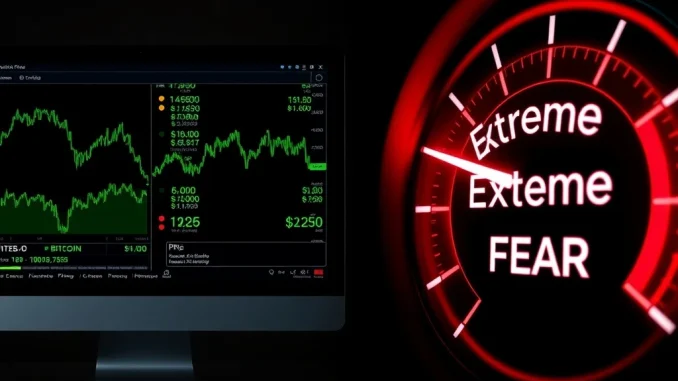
The widely cited Crypto Fear & Greed Index has remained entrenched in “Extreme Fear” territory for an extended period. This sentiment indicator aggregates data from multiple sources, including:
- Volatility: Current price swings compared to historical averages.
- Market Momentum/Volume: Trading activity and volume relative to recent trends.
- Social Media Sentiment: Analysis of buzz and interaction on major platforms.
- Surveys: Periodic polls of market participant outlook.
- Dominance: Shifts in Bitcoin’s share of the total market cap.
Historically, prolonged periods of extreme fear have sometimes preceded significant market rallies, as they can indicate capitulation and a washing out of overly leveraged positions. However, they can also foreshadow further declines if driven by fundamental deteriorations. The key distinction lies in whether the fear stems from external macroeconomic shocks or internal, resolvable crypto-industry issues. The current sentiment likely reflects a combination of both, including regulatory scrutiny in several jurisdictions and shifting monetary policy expectations from central banks globally.
Bitcoin and Ethereum: The Bedrock Shows Resilience
Bitcoin, often viewed as digital gold, has seen its price stabilize and grind higher despite the gloomy sentiment. Its network fundamentals, such as hash rate and active address count, remain robust. Similarly, Ethereum has posted gains, supported by ongoing developments within its ecosystem, including layer-2 scaling solutions and steady protocol upgrades. The performance of these two giants suggests that seasoned investors may be using periods of negative sentiment to accumulate assets at lower price points, a strategy often termed “buying the fear.” This activity provides a foundational support level for the broader market. Their relative stability acts as a keystone, preventing more severe cascades across the altcoin spectrum.
A Historical Perspective on Market Sentiment Cycles
The cryptocurrency market is no stranger to dramatic sentiment swings. Previous cycles have demonstrated a reliable, though not perfectly predictable, pattern. Periods of “Extreme Greed” often coincide with market tops and widespread retail FOMO (Fear Of Missing Out). Conversely, protracted “Extreme Fear” has frequently marked accumulation zones for long-term holders. For instance, the bear market of 2018-2019 and the post-LUNA collapse period in 2022 saw the index dwell in extreme fear for months. Each phase was followed by a significant re-rating of asset prices once new positive catalysts emerged. The current environment shares characteristics with these historical consolidation phases, where patience and fundamental analysis are rewarded over reactive trading.
| Period | Avg. Fear & Greed Index | BTC 30-Day Performance | Market Cap Trend |
|---|---|---|---|
| Current (April 2025) | Extreme Fear (≈20) | +3.5% | Sideways to Slightly Up |
| Q4 2024 | Neutral (≈50) | +15% | Strong Upward |
| Q3 2024 | Extreme Fear (≈25) | -8% | Downward Correction |
Expert Insight: Decoupling Sentiment from Fundamentals
Market analysts emphasize that while sentiment indicators are valuable tools, they are not infallible predictors. “The Fear & Greed Index measures emotion, not value,” notes a veteran portfolio manager specializing in digital assets. “What we’re seeing now could be a classic decoupling. The underlying technology continues to develop, institutional infrastructure grows, and real-world adoption metrics inch forward, even while short-term trader psychology remains bleak. This creates potential opportunity but requires rigorous risk management.” This perspective underscores the importance of a multi-faceted analysis approach that weighs on-chain data, developer activity, and regulatory landscapes alongside sentiment gauges.
Conclusion: Navigating a Market of Contradictions
The current state of the crypto market is defined by a clear contradiction: steadying prices and modest gains for key assets amidst a pervasive climate of extreme fear. This scenario highlights the market’s growing complexity and the evolving behavior of its participants. For observers and investors, it reinforces the necessity of looking beyond single indicators. The resilience of Bitcoin and Ethereum suggests a foundation of long-term belief that tempers short-term panic. As the industry matures, such periods of sentiment-price divergence may become more common, marking phases where disciplined, fundamental analysis separates from reactive crowd psychology. The market’s ability to hold steady under these conditions is, in itself, a noteworthy data point for its ongoing development.
FAQs
Q1: What does “Extreme Fear” mean in crypto markets?
A1: “Extreme Fear” is a reading on the Crypto Fear & Greed Index, a composite indicator that suggests market participants are predominantly driven by panic, uncertainty, and negative sentiment. It is based on data like volatility, social media buzz, and surveys, but does not directly measure asset fundamentals or long-term value.
Q2: How can Bitcoin and Ethereum rise if the market is in extreme fear?
A2: This divergence can happen when long-term investors and institutions view price dips as buying opportunities, providing buy-side support. It can also indicate that the fear is being driven by factors not directly impacting the core fundamentals of these largest assets, or that the market has already priced in the worst-case news.
Q3: Is the Fear & Greed Index a reliable trading signal?
A3: It is a useful contextual tool, but not a standalone trading signal. Historically, prolonged extreme fear has sometimes marked market bottoms, but using it alone for entry/exit decisions is risky. It should be combined with technical analysis, on-chain data, and fundamental research.
Q4: What typically causes a shift from Extreme Fear to another sentiment?
A4: Shifts are usually triggered by a catalyst that changes the market narrative. This could be a major positive regulatory decision, a breakthrough in adoption, a shift in macroeconomic policy (like interest rate cuts), or a period of sustained price stability that rebuilds investor confidence.
Q5: Does total market cap tell the whole story during fearful periods?
A5: No, total market cap is a high-level overview. During fear-driven markets, it’s crucial to also examine trading volume, liquidity depth (especially on decentralized exchanges), stablecoin market cap (indicating dry powder), and the performance disparity between large-cap and small-cap assets to understand capital flows.
Related News
- Crypto Liquidations Unleash $700M Short Squeeze as Bitcoin Breaks $95,000
- How Cryptocurrency is Reshaping Digital Transactions
- Best Crypto to Buy Now: Analyzing Market Corrections and Emerging Opportunities in DeepSnitch AI, Monad, and Chainlink
Related: ASTER Consolidation Reaches Critical Juncture: Will $0.81 Breakout Materialize?
Related: Crypto Presale Projects: 5 Leading Contenders for the 2026 Market Cycle
Related: Fake Crypto Ads: Uniswap Founder's Urgent Warning After Devastating Six-Figure Loss