DeepSnitch AI Gains Traction as $53B Bitcoin ETF Inflows Meet Evolving 2026 Crypto Landscape
Global, March 2025: The cryptocurrency sector continues its dynamic evolution, marked by substantial institutional capital inflows and rapid technological innovation. Recent data highlights a significant milestone with over $53 billion flowing into U.S.-listed spot Bitcoin Exchange-Traded Funds (ETFs) since their approval. Concurrently, developer activity and market attention are shifting toward next-generation tools, with platforms like DeepSnitch AI generating notable discussion for their potential role in the 2026 trading landscape. This analysis examines these parallel trends within the broader context of market maturation and investor behavior.
Bitcoin ETF Inflows Signal Sustained Institutional Interest
The accumulation of $53 billion in assets under management (AUM) by spot Bitcoin ETFs represents a foundational shift in digital asset accessibility. These regulated financial products provide a familiar conduit for traditional finance entities and accredited investors to gain exposure to Bitcoin’s price movements without the technical complexities of direct custody. Analysts view this sustained inflow, particularly through periods of price volatility, as a vote of confidence in Bitcoin’s long-term viability as a macro asset. The capital primarily originates from wealth managers, hedge funds, and corporate treasuries, diversifying the asset’s holder base beyond retail enthusiasts and early adopters. This institutional layer adds liquidity and stability to the market, though it also introduces new correlations with traditional finance metrics.
The Evolving Developer Focus: From Scaling to Intelligence
For several years, a significant portion of blockchain developer resources was dedicated to solving the scalability trilemma—balancing decentralization, security, and transaction throughput. This effort spawned numerous Layer-2 (L2) scaling solutions, such as rollups and state channels, designed to offload transaction volume from congested base layers like Ethereum. While these technologies remain critical infrastructure, a noticeable pivot is occurring within developer communities and startup funding rounds. The focus is expanding from pure transaction processing to data intelligence and execution. Advanced analytics, predictive modeling, and automated strategy tools are becoming areas of intense research and development. This shift reflects a market moving beyond basic asset ownership toward sophisticated portfolio management and risk assessment, akin to tools available in mature equity and forex markets.
DeepSnitch AI: A Case Study in Emerging Tooling
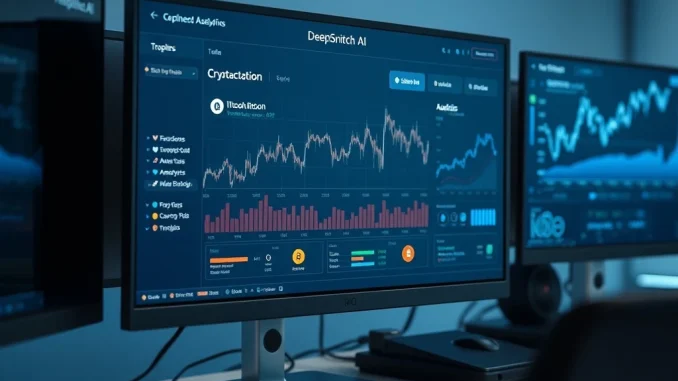
DeepSnitch AI enters this landscape as an example of the new tooling category gaining attention. According to its published documentation, the platform aims to provide AI-powered analytics for cryptocurrency markets. Its proposed features, as seen in a recently released interface preview, include real-time on-chain data interpretation, sentiment analysis across social and news media, and automated pattern recognition for a range of digital assets. The platform’s presale phase indicates targeted interest from a segment of investors specifically seeking exposure to crypto-adjacent AI applications. It is crucial to frame this not as a singular phenomenon but as part of a broader trend where artificial intelligence is being integrated into various crypto verticals, including security, compliance, and market-making. The performance and adoption of such tools will depend on their proven utility, transparency, and reliability in live trading environments beyond 2025.
Comparative Analysis: Infrastructure vs. Intelligence Investment
The discussion around investor interest in AI tools versus L2 solutions presents a nuanced picture. It is not necessarily a wholesale “ditching” of one for the other, but a rebalancing of portfolio and attention allocation as the ecosystem matures.
- Layer-2 Solutions: These are foundational, long-term infrastructure plays. Investment here is akin to investing in the highway system; it’s essential for ecosystem growth but may offer slower, more utility-driven returns.
- AI Trading & Analytics Tools: These are application-layer services. Investment here is akin to investing in advanced logistics or mapping software that uses the highways. They can offer rapid innovation cycles and direct user-facing value but may carry higher volatility and competitive risk.
Sophisticated investors typically maintain exposure to both infrastructure and application layers, adjusting weightings based on market cycles and technological readiness. The rising conversation around AI tools suggests the market is seeking alpha—excess returns—through information asymmetry and execution speed, which these tools purport to address.
Regulatory and Practical Considerations for 2026
As AI integrates deeper into financial activities, regulatory scrutiny will inevitably follow. Key considerations for platforms offering AI-driven trading tools will include:
- Algorithmic Transparency: To what extent must the AI’s decision-making process be explainable?
- Data Provenance: Ensuring the data sets used for training and analysis are accurate and free from manipulation.
- Performance Claims: Marketing must avoid unrealistic promises of profitability, a common focus for financial regulators worldwide.
- Systemic Risk: The potential for correlated AI-driven actions to amplify market moves, creating flash crashes or liquidity events.
Furthermore, the practical success of any AI trading tool will be measured by its robustness during black swan events, its ability to adapt to changing market regimes, and the tangible edge it provides over both human traders and simpler automated systems.
Conclusion
The cryptocurrency market in 2025 is characterized by the coexistence of massive institutional capital, evidenced by $53 billion in Bitcoin ETF inflows, and a vibrant, iterative developer scene exploring frontier technologies like artificial intelligence. The traction around DeepSnitch AI and similar platforms reflects a natural evolution toward sophisticated data analysis in a complex, 24/7 global market. While Layer-2 scaling remains a critical engineering challenge, the emerging focus on AI-powered tools highlights the industry’s next phase: building intelligence layers atop financial infrastructure. The trajectory for 2026 will likely be defined by how effectively these tools deliver real-world value, navigate an evolving regulatory landscape, and integrate with the now-significant institutional presence in the digital asset space.
FAQs
Q1: What do the $53B Bitcoin ETF inflows actually mean?
The inflows demonstrate validated institutional demand, providing Bitcoin with enhanced liquidity, price discovery, and legitimacy as an asset class within traditional portfolio construction.
Q2: Are Layer-2 (L2) solutions no longer important?
They remain critically important as core infrastructure for scalability and usability. The trend indicates a broadening of developer focus to include application-layer intelligence tools, not an abandonment of scaling work.
Q3: What is an AI trading tool supposed to do?
These tools aim to process vast amounts of market data (price, on-chain transactions, social sentiment, news) using machine learning to identify patterns, assess risk, and sometimes execute trades, far beyond the capability of manual analysis.
Q4: What should investors be cautious about with new AI crypto platforms?
Investors should scrutinize the team’s expertise, the transparency of the technology, historical performance data (if any), regulatory compliance, and avoid platforms that guarantee returns or seem overly promotional.
Q5: How might AI tools impact overall market stability?
They could increase efficiency and liquidity but also pose risks if many systems act on similar signals simultaneously, potentially exacerbating market volatility. This is an area of active study by both developers and regulators.
Related News
- Bitcoin Price: Warning Signs Emerge for Potential Correction
- Best Crypto to Invest In 2026: Market Shifts Emerge as Regulatory Changes and Project Challenges Reshape Landscape
- Generative AI use soars among brits, but is it sustainable?
Related: Bitcoin Hyper Price Prediction: Analyzing DeepSnitch AI's $1.66M Funding and Market Projections
Related: Solana's Monumental Surge: Nears $1B in Tokenized Real-World Assets Fueled by BlackRock and Ondo
Related: Binance Whale Deposits Surge to $8.3B, Highest Since 2024, as Bitcoin Price Stalls