BlockDAG’s Genesis Price Vanishes as XRP and Polygon Stagnate: A Market Divergence Analysis
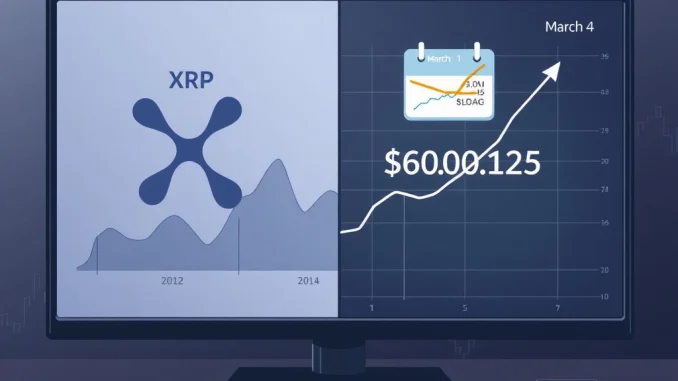
March 4, 2025: The cryptocurrency landscape is presenting a stark contrast in momentum. While established assets like XRP and Polygon (MATIC) exhibit prolonged periods of price consolidation, a significant event unfolded for the emerging project BlockDAG. Its initial genesis offering price of $0.000125, a figure that had anchored early promotional material, officially became unavailable as of today, March 4th, signaling a rapid shift in its early valuation phase and capturing immediate market attention. This divergence highlights the varying forces of regulatory uncertainty, technological development cycles, and investor sentiment currently shaping the digital asset sector.
Analyzing the Stagnation of XRP and Polygon
The current price action for both XRP and Polygon (MATIC) fits a classic pattern of market consolidation. For XRP, this period of uncertainty is deeply intertwined with its ongoing legal proceedings with the U.S. Securities and Exchange Commission (SEC). Although the case has seen partial resolutions, the broader implications for its regulatory classification continue to cast a long shadow. Market analysts note that until there is definitive, case-wide clarity, institutional adoption may remain cautious, suppressing significant bullish momentum. Price predictions for 2026 remain a wide spectrum, reflecting this fundamental uncertainty rather than technical shortcomings of the XRP Ledger itself.
Similarly, Polygon, a leading Layer-2 scaling solution for Ethereum, finds itself in a phase of integration and development rather than speculative hype. Its technology is actively being deployed across decentralized finance (DeFi) and non-fungible token (NFT) platforms, which is a growth metric not always immediately reflected in token price. The stall in its price prediction models often points to broader market conditions affecting the entire Ethereum ecosystem and the competitive pressure from other scaling solutions like Arbitrum and Optimism. This represents a maturation phase where utility and adoption are being assessed against market saturation.
The Technical and Market Context of BlockDAG’s Movement
The disappearance of BlockDAG’s advertised genesis price point is a procedural milestone common in new token distributions. It typically indicates the closure of an early sale round or a shift in valuation based on initial funding targets being met. Unlike the stagnation seen with larger assets, this movement is characteristic of the early-stage cryptocurrency project lifecycle, which often involves:
- Phased Fundraising: Projects frequently use multiple rounds (e.g., private sale, public sale) with increasing prices.
- Vesting Schedules: Tokens sold at early prices often have lock-up periods, controlling immediate market supply.
- Exchange Listings: The first listing on a decentralized or centralized exchange usually establishes a new, market-driven price point, rendering previous fixed sale prices obsolete.
This event alone does not predicate long-term success but marks a transition from a theoretical launch price to a live market valuation. Its prominence on “top gainer” lists today is likely due to the low initial valuation creating a high percentage increase upon first market trades, a common occurrence with new listings.
Understanding the Underlying Blockchain Architectures
The divergent paths of these assets can be partly understood through their technological foundations. XRP operates on a consensus protocol designed for fast, low-cost settlements, primarily targeting financial institutions. Polygon provides scaling through sidechains and commit-chains to alleviate Ethereum’s congestion. The term “BlockDAG” itself refers to a Directed Acyclic Graph structure, a different data architecture proposed as an alternative to traditional linear blockchains, aiming for higher throughput. Each architecture faces unique adoption challenges, scalability debates, and competitive landscapes that influence investor perception and price discovery over different time horizons.
Broader Market Implications and Investor Sentiment
The simultaneous occurrence of stagnation for major altcoins and volatility for a new entrant is a microcosm of the current crypto market. It reflects a environment where capital is selective, rotating between established, “safer” assets during uncertain times and seeking high-growth potential in nascent projects. This behavior underscores several market realities:
- Liquidity Fragmentation: Capital is not uniformly distributed, creating pockets of high volatility amid general market calm.
- Narrative-Driven Cycles: New technological narratives (like novel consensus mechanisms) can attract short-term attention independent of broader market trends.
- Risk Stratification: Investors often categorize assets by risk profile, with money moving between these categories based on macroeconomic indicators and sector-specific news.
The rapid buyer activity reported for BlockDAG’s next phase is indicative of this risk-on sentiment within a specific segment of the market, contrasting with the wait-and-see approach dominating the trading of XRP and Polygon.
Conclusion
The cryptocurrency market event of March 4th, where BlockDAG’s genesis price vanished amid the continued stagnation of XRP and Polygon, serves as a clear lesson in market phases and investor psychology. It highlights the contrast between the slow, grinding price discovery of assets weighed down by regulatory and ecosystem-wide challenges, and the rapid, event-driven volatility of early-stage project launches. For observers and participants, this divergence reinforces the importance of distinguishing between short-term trading catalysts rooted in issuance mechanics and long-term value drivers based on technological utility, regulatory clarity, and mainstream adoption. The trajectory of BlockDAG’s market price will now be tested by the same forces of supply, demand, and perceived utility that govern all digital assets.
FAQs
Q1: What does it mean that BlockDAG’s genesis price “vanished”?
It typically means the project has moved past its initial, fixed-price fundraising round (e.g., a presale or genesis offering). The price is now determined by market forces on exchanges, making the previous static price obsolete.
Q2: Why are XRP price predictions for 2026 so uncertain?
The primary source of uncertainty is the lack of final, comprehensive resolution in the SEC vs. Ripple lawsuit. The outcome will significantly impact its regulatory status in the United States, a major market, influencing institutional adoption and price.
Q3: Is Polygon’s stalled price prediction a sign of technological failure?
Not necessarily. Polygon’s technology is widely used. The price stall often reflects broader market conditions, competition from other Layer-2 solutions, and a market phase that values proven utility over speculative growth.
Q4: What is a BlockDAG in blockchain terms?
BlockDAG is a proposed data structure where blocks can reference multiple previous blocks, forming a directed acyclic graph. Proponents argue it can offer higher scalability and throughput compared to a linear blockchain, but it presents different security and consensus challenges.
Q5: Does appearing on a “top crypto gainers” list indicate long-term success?
No, it is a short-term metric. Newly listed tokens with low initial prices and liquidity often see high percentage gains initially. Long-term success depends on technology adoption, community growth, development execution, and sustained market demand.
Related News
- Alchemy Pay Expands Global Reach: $USA₮ Fiat On-Ramps Now Live in 173 Markets
- Alien Discovery Crypto Surge: Former BOE Analyst Reveals Startling Financial Contingency
- Mine with ease. Rich Miner helps Bitcoin holders get a daily income.
Related: Alchemy Pay Expands Global Access with Fiat On-Ramp Support for Ultima's $ULTIMA Token
Related: OpenAI EVMbench Launch Follows Shocking AI-Assisted DeFi Code Disaster