AI-Driven On-Chain Trading Revolution Begins as PINDex and Cache Wallet Form Strategic Alliance
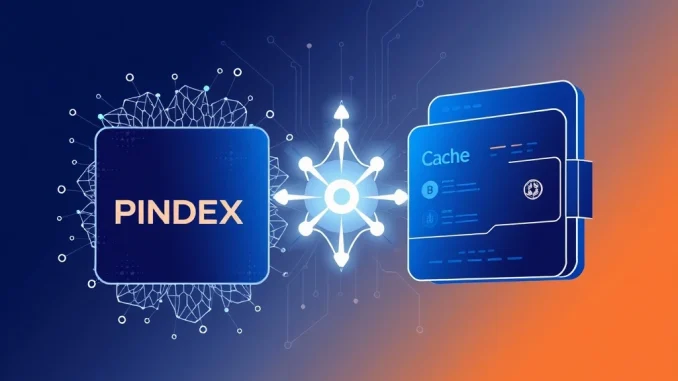
Global, March 2025: The decentralized finance landscape enters a new phase of integration as two prominent platforms announce a transformative partnership. PINDex, an AI-native perpetual trading protocol, and Cache Wallet, a security-focused Web3 wallet solution, have formed a strategic alliance aimed at revolutionizing AI-driven on-chain trading. This collaboration represents a significant step toward solving persistent challenges in decentralized trading by merging sophisticated artificial intelligence with user-friendly security infrastructure.
AI-Driven On-Chain Trading Enters New Phase with Strategic Integration
The partnership between PINDex and Cache Wallet addresses a fundamental tension in decentralized finance: the trade-off between advanced functionality and user security. Perpetual trading protocols have traditionally required users to navigate complex interfaces while managing multiple security concerns across different platforms. This alliance seeks to create a seamless experience where AI-powered trading strategies operate within a secure, intuitive wallet environment.
Industry analysts note this collaboration reflects a broader trend toward vertical integration in Web3 infrastructure. Rather than building competing solutions in isolation, specialized platforms are increasingly forming strategic partnerships to create comprehensive ecosystems. The PINDex-Cache Wallet alliance specifically targets the growing demand from institutional and sophisticated retail traders who require both advanced trading tools and enterprise-grade security for their on-chain activities.
Technical Architecture of the Integrated Solution
The integration involves multiple technical layers that enable secure communication between PINDex’s AI trading engine and Cache Wallet’s user interface. At its core, the solution utilizes:
- Secure API Gateways: Encrypted communication channels that allow Cache Wallet to interact with PINDex’s trading protocols without exposing private keys
- Unified Authentication: Single sign-on functionality that maintains security while reducing friction for users moving between trading and wallet management
- Real-time Data Synchronization: Continuous updating of portfolio positions, margin requirements, and risk parameters across both platforms
- Modular Smart Contract Architecture: Interoperable contract designs that enable specific trading functions while maintaining separation of concerns for security
This technical foundation enables what both companies describe as “context-aware trading”—where the AI system can consider a user’s complete portfolio, risk tolerance, and security preferences when executing trades, rather than operating in isolation.
The Evolution of Perpetual Trading Protocols
To understand the significance of this partnership, it helps to examine the historical development of perpetual trading in decentralized finance. The first generation of DeFi perpetual protocols emerged around 2020-2021, offering basic leveraged trading with limited risk management tools. These platforms often suffered from poor user experience, high gas costs, and vulnerability to market manipulation.
The second generation, appearing in 2022-2023, introduced improved oracle systems, better liquidity mechanisms, and basic automated strategies. PINDex represents what industry observers classify as a third-generation protocol, incorporating machine learning algorithms that can adapt to market conditions, optimize execution, and manage complex risk parameters autonomously.
Concurrently, Web3 wallet technology has evolved from simple key storage to comprehensive asset management platforms. Cache Wallet’s development trajectory mirrors this evolution, having started as a multi-chain wallet before adding advanced features like transaction simulation, phishing detection, and portfolio analytics. The convergence of these two mature technologies creates what could become a new standard for professional on-chain trading.
Security Implications and Risk Management Framework
One of the most critical aspects of this integration involves security architecture. The alliance has developed a multi-layered approach to protecting user assets while enabling sophisticated trading operations:
| Security Layer | PINDex Implementation | Cache Wallet Implementation |
|---|---|---|
| Fund Separation | Trading collateral held in isolated smart contracts | Main wallet assets remain in user-controlled addresses |
| Transaction Validation | AI recommendations verified against multiple risk parameters | All transactions simulated and reviewed before signing |
| Access Control | Role-based permissions for different trading functions | Biometric and hardware wallet integration for authorization |
| Monitoring Systems | Real-time anomaly detection in trading patterns | Continuous security scanning for suspicious activities |
This framework addresses common concerns about AI trading systems, particularly the risk of unexpected behavior or exploitation. By maintaining clear separation between trading operations and core asset storage, while implementing overlapping security measures, the alliance aims to provide both capability and protection.
Market Context and Competitive Landscape
The announcement comes during a period of significant growth in AI-enhanced DeFi applications. According to recent industry reports, the total value locked in AI-integrated DeFi protocols has grown approximately 300% year-over-year, reaching an estimated $4.2 billion as of early 2025. This growth reflects increasing institutional interest in automated trading strategies that can operate 24/7 across global markets.
Several other platforms have attempted similar integrations with varying degrees of success. The differentiating factors for the PINDex-Cache Wallet alliance appear to be:
- Native Integration: Rather than relying on bridges or third-party connectors, the platforms are building shared infrastructure from the ground up
- Regulatory Considerations: Both companies have engaged with compliance experts to ensure their integration meets evolving regulatory standards in multiple jurisdictions
- Cross-Chain Compatibility: The solution supports multiple blockchain networks, recognizing that traders increasingly operate across ecosystems
- Transparent Operations: All AI trading decisions will be accompanied by explainable AI features that help users understand why specific trades were executed
This comprehensive approach positions the alliance to capture market share from both traditional centralized exchanges offering AI tools and from less integrated DeFi protocols.
User Experience Transformation
For end users, the most visible impact will be in daily interaction with trading platforms. The integrated experience allows traders to:
- Set up AI trading strategies directly from their wallet interface without transferring funds to separate platforms
- Monitor positions and performance alongside their complete portfolio in a unified dashboard
- Adjust risk parameters that apply across both trading and wallet management functions
- Receive consolidated reporting for tax and accounting purposes
- Utilize advanced order types that consider wallet liquidity and overall portfolio allocation
This represents a significant departure from current workflows that typically involve multiple browser tabs, disconnected applications, and manual reconciliation between trading platforms and wallet balances.
Implementation Timeline and Development Roadmap
The alliance has outlined a phased implementation schedule extending through 2025. The initial phase, beginning in Q2 2025, will involve limited beta testing with selected institutional partners. This phase focuses on basic integration of PINDex’s AI trading signals with Cache Wallet’s interface for a small set of trading pairs.
The second phase, scheduled for Q3 2025, will expand functionality to include automated execution of simple strategies and more comprehensive portfolio integration. The final phase, targeted for Q4 2025, will introduce advanced features including cross-margin capabilities, social trading elements, and institutional-grade reporting tools.
Both companies emphasize that security audits and user testing will gate progress between phases. Independent security firms have already begun reviewing the integration architecture, with public audit reports scheduled for release alongside each phase implementation.
Conclusion
The strategic alliance between PINDex and Cache Wallet represents a meaningful advancement in AI-driven on-chain trading infrastructure. By addressing the historical divide between sophisticated trading tools and secure user experience, this partnership could accelerate adoption of decentralized trading among both institutional and retail participants. As the integration progresses through its implementation phases throughout 2025, the industry will be watching closely to see if this model establishes a new standard for how artificial intelligence and user security can coexist in Web3 finance. The success of this collaboration may well determine whether AI-enhanced DeFi can move beyond early adopters to mainstream financial applications.
FAQs
Q1: What exactly does the PINDex and Cache Wallet alliance involve?
The alliance involves deep technical integration between PINDex’s AI-powered perpetual trading protocol and Cache Wallet’s security-focused Web3 wallet. This creates a unified platform where users can access sophisticated AI trading tools directly through their secure wallet interface without compromising safety or convenience.
Q2: How does this integration improve security for AI-driven on-chain trading?
The integration implements multiple security layers including fund separation (trading collateral isolated from main wallet assets), transaction validation through simulation, and continuous monitoring systems. This architecture maintains the security advantages of non-custodial wallets while enabling advanced trading functionality.
Q3: When will the integrated platform be available to all users?
The implementation follows a phased roadmap throughout 2025, beginning with limited beta testing in Q2, expanding functionality in Q3, and targeting full feature release in Q4. Availability will expand gradually with security audits and user testing guiding the rollout schedule.
Q4: Can users still access PINDex or Cache Wallet separately after the integration?
Yes, both platforms will continue to operate as standalone services. The integration creates an enhanced combined experience but doesn’t eliminate individual platform access. Users can choose whether to utilize the integrated features or continue using the services separately.
Q5: What blockchain networks will the integrated solution support?
The initial implementation will support Ethereum, Arbitrum, and Polygon, with plans to expand to additional networks based on user demand and technical feasibility. The architecture is designed to be chain-agnostic, allowing for future expansion across the multi-chain ecosystem.
Q6: How does the AI trading system handle different risk tolerances and investment goals?
The integrated platform includes configurable risk parameters that allow users to define their risk tolerance, investment horizon, and specific goals. The AI system then optimizes trading strategies within these constraints, with explainable AI features that help users understand how specific trades align with their stated preferences.
Related News
- Bitcoin's Potential Surge: How Federal Reserve Independence Concerns Could Weaken the Dollar
- HYPE Listing Confirmed: Coinbase's Crucial Move for Hyperliquid Spot Trading
- Duckchain Unveils Electrifying Crypto Bash at KBW 2025
Related: Modular Financial Infrastructure: The Revolutionary End of Monolithic Banking Systems
Related: Polymarket Election Bet: NYSE President Reveals Stunning Link to Market Surge
Related: Pivotal SEC Decision Looms for T. Rowe Price's XRP-Inclusive Crypto ETF