WLFI Price Skyrockets 26%: Whale Buying Sparks Dramatic Short Squeeze
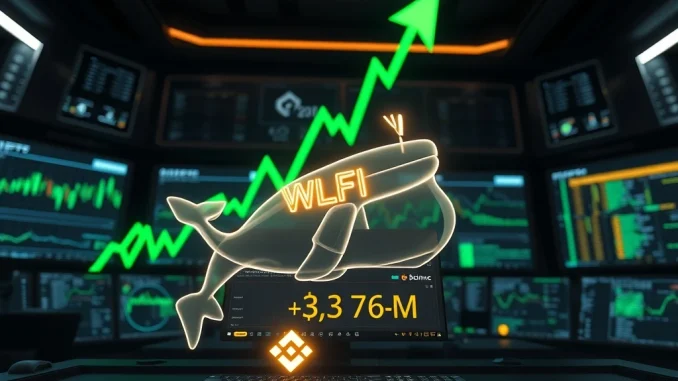
Global Cryptocurrency Markets, April 2025: The price of the WLFI token experienced a dramatic surge of 26% in a single trading session, a move primarily attributed to significant whale accumulation and a resulting short squeeze. The event, which saw approximately $33.76 million worth of assets withdrawn from the Binance exchange, coincided with heightened market attention surrounding the World Liberty Forum, creating a perfect storm of volatility and trader interest. This analysis breaks down the mechanics and context behind this significant cryptocurrency market movement.
WLFI Price Action and the Mechanics of a Short Squeeze
The sudden 26% ascent in WLFI’s valuation is a textbook example of a short squeeze playing out in the cryptocurrency markets. A short squeeze occurs when traders who have borrowed and sold an asset, betting on its price decline (short sellers), are forced to buy it back at a higher price to limit their losses. This forced buying creates additional upward pressure, fueling a rapid price increase. In this instance, data from on-chain analytics platforms and exchange order books indicates that a series of large purchase orders, commonly executed by entities known as “whales,” initiated the upward momentum. As the price began to climb, stop-loss orders for short positions were triggered, creating a cascading effect of buy orders that propelled WLFI’s price sharply higher within a compressed timeframe. This phenomenon underscores the highly leveraged and volatile nature of crypto trading, where sentiment and positioning can lead to explosive moves.
Analyzing the Whale Activity and Exchange Withdrawals
The role of whale investors is central to understanding this price event. Blockchain data reveals that several large wallets accumulated WLFI tokens in the hours preceding the major price spike. The subsequent withdrawal of $33.76 million in assets from Binance is a critical data point. Large withdrawals from centralized exchanges often signal an intent to move assets into cold storage or private wallets for long-term holding, a move interpreted by the market as a reduction in immediate selling pressure. This action can shift the supply-demand balance on the exchange, making it harder for short sellers to locate tokens to cover their positions and exacerbating a squeeze. The table below outlines the typical sequence of events in a whale-induced short squeeze:
| Phase | Action | Market Impact |
|---|---|---|
| 1. Accumulation | Whales execute large buy orders over time. | Gradual price support, reduced circulating supply on exchanges. |
| 2. Catalyst | News or event (e.g., Forum hype) increases buying interest. | Price begins a sharper upward trend. |
| 3. Withdrawal | Whales move tokens off exchanges to custody. | Perceived supply shock, increased volatility. |
| 4. Short Squeeze | Rising price triggers margin calls for short sellers. | Forced buying creates parabolic price spike. |
| 5. Stabilization | Profit-taking and rebalancing occur. | Price finds a new, often higher, support level. |
Context from the World Liberty Forum
While not a direct cause, the timing of the World Liberty Forum at Mar-a-Lago provided a narrative backdrop that influenced trader psychology. Events that gather prominent figures from finance, technology, and policy often generate speculative buzz in cryptocurrency circles, with traders anticipating announcements or sentiment shifts that could impact asset prices. The forum likely acted as a coincidental catalyst, drawing attention to projects and discussions within the liberty-focused and decentralized finance (DeFi) spaces, of which WLFI may be perceived as a part. This external hype can amplify existing market trends, adding fuel to technical movements like the one driven by whale activity.
Historical Precedents and Market Structure Implications
This event is not isolated in cryptocurrency history. Similar short squeeze scenarios have unfolded with various assets, most notably with GameStop (GME) in traditional markets in 2021 and with several major cryptocurrencies like Bitcoin and Ethereum during past bull market cycles. These events highlight key structural features of modern digital asset markets:
- High Leverage: The widespread availability of leverage (often 5x, 10x, or more) on crypto exchanges magnifies both gains and losses, making squeezes more violent.
- Transparency of On-Chain Data: While wallets are pseudonymous, large transactions are public, allowing the market to see whale movements in real-time, which can itself influence behavior.
- Fragmented Liquidity: Unlike traditional stock exchanges, crypto liquidity is spread across dozens of platforms. A large withdrawal from a major exchange like Binance can have an outsized impact on available liquidity for that specific trading pair.
For regulators and institutional observers, such volatility events reinforce ongoing discussions about market integrity, the need for robust risk management tools for participants, and the evolving nature of price discovery in a 24/7 global market.
Conclusion
The 26% surge in the WLFI price serves as a powerful case study in contemporary market dynamics, where whale buying, exchange flow data, and external event hype converged to trigger a significant short squeeze. This event demonstrates the complex interplay between on-chain activity, exchange mechanics, and trader sentiment in the cryptocurrency ecosystem. While the immediate price action is dramatic, the longer-term implications for WLFI will depend on fundamental project developments and broader market trends. For traders and analysts, the episode underscores the importance of monitoring whale wallets, exchange reserves, and leverage metrics to understand potential volatility catalysts, reminding all market participants of the inherent risks and opportunities in digital asset trading.
FAQs
Q1: What is a short squeeze in cryptocurrency?
A short squeeze is a rapid increase in an asset’s price that forces traders who bet on the price falling (short sellers) to buy back the asset to close their positions and limit losses. This forced buying drives the price even higher.
Q2: Who are “whales” in crypto markets?
“Whales” are individuals or entities that hold large amounts of a particular cryptocurrency. Their trades are significant enough to influence market prices and sentiment due to the size of their transactions.
Q3: Why does withdrawing coins from an exchange like Binance affect the price?
Large withdrawals reduce the immediately available supply of a token on the exchange’s order book. This can make it harder and more expensive for other traders, especially short sellers, to acquire the token, potentially leading to higher prices and increased volatility.
Q4: Was the World Liberty Forum the main reason for the WLFI price jump?
No, the forum was likely a coincidental narrative catalyst that amplified existing market movements. The primary technical drivers were identified as whale accumulation and the resulting short squeeze mechanics.
Q5: How can traders identify potential short squeeze setups?
Traders often look for assets with a high level of short interest (many open short positions), decreasing exchange reserves, and increasing large wallet (whale) accumulation. A sudden spike in buying volume can then be the trigger that starts the squeeze.
Related News
- Bitcoin Soars: BTC Breaks the $77,000 Barrier in Major Market Rally
- Is Solana a Good Investment in 2025? Unpacking Solana ETF News and Market Trends
- Bitcoin Hyper Price Prediction: Analyzing the $90K DeepSnitch AI Initiative and Bitcoin L2 Utility
Related: Modular Financial Infrastructure: The Revolutionary End of Monolithic Banking Systems
Related: Polymarket Election Bet: NYSE President Reveals Stunning Link to Market Surge
Related: Pivotal SEC Decision Looms for T. Rowe Price's XRP-Inclusive Crypto ETF