Altcoin Accumulation: Why 2026 Could Be the Ultimate Year for Strategic Investors
Global, March 2025: A growing consensus among cryptocurrency analysts suggests that 2026 could emerge as a pivotal altcoin accumulation year for strategic investors. This perspective is not based on speculative hype but on a sober examination of technical indicators, historical market cycles, and prevailing sentiment. The core argument hinges on observed patterns where the Relative Strength Index (RSI) for major altcoin indices appears to be mirroring the deeply oversold conditions seen at previous cycle bottoms in 2015, 2018, and 2022. While market sentiment in early 2025 remains cautious, this analysis provides a framework for understanding the potential phase the market may be entering.
Understanding the Altcoin Accumulation Thesis for 2026
The concept of an “accumulation year” refers to a prolonged period where asset prices trade within a relatively tight range at depressed levels following a significant bear market. During this phase, long-term investors systematically build positions, while short-term speculators and weak hands exit the market. For altcoins—cryptocurrencies other than Bitcoin—these periods have historically preceded substantial bull runs. The current analysis projecting 2026 as such a year is rooted in comparative cycle theory. Analysts are not predicting exact price movements but identifying structural similarities in market psychology and technical setups that have preceded major trend reversals in the past. This involves examining multi-year timelines, investor behavior during deep pessimism, and the re-alignment of fundamental value within the blockchain ecosystem.
Historical RSI Patterns and Cycle Repetition
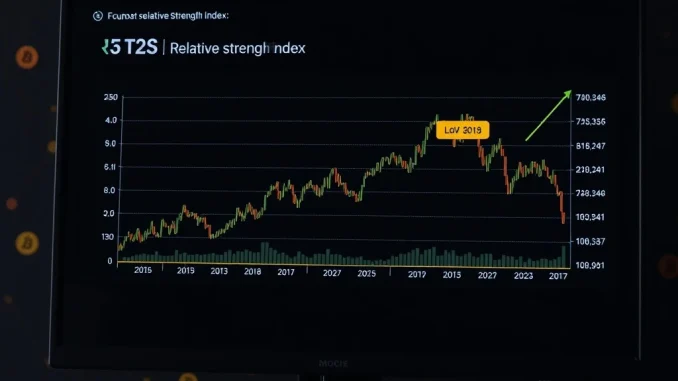
The Relative Strength Index (RSI) is a momentum oscillator that measures the speed and change of price movements, typically on a scale from 0 to 100. Readings below 30 are generally considered oversold. A critical observation from several independent research firms is that the weekly and monthly RSI readings for aggregate altcoin markets in late 2024 and early 2025 are approaching zones that, in previous cycles, marked major lows.
- 2015 Accumulation: Following the 2013-2014 bear market, altcoin RSI readings spent extended periods below 30, creating a foundation for the 2016-2017 bull market.
- 2018-2019 Bottom: After the crash from the 2017 peak, the altcoin market cap RSI reached extreme lows in late 2018, leading to a 2019-2020 accumulation phase before the next cycle.
- 2022 Capitulation: The post-2021 crash saw similar deeply oversold RSI conditions, which established a base for the market recovery that began in 2023.
The projected timeline suggests that if the current macro-financial conditions and crypto market maturation follow a similar rhythm, the deepest point of the oversold condition and subsequent sideways accumulation could center on 2026. This is not a guarantee but a historical analog based on the time required for leverage to flush out, developer activity to continue, and new fundamental narratives to form.
The Role of Market Sentiment in Identifying Accumulation Phases
Technical indicators like RSI are most informative when viewed alongside market sentiment. Historically, ultimate accumulation phases occur when pessimism is pervasive, media coverage is minimal or negative, and trading volumes decline. The Crypto Fear & Greed Index, a popular sentiment gauge, often lingers in “Extreme Fear” territory for months during these periods. Early 2025 data shows sentiment remains fragile, oscillating between fear and neutral, which aligns with the early stages of a potential basing pattern. The shift from outright capitulation to weary skepticism is a documented precursor to accumulation. During this phase, narratives shift from short-term price speculation to long-term discussions about protocol adoption, scalability solutions, and real-world utility—conversations that are currently active within the blockchain community.
Expert Analysis on Cycle Duration and Macro Factors
Financial analysts specializing in crypto markets emphasize the importance of external macro-economic factors. Interest rate cycles, liquidity conditions, and regulatory developments play a crucial role in shaping the duration and depth of crypto market cycles. The projected 2026 timeline incorporates expectations of a different macro-economic environment than previous cycles, including potential central bank policy shifts and broader institutional adoption frameworks. Experts caution that while cycles may rhyme, they do not repeat exactly. The increasing correlation of crypto with traditional finance and the maturation of the asset class mean the accumulation phase may exhibit different characteristics, such as reduced volatility in major assets compared to previous cycles, even as RSI patterns appear similar.
Strategic Implications for Investors and the Ecosystem
If 2026 does develop into a pronounced accumulation year, the implications are significant for different market participants. For long-term investors, it would represent a period for disciplined, dollar-cost averaging into fundamentally sound projects with proven development activity, ignoring short-term price noise. For the blockchain ecosystem, these periods are often when the most substantive technical work is done, free from the distractions of manic speculation. Developers focus on building, and venture funding, while more selective, tends to flow toward projects with clear roadmaps and utility. This phase tests project resilience, leading to a natural consolidation where weaker projects fade and stronger ones solidify their foundations. The market’s focus transitions from pure tokenomics to metrics like active addresses, transaction volume, and governance participation.
Conclusion
The analysis suggesting 2026 as the ultimate altcoin accumulation year is a data-driven hypothesis based on the confluence of historical technical patterns, current sentiment trajectories, and cyclical market behavior. It presents a scenario where patience and rigorous fundamental analysis could be rewarded. While no model can predict the future with certainty, understanding these potential accumulation phases allows investors to develop strategies grounded in market history rather than reactionary emotion. The evolving cryptocurrency landscape continues to present unique opportunities, and periods of pessimism have consistently preceded its most significant chapters of growth.
FAQs
Q1: What is an “accumulation year” in cryptocurrency markets?
An accumulation year is a period following a bear market where prices stabilize at relatively low levels for an extended time. During this phase, long-term investors gradually build positions while trading activity and media interest are low, often setting the stage for the next bull market.
Q2: Why is the Relative Strength Index (RSI) important for this analysis?
The RSI measures whether an asset is overbought or oversold. Historically, when the altcoin market’s RSI reaches sustained lows (often below 30) on weekly or monthly charts, it has coincided with major cycle bottoms, making it a key indicator analysts use to identify potential accumulation zones.
Q3: How does current market sentiment compare to past accumulation phases?
Current sentiment, as of early 2025, reflects caution and weariness, which is characteristic of the early or middle stages of a basing pattern. Past accumulation phases were marked by extreme pessimism, low volumes, and a lack of retail interest—conditions that can develop further if the macro environment remains challenging.
Q4: Are all altcoins expected to behave the same way in a potential 2026 accumulation phase?
No. Accumulation phases typically see increased differentiation. Projects with strong fundamentals, active development, and clear utility may consolidate and begin gradual recovery earlier, while weaker projects may not survive. This phase highlights the importance of fundamental research over broad market bets.
Q5: What are the biggest risks to this “2026 accumulation” scenario?
Key risks include unforeseen regulatory actions, black swan events in traditional finance, a significant delay in broader macroeconomic recovery, or a fundamental breakdown in the historical cycle pattern due to the crypto market’s ongoing maturation and integration with global finance.
Related News
- UAE unveils new AI model to rival big tech giants
- Shiba Inu Price Prediction: PCHAIN Will Outperform SHIB in 2025 with an 18,670% Rally
- Bithumb Unveils Exciting ERA/KRW Trading Pair: A New Era for Caldera Crypto?
Related: Quantum Threat Bitcoin: CryptoQuant Founder Issues Stark Warning About Satoshi's Vulnerable BTC
Related: Bittensor Dominates AI Crypto Social Rankings as LimeWire, Virtuals, and Venice Compete for Voice
Related: Stablecoin Yield Orchestration Platform: Ymax Opens Crucial Early Access to DeFi Users