Real-Time Crowd Gaming Revolution Begins as Weaver Labs Joins Piing at MK Dons Stadium
Milton Keynes, United Kingdom, April 2025: A pioneering collaboration between connectivity specialist Weaver Labs and interactive platform Piing is set to transform the live sports experience. The partnership aims to deploy a robust, real-time crowd gaming network at Stadium MK, home of the MK Dons football club. This initiative represents a significant step in leveraging advanced digital infrastructure to create immersive, participatory events for thousands of fans simultaneously.
Real-Time Crowd Gaming: A New Frontier for Fan Engagement
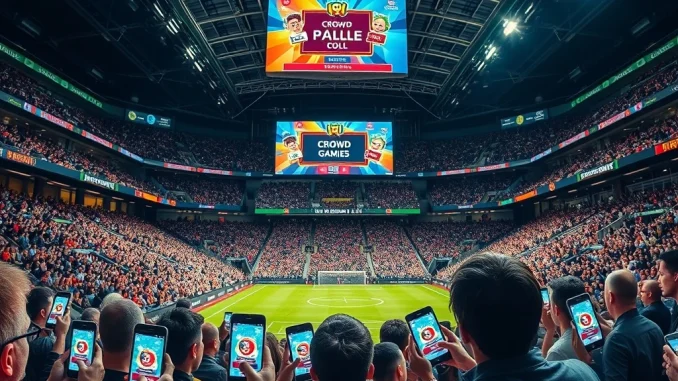
The core objective of the Weaver Labs and Piing alliance is to enable “crowd gaming” on a previously impractical scale. Unlike simple fan vote applications, real-time crowd gaming involves complex, synchronous interactions where the entire stadium audience participates in games, polls, predictions, and quizzes with instant feedback displayed on the venue’s giant screens. The technical challenge has always been delivering a reliable, low-latency connection to thousands of devices in a dense, high-interference environment. Weaver Labs brings its expertise in dynamic network sharing and neutral host solutions to build the foundational connectivity layer. Piing provides the proven software platform that translates that connectivity into engaging user experiences. This model moves beyond basic Wi-Fi to a tailored, high-capacity network designed specifically for mass, simultaneous data exchange.
The Technical Architecture Behind the Scenes
Enabling seamless interaction for a stadium crowd requires a sophisticated technical approach. The system likely integrates several key components. First, a dense mesh of small cell antennas and access points, strategically placed throughout the stadium bowl and concourses, ensures blanket coverage. Weaver Labs’s technology facilitates the efficient sharing of this network infrastructure among different service providers and applications. Second, edge computing resources process the gaming data locally within the stadium, minimizing latency—the delay between a fan’s action and the screen’s response—which is critical for a real-time feel. Finally, Piing’s platform manages the user interface, game logic, and content delivery, syncing perfectly with the live event broadcast and in-stadium entertainment. This architecture must be resilient, handling peak data loads when a goal is scored or a halftime game begins.
Historical Context and Industry Evolution
The drive for enhanced in-stadium experiences is not new. For over a decade, clubs and venues have sought to combat the “second screen” phenomenon, where fans watch broadcasts on their phones instead of the live action. Initial solutions focused on providing free, basic Wi-Fi, but these networks often buckled under demand. The next phase introduced simple app-based features like replays and concession ordering. The partnership between Weaver Labs and Piing signals a move into a third phase: using dedicated, high-performance connectivity as a platform for truly collective, gamified experiences that can only happen live. This evolution mirrors broader trends in telecommunications, where network slicing and neutral host models allow for custom-built solutions for specific enterprise needs, from factories to football stadiums.
Implications for Sports Business and Fan Culture
The successful deployment of wide-scale crowd gaming carries significant implications. For clubs like MK Dons, it offers a powerful new tool for fan engagement and revenue generation. Interactive sponsorships, where brands integrate into games and quizzes, present novel advertising avenues. The data collected from fan participation can also provide deep insights into audience preferences. For fans, the experience shifts from passive observation to active participation, potentially deepening emotional investment and creating memorable shared moments. It turns the stadium crowd into a single, interactive entity. However, success depends on the technology being invisible and flawless; any lag or failure would break immersion and frustrate users. The MK Dons pilot will serve as a critical test case for the sports industry.
Broader Applications Beyond the Stadium Bowl
While the initial focus is Stadium MK, the underlying technology has a wider potential application map. The same principles of robust, real-time connectivity for mass participation can be applied to other large venues and event types.
- Music Festivals and Concerts: Interactive light shows synchronized to audience votes, real-time song selection, or collective art projects.
- Convention Centers and Conferences: Large-scale polling, Q&A sessions with thousands of attendees, and interactive networking tools.
- City-Wide Events: Orchestrating participation in public celebrations, marathons, or cultural festivals across multiple linked locations.
The partnership thus positions the MK Dons stadium not just as a sports venue, but as a living lab for next-generation public connectivity solutions.
Conclusion
The collaboration between Weaver Labs and Piing at MK Dons Stadium represents a tangible move towards the future of live events. By solving the complex challenge of real-time crowd gaming through advanced digital connectivity, they are pioneering a model that prioritizes collective, in-venue engagement. This initiative has the potential to redefine the stadium experience, offering fans a more active role while providing clubs with new commercial and analytical tools. The success of this deployment will be closely watched, as it could set a new standard for how technology bridges the physical and digital worlds in shared public spaces. The era of the interactive crowd is beginning.
FAQs
Q1: What is real-time crowd gaming?
Real-time crowd gaming refers to interactive experiences, like quizzes, polls, or prediction games, where thousands of people in a venue participate simultaneously using their smartphones. Their collective inputs instantly influence content on large screens, creating a shared, live experience.
Q2: What does Weaver Labs contribute to this partnership?
Weaver Labs provides the advanced digital connectivity infrastructure. Their expertise lies in creating and managing neutral host, high-capacity networks that can reliably handle the massive, synchronous data traffic required for thousands of users to interact without lag.
Q3: What is Piing’s role in the MK Dons stadium project?
Piing supplies the interactive software platform. They design and operate the crowd gaming applications, user interfaces, and content that runs on top of the connectivity layer, ensuring the experiences are engaging, intuitive, and synchronized with the live event.
Q4: Why is MK Dons’ Stadium MK a suitable location for this trial?
Stadium MK is a modern, technologically forward-thinking venue. Piloting this system in a real-world, high-demand environment like a football match provides the perfect stress test for the technology and offers valuable insights into fan behavior and network performance under pressure.
Q5: Could this technology be used for purposes other than games at sports events?
Absolutely. The core capability—enabling reliable, instant communication with a vast, co-located group—has many applications. These include interactive voting at conferences, synchronized participation in large concerts, enhanced safety communications, and wayfinding in complex public venues.
Related News
- Stablecoin Revenue 2025: How Issuers Earned a Staggering $5 Billion
- Bitcoin Conference Strategy: MicroStrategy's Bold Corporate Adoption Summit Set for Las Vegas 2026
- Sustainable Growth in Emerging Cryptocurrencies: The 5 Essential Indicators for 2025
Related: Spartans Winter Olympics Crypto Betting Dominates with 33% CashRake as NY Spins and Betfair Struggle
Related: Presale Cryptos for Long-Term Value: Analyzing ZKP Crypto, SUBBD, BMIC, and Nexchain