Bitcoin Derivatives Market Reveals Startling Contraction as Open Interest Crashes to Multi-Month Lows
Global, May 2025: The Bitcoin derivatives market is experiencing a significant structural shift as open interest across major exchanges has plummeted to levels not seen in months. This contraction comes despite a recent price rebound, creating a complex market dynamic that reveals more about trader psychology than simple price movements. The data suggests a broad reduction in speculative positioning rather than new capital entering the market.
Bitcoin Derivatives Market Faces Sustained Contraction
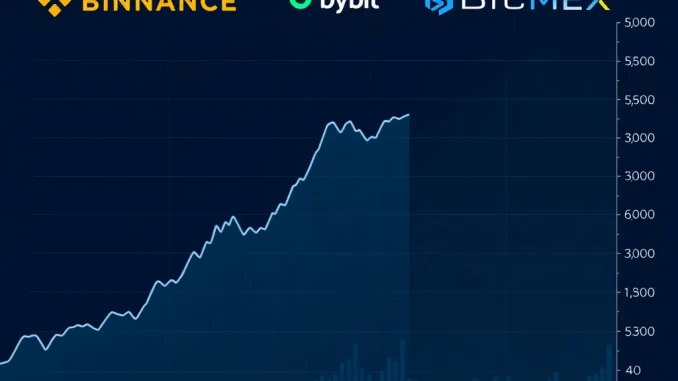
Open interest, representing the total number of outstanding derivative contracts that have not been settled, serves as a crucial indicator of market activity and trader commitment. Recent data shows a dramatic decline from the cycle peak of approximately 381,000 BTC to current multi-month lows. This 22% drop in open interest occurred alongside a 21% Bitcoin price increase, creating what analysts describe as a “divergence of significance.”
This pattern indicates that the recent price recovery was primarily driven by short positions being closed rather than new long positions being established. When traders who bet against Bitcoin buy back to close their positions, they create upward price pressure without necessarily reflecting renewed bullish conviction. The derivatives market contraction suggests a reduction in overall market leverage and speculative activity across the board.
Exchange-Specific Data Reveals Broad Risk-Off Behavior
The decline in open interest is not isolated to a single platform but represents a sector-wide phenomenon. Data from the three largest cryptocurrency derivatives exchanges shows consistent patterns:
- Binance: The world’s largest crypto exchange by volume has seen open interest decline steadily over the past six weeks, with particularly sharp reductions during periods of price volatility.
- Bybit: This derivatives-focused platform shows similar contraction patterns, with reductions across both perpetual swaps and quarterly futures contracts.
- BitMEX: Once the dominant force in crypto derivatives, BitMEX continues to show declining open interest, though its overall market share has diminished in recent years.
This broad-based reduction suggests that institutional and retail traders alike are adopting more conservative positions. The synchronized decline across platforms indicates a market-wide reassessment of risk rather than platform-specific issues or migrations.
Historical Context and Market Cycle Implications
To understand the current derivatives market contraction, we must examine historical patterns. During previous Bitcoin cycles, periods of declining open interest often coincided with market transitions. For instance, after the 2021 bull market peak, open interest declined steadily for months as leverage was systematically removed from the system.
Market analysts note several potential interpretations of the current data:
- Deleveraging Phase: The market may be undergoing a necessary deleveraging process, reducing systemic risk after periods of excessive speculation.
- Institutional Caution: Professional traders and institutions might be reducing exposure ahead of anticipated regulatory developments or macroeconomic events.
- Retail Withdrawal: Smaller traders may be exiting derivatives markets entirely after experiencing losses during recent volatility.
The relationship between price action and open interest provides valuable insights. When prices rise alongside declining open interest, it typically indicates short covering rather than new bullish positioning. Conversely, rising prices with increasing open interest suggest genuine new buying interest.
Understanding the Mechanics of Open Interest Changes
Open interest changes occur through specific mechanisms that reveal different market dynamics. When a new buyer and new seller create a contract, open interest increases. When an existing buyer sells to an existing seller, open interest decreases. The current market shows more of the latter activity, suggesting position unwinding rather than new position creation.
Several factors contribute to this dynamic:
- Margin Call Liquidations: As prices move against leveraged positions, exchanges automatically close positions, reducing open interest.
- Volatility-Induced Caution: High volatility increases margin requirements and risk, prompting traders to reduce position sizes.
- Regulatory Uncertainty: Evolving global regulations for cryptocurrency derivatives may be prompting more conservative positioning.
The funding rate mechanism in perpetual swaps also plays a role. When funding rates turn negative (shorts paying longs), it can incentivize short covering, which reduces open interest while potentially boosting prices.
Broader Market Implications and Future Trajectory
The derivatives market contraction has several important implications for the broader cryptocurrency ecosystem. First, reduced open interest typically means lower liquidity, which can lead to increased price volatility. With fewer outstanding contracts, large trades can have disproportionate price impacts.
Second, the decline suggests reduced speculative activity, which might indicate a market transitioning from a speculative phase to one driven by fundamental factors. This could potentially be healthy for long-term stability, though it may reduce short-term trading opportunities.
Third, exchange revenue models face pressure. Derivatives trading generates significant fee income for platforms through funding rates, trading fees, and liquidation fees. Sustained open interest declines could impact exchange profitability and potentially affect their service offerings and development roadmaps.
Market participants should monitor several key metrics going forward:
- The ratio of open interest to trading volume
- Changes in average position sizes
- Shifts between perpetual swaps and dated futures
- Funding rate patterns across exchanges
These indicators will help determine whether the current contraction represents a temporary adjustment or a more fundamental shift in market structure.
Conclusion
The Bitcoin derivatives market is undergoing a significant transformation as open interest reaches multi-month lows across all major exchanges. This contraction, occurring alongside price recovery, reveals a market dominated by position unwinding rather than new speculative interest. The broad-based nature of the decline across Binance, Bybit, and BitMEX indicates sector-wide risk reduction rather than platform-specific issues. While reduced leverage may contribute to long-term market health, it also presents challenges for liquidity and exchange operations. Market participants should approach this derivatives market environment with heightened awareness of changing dynamics and adjusted risk parameters.
FAQs
Q1: What is open interest in cryptocurrency derivatives?
Open interest represents the total number of outstanding derivative contracts that have not been settled. It’s a key metric for understanding market activity, liquidity, and trader positioning in futures and options markets.
Q2: Why does declining open interest matter if Bitcoin’s price is rising?
When prices rise alongside declining open interest, it typically indicates that the price movement is driven by short covering rather than new buying interest. This suggests weaker bullish conviction than if both price and open interest were increasing together.
Q3: How does open interest differ from trading volume?
Trading volume measures how many contracts are traded during a specific period, while open interest measures how many contracts remain open at a given time. Volume shows activity level, while open interest shows ongoing market exposure.
Q4: What are the main risks when open interest declines significantly?
Significant open interest declines can reduce market liquidity, increase price volatility, and potentially trigger cascading liquidations during sharp price movements. They may also indicate reduced market participation and confidence.
Q5: How do derivatives market changes affect spot Bitcoin trading?
Derivatives markets influence spot trading through several channels: price discovery, arbitrage opportunities, liquidity provision, and sentiment indicators. Large derivatives positions can create pressure that spills over into spot markets, especially during liquidations.
Related News
- Digital Asset Funds Witness Staggering $454M Weekly Net Outflows as Bitcoin Leads Decline
- JeetWin Site: Best Betting and Casino Games Site in Bangladesh
- Viral Altcoin Repeats Shiba Inu’s 2021 Growth Pattern—Will This Be the Next 100x Crypto?
Related: Address Poisoning Attack: How a Sophisticated Scam Stole $600K in USDT