Snowball MNS Integrates With Monad: The Essential Guide to Human-Readable Blockchain Identity
Global, April 2025: In a significant move for blockchain usability, Snowball Labs has launched its Modular Naming Service (MNS) on the Monad blockchain. This integration aims to bridge a critical gap in the ecosystem by replacing complex cryptographic addresses with simple, human-readable names. The development marks a pivotal step in making high-performance blockchain systems genuinely accessible to a broader, non-technical audience, addressing a long-standing barrier to mainstream adoption.
Snowball MNS and Monad: A Technical Breakdown
The core innovation lies in the synergy between Snowball’s Modular Naming Service and Monad’s underlying architecture. Monad is a high-performance, parallelized Ethereum Virtual Machine (EVM)-compatible Layer 1 blockchain. It is engineered for exceptional speed and scalability, capable of processing over 10,000 transactions per second. However, like all blockchains, it relies on long, alphanumeric addresses (e.g., 0x742d35Cc6634C0532925a3b844Bc9e…). These addresses are prone to errors during manual entry and offer no intuitive connection to the user or entity they represent.
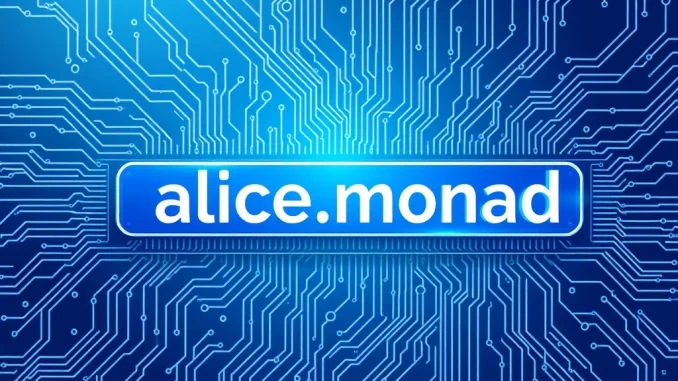
Snowball MNS functions as a decentralized naming protocol built directly on Monad. It allows users to register and manage readable domain names, such as ‘john.monad’ or ‘acme.monad’. These names then resolve to the underlying blockchain addresses, wallets, smart contracts, or even decentralized websites. The service is ‘modular’ by design, meaning its components can be adapted and integrated across different blockchain environments, though its deployment on Monad is a primary focus. This integration directly tackles the user experience (UX) chasm that has persisted since blockchain technology’s inception.
The Critical Problem of Blockchain Inaccessibility
For years, the industry has grappled with a fundamental paradox: building incredibly powerful decentralized systems that remain intimidating and error-prone for the average person. The complexity of wallet addresses is not a minor inconvenience; it is a primary vector for user error and financial loss. A single mistyped character can send funds into an irretrievable void. This technical friction has stifled adoption in payments, decentralized finance (DeFi), non-fungible tokens (NFTs), and decentralized autonomous organizations (DAOs).
Previous solutions, like the Ethereum Name Service (ENS) on Ethereum, demonstrated the demand for human-readable names but often operated on networks with higher fees and lower throughput. By deploying MNS on Monad, Snowball Labs leverages a chain built for scale from the ground up. This combination suggests a naming service that is not only user-friendly but also fast and cost-effective to use, removing the economic barrier that can make similar services prohibitive for frequent interactions.
- User Error Reduction: Sending crypto to ‘alice.monad’ is inherently safer than copying a 42-character hex string.
- Brand Identity: Projects can establish a verifiable, memorable presence (e.g., ‘officialdao.monad’).
- Simplified Onboarding: New users can interact with readable names instead of cryptographic hashes.
- Enhanced Discoverability: Services and individuals become easier to find and verify on-chain.
The Architecture of a Readable Web3
The technical implementation involves smart contracts on the Monad blockchain that manage the registry and resolution of names. When a user registers a name, they gain control of a non-fungible token (NFT) that represents ownership of that domain. Resolution—the process of translating ‘name.monad’ into its corresponding address—happens through these decentralized contracts. This system inherits Monad’s security and decentralization guarantees. The architecture is designed to be interoperable, anticipating a multi-chain future where a single identity could be portable across ecosystems, though initial functionality is native to Monad.
Implications for Developers and the Monad Ecosystem
For developers building on Monad, the availability of MNS is a powerful tool. It enables the creation of applications with significantly improved UX. Imagine a DeFi app where users can send assets to a friend’s name instead of an address, or an NFT marketplace where artist profiles are easily identifiable. This layer of abstraction is crucial for applications targeting mass markets. It allows developers to focus on core application logic while leveraging a standardized identity layer for user interaction.
The integration also strengthens the Monad ecosystem’s value proposition. By offering a robust naming service alongside its high throughput, Monad presents a more complete environment for both developers and end-users. It addresses two key pillars of adoption: performance and usability. This strategic move can attract projects that prioritize user experience, potentially accelerating network growth and the diversity of applications built on the platform.
Historical Context and Industry Trajectory
The quest for human-readable identifiers is not new to the internet. The Domain Name System (DNS), which translates website names like ‘google.com’ into IP addresses, solved an identical problem for the early web. Without DNS, the internet’s growth would have been severely hampered. Blockchain naming services are the Web3 equivalent of this foundational technology. The integration of MNS on a high-performance chain like Monad represents an evolution, applying this proven concept to a more scalable and efficient blockchain infrastructure.
This development aligns with a broader industry trend toward improving blockchain abstraction layers. From account abstraction (smart contract wallets) to improved key management, the focus is shifting from pure technological capability to holistic user experience. Snowball MNS on Monad is a concrete example of this trend in action, providing a critical piece of infrastructure that makes the technology’s benefits more accessible.
Conclusion: A Step Toward Mainstream Blockchain Utility
The integration of Snowball’s Modular Naming Service with the Monad blockchain is a substantive technical development with clear practical implications. It directly addresses one of the most persistent usability barriers in decentralized technology by replacing cryptographic addresses with human-readable identity. While the success of any new protocol depends on adoption, the foundational logic is sound: for blockchain to reach its potential, it must be usable by everyone, not just experts. This move by Snowball Labs and the Monad ecosystem represents a deliberate and necessary step in that direction, making the high-speed world of advanced blockchain systems legible and accessible to a much wider audience.
FAQs
Q1: What is Snowball MNS?
Snowball MNS (Modular Naming Service) is a decentralized protocol that allows users to register human-readable names (like ‘yourname.monad’) on a blockchain. These names point to wallet addresses, smart contracts, or other data, simplifying transactions and interactions.
Q2: How does MNS benefit users on the Monad blockchain?
It eliminates the need to copy and paste long, complex wallet addresses, drastically reducing the risk of errors when sending funds or interacting with apps. It also makes it easier to identify and verify entities on-chain, improving security and user experience.
Q3: Is my ‘name.monad’ an NFT?
Yes. Ownership of a Snowball MNS name is represented by a non-fungible token (NFT) on the Monad blockchain. This gives you full control to manage, transfer, or set resolution records for your name.
Q4: How is this different from ENS on Ethereum?
While the core concept is similar, Snowball MNS is built with a modular architecture and is deployed natively on the Monad blockchain. Monad offers higher throughput and lower transaction costs than Ethereum’s mainnet, which could make registering and managing names faster and more affordable.
Q5: Can developers integrate MNS into their applications?
Absolutely. Developers building decentralized applications (dApps) on Monad can integrate MNS to allow users to interact using readable names instead of addresses. This can be used for payments, user profiles, DAO governance, and more, enhancing the app’s usability.
Related News
- DeepSnitch AI Price Prediction for 2026: Analyzing Market Dynamics Amid Pump.fun's Vyper Acquisition
- Vietnam Crypto Tax: The Critical 0.1% Transaction Levy Explained
- Stunning: Trump Nominates Kevin Warsh as Next Federal Reserve Chair, Signaling Hawkish Shift
Related: Altcoins Face Grim Reality: 99% May Never Reclaim Past Highs, Analyst Warns
Related: Essential Blockchain Security: Lunar Strategy and SolidProof Forge Critical Alliance for Web3 Growth