World Mobile’s Groundbreaking RWA Expansion: 3M+ Users and 100K AirNodes on Base Reshape Telecom
Global, April 2025: World Mobile, a pioneer in decentralized telecommunications, has achieved a significant inflection point in its mission to bridge the digital divide. The project now supports a user base exceeding three million consumers while its physical network infrastructure, known as AirNodes, has surpassed 100,000 active units globally. This dual milestone, anchored on Coinbase’s Base blockchain, represents a major step in scaling Real World Asset (RWA) infrastructure, effectively merging tangible telecom hardware with on-chain liquidity and governance.
World Mobile’s RWA Expansion Reaches Critical Mass
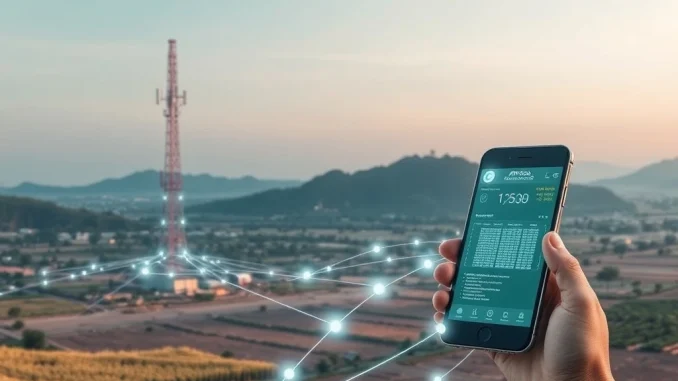
The announcement of surpassing three million users and 100,000 AirNodes is not merely a numerical achievement. It signals the maturation of a novel economic model where physical infrastructure becomes a tokenized, income-generating asset. Each AirNode—a hardware unit that provides local WiFi or cellular connectivity—operates as a node in World Mobile’s hybrid network. Owners can stake the network’s native token to operate these nodes, earning rewards for providing coverage. This model turns traditional telecom capex into a decentralized, community-owned utility. The deployment of over 100,000 units, particularly across regions in Africa and Southeast Asia, demonstrates tangible adoption and addresses a clear market need for affordable connectivity.
Base Network: The Foundational Layer for Scalable Telecom RWAs
The choice of Base as the primary settlement layer is a strategic cornerstone for this expansion. As an Ethereum Layer 2 solution incubated by Coinbase, Base offers low transaction fees and high throughput, which are essential for managing microtransactions and rewards for a global network of node operators and users. The blockchain securely records node ownership, staking status, and reward distribution, creating a transparent and auditable system for the RWA ecosystem. This infrastructure move away from cost-prohibitive mainnet operations allows World Mobile to scale its economic model to millions of participants without being crippled by gas fees, a practical necessity for a service targeting underserved populations.
The Evolution from Concept to Global Infrastructure
The journey to this milestone follows a clear trajectory. Initial pilots, such as those in Tanzania and Indonesia, proved the technical and economic viability of the AirNode model. Early adopters demonstrated that locally-owned nodes could provide reliable service and generate sustainable returns. The subsequent integration with blockchain for identity management, payments, and governance—through World Mobile’s “MyEarthID” and token ecosystem—created a full-stack decentralized alternative to traditional mobile network operators (MNOs). Reaching 100,000 nodes indicates a shift from pilot phases to widespread network densification, improving coverage quality and redundancy.
Bridging Decentralized Telecom and On-Chain Liquidity
This expansion fundamentally redefines the relationship between physical assets and digital finance. An AirNode is a classic real-world asset: it has a manufacturing cost, a physical location, depreciates over time, and generates cash flow based on usage. By representing its ownership and economic rights on-chain through tokenization, World Mobile unlocks liquidity for these assets. Node operators can potentially use tokenized representations as collateral in decentralized finance (DeFi) protocols on Base. Furthermore, the entire network’s value—driven by subscriber fees and data consumption—accrues to a decentralized set of stakeholders rather than a single corporate entity. This creates a direct alignment between network growth, usage, and tokenholder value.
The implications are substantial for several sectors:
- Telecommunications: Introduces a new, community-owned network model that competes with legacy MNOs on cost and coverage in underserved areas.
- Blockchain & RWAs: Provides a high-scale, real-world use case for asset tokenization beyond real estate and commodities, focusing on income-generating hardware.
- Global Development: Offers a financially sustainable framework for expanding internet access, a key driver for economic participation and education.
Analyzing the User Growth: Beyond the 3 Million Figure
Surpassing three million users indicates strong product-market fit in World Mobile’s target regions. User growth in decentralized networks often faces the classic “chicken-and-egg” problem: users need coverage, and node operators need users. Crossing this threshold suggests the network has achieved sufficient coverage density in key corridors to be a viable primary or secondary connectivity option for consumers. The business model, which often utilizes dynamic spectrum sharing and blockchain-based smart contracts for billing, allows for lower-cost data plans, directly addressing affordability barriers that limit internet adoption in emerging economies.
Challenges and the Road Ahead for Decentralized Networks
Despite the progress, scaling a decentralized physical network presents ongoing challenges. Regulatory compliance varies significantly across different countries regarding telecommunications and crypto assets. Network maintenance and hardware logistics at a global scale require robust partnerships and local expertise. Furthermore, the project must continuously demonstrate that its decentralized governance and economic model can be as reliable and efficient as centralized alternatives. The next phase will likely focus on integrating with more DeFi ecosystems on Base, enhancing network performance metrics, and expanding into new geographic markets, all while maintaining the security and decentralization of its underlying blockchain operations.
Conclusion
World Mobile’s report of over three million users and 100,000 AirNodes on the Base network marks a definitive moment for the convergence of telecommunications and blockchain. This RWA expansion validates a model where physical infrastructure can be owned, operated, and financed by a decentralized community, creating a scalable alternative to traditional telecoms. The achievement underscores the practical utility of blockchain technology beyond speculative finance, directly addressing global inequities in internet access. As World Mobile continues to scale its hybrid network, it sets a compelling precedent for how real-world assets and decentralized protocols can collaboratively build essential, inclusive infrastructure for the next billion internet users.
FAQs
Q1: What is an AirNode in the World Mobile network?
An AirNode is a physical hardware unit, often a solar-powered station, that provides local wireless (WiFi or cellular) internet connectivity. It is owned and operated by individuals or businesses who stake tokens to join the network and earn rewards for providing coverage.
Q2: Why is the Base blockchain important for World Mobile’s expansion?
Base provides a scalable, low-cost Ethereum Layer 2 environment. This is crucial for handling the millions of micro-transactions for node rewards and user payments efficiently, making the economic model of a global decentralized network financially viable.
Q3: How does this relate to Real World Assets (RWAs)?
Each AirNode is a real-world, income-generating asset. World Mobile tokenizes the ownership and economic rights of these nodes on the blockchain, turning them into tradable or collateralizable RWAs that bridge the physical and digital economies.
Q4: Who are the typical users of World Mobile’s network?
The primary users are in emerging markets and regions with poor or expensive existing internet coverage. This includes rural communities, small businesses, and individuals in areas underserved by traditional mobile network operators.
Q5: What are the main challenges for a decentralized telecom network?
Key challenges include navigating diverse international telecom regulations, managing physical hardware deployment and maintenance at scale, ensuring network security and reliability comparable to centralized providers, and achieving continued user growth to sustain the node operator economy.
Related News
- AI Startups: Unlock Essential Strategies with OpenAI’s Hao Sang at Bitcoin World Sessions AI
- Stunning Crypto Rebound Ignited as Trump Tariffs Ease with U.S.-India Trade Deal
- XRP Price Analysis: Glassnode's Ominous Pattern Echoes 2022's 68% Market Crash
Related: Bitcoin Price Consolidation Masks Critical Surge in Options Open Interest and Volatility
Related: Altcoins Face Grim Reality: 99% May Never Reclaim Past Highs, Analyst Warns
Related: Essential Blockchain Security: Lunar Strategy and SolidProof Forge Critical Alliance for Web3 Growth