Tether’s Scudo Revolutionizes Digital Gold with Practical Fractional Transactions
Global, May 2025: Tether Operations Limited, the issuer of the world’s largest stablecoin, has launched a significant innovation in the digital assets space. The company introduced a new fractional unit called ‘Scudo’ for its XAU₮ token, a digital representation of physical gold. This development fundamentally changes the granularity of on-chain gold transactions, enabling transfers as small as one-thousandth of a troy ounce. By making gold divisible to a previously impractical degree, Tether’s Scudo directly addresses a core barrier to using gold as a medium for everyday exchange.
Tether’s Scudo Unit Enables Micro-Gold Transactions
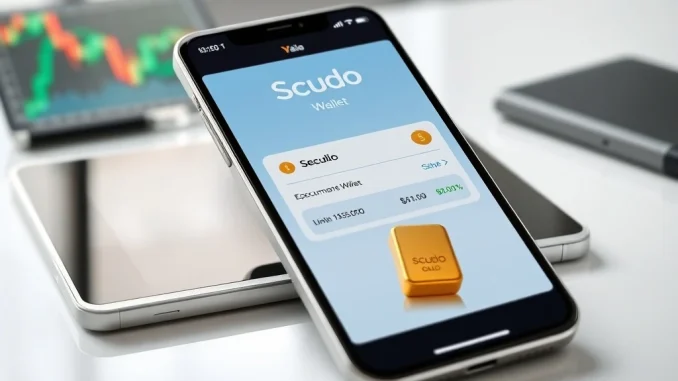
The core function of the Scudo unit is to subdivide Tether Gold (XAU₮). According to the official announcement from Tether’s verified social media account, one Scudo is precisely defined as 1/1000 of one XAU₮ token. Since each XAU₮ token is backed by and represents one fine troy ounce of physical gold stored in a Swiss vault, one Scudo effectively represents 0.001 troy ounces of gold. At current market prices, this translates to a value of approximately two to three U.S. dollars, a figure that fluctuates with the gold spot price. This level of divisibility is a technical and conceptual leap. Historically, transacting physical gold in such small amounts was logistically impossible and economically unfeasible due to storage, verification, and security costs. The blockchain-based XAU₮ token, now with its Scudo subunit, removes these physical constraints, digitizing the value of gold into spendable increments.
The Technical Mechanics Behind XAU₮ and Scudo
Understanding Scudo requires a brief examination of the XAU₮ ecosystem. XAU₮ is an ERC-20 token operating primarily on the Ethereum blockchain, with versions on other networks like Tron. It is not a stablecoin pegged to a fiat currency but a commodity-backed token. Each token in circulation is matched by a corresponding physical gold bar held by a custodian in Switzerland, with ownership details and serial numbers publicly auditable. The introduction of the Scudo does not create new tokens or change the underlying backing. Instead, it establishes a standardized sub-denomination within the existing smart contract and wallet interfaces. Wallets and exchanges that support XAU₮ can now display balances and process transactions denominated in Scudos, providing users with a clearer view of smaller, more practical amounts. This technical implementation mirrors how satoshis function for Bitcoin, providing a user-friendly layer atop the base protocol.
Bridging Centuries of Gold Storage with Modern Digital Utility
The evolution from gold bullion to digital tokens represents a profound shift in asset liquidity. For millennia, gold’s role as a store of value was hampered by its physicality. Secure storage, expensive assay verification, and challenges in dividing large bars limited its use in daily commerce. The 20th century saw the advent of gold certificates and later, gold exchange-traded funds (ETFs), which provided indirect exposure. Tether Gold and now the Scudo unit represent the next logical step: direct, on-chain ownership of a specific claim to physical gold, combined with the frictionless transferability of a cryptocurrency. This merger of traditional asset security with blockchain efficiency creates a novel hybrid instrument. It allows users to hold a timeless store of value while simultaneously possessing the utility to transfer portions of it globally, instantly, and at low cost, a capability that was purely theoretical just a decade ago.
Potential Use Cases and Market Implications
The practical applications for micro-denominated digital gold are extensive and span multiple sectors. Analysts point to several immediate and future use cases enabled by the Scudo unit’s granularity.
- Remittances and Cross-Border Payments: Individuals in regions with high inflation or unstable currencies could send value abroad using Scudos, leveraging gold’s price stability compared to volatile local fiat.
- Micro-Savings and Dollar-Cost Averaging: Users can regularly purchase small amounts of gold (e.g., $5 or $10 worth) without high minimums, facilitating disciplined long-term savings in a hard asset.
- Merchant Payments: While still nascent, online merchants accepting crypto could theoretically accept gold-denominated payments for small digital goods or services, using Scudos as the unit of account.
- DeFi and Lending Collateral: In decentralized finance protocols, gold-backed assets can be used as collateral. Fractional units like Scudos allow for more precise calculation of loan-to-value ratios and enable smaller participants to engage.
The broader implication is the potential expansion of Tether Gold’s user base from primarily institutional and high-net-worth individuals to a broader retail audience. By lowering the psychological and financial barrier to entry, Tether is positioning XAU₮ not just as a digital vault, but as a spendable, usable form of digital gold.
Regulatory Landscape and Competitive Context
Tether’s move occurs within a complex and evolving regulatory environment for digital assets. Commodity-backed tokens like XAU₮ often fall under different regulatory scrutiny than algorithmic or fiat-backed stablecoins. Regulators in jurisdictions like the United States and the European Union are increasingly focused on the precise nature of reserves, redemption rights, and consumer protection for all asset-backed tokens. Tether’s established practice of publishing quarterly assurance reports for its gold reserves provides a framework for transparency that may align with future regulatory expectations. Furthermore, the Scudo launch represents a competitive differentiation. While other projects offer tokenized gold or precious metals, Tether’s strategy leverages its massive existing distribution network, brand recognition in the crypto space, and deep liquidity. Making its product more usable for small transactions could be a key factor in capturing market share in the growing tokenized commodities sector.
Conclusion
Tether’s introduction of the Scudo unit for its XAU₮ token is a pivotal development in the maturation of digital gold. It moves the asset class beyond pure investment and storage into the realm of potential utility and everyday transaction. By solving the divisibility problem that has long plagued physical gold, Tether’s Scudo makes the timeless value of gold compatible with the modern demand for digital, granular, and borderless value transfer. The success of this initiative will depend on widespread integration by wallets and exchanges, user adoption, and navigating the regulatory path ahead. Nevertheless, it stands as a clear signal that the convergence of traditional finance and blockchain technology is advancing into increasingly sophisticated and practical applications.
FAQs
Q1: What exactly is a Tether Scudo?
A Tether Scudo is a new fractional unit for the Tether Gold (XAU₮) token. One Scudo equals 1/1000 of one XAU₮ token, which itself represents one troy ounce of physical gold. It allows users to transact in very small amounts of digital gold.
Q2: How is the value of a Scudo determined?
The value of a Scudo is directly derived from the live market price of gold. Since one Scudo is 0.001 troy ounces of gold, its U.S. dollar value is calculated as (Gold Price per Ounce) x 0.001. It fluctuates with the gold spot price.
Q3: Is my XAU₮ still backed by real gold after this change?
Yes. The introduction of the Scudo unit is purely a denominational change for display and transaction purposes. The underlying backing of each XAU₮ token by one physical troy ounce of gold in a Swiss vault remains unchanged and continues to be subject to regular assurance audits.
Q4: Can I spend Scudos like regular money?
While technically possible to transfer Scudos to any Ethereum wallet address, spending them like cash requires merchants or individuals to accept XAU₮ as payment. The Scudo unit makes such transactions more practical for small purchases, but widespread merchant adoption is still in early stages.
Q5: What’s the difference between Tether Gold (XAU₮) and a gold ETF?
A gold ETF is a traditional security that tracks the price of gold, traded on stock exchanges during market hours. XAU₮ is a blockchain token representing direct ownership of a claim to specific gold bars, allowing for 24/7 peer-to-peer transfers globally without a traditional brokerage. The Scudo unit further differentiates it by enabling fractional ownership at a much finer scale than typical ETF shares.
Related News
- Bybit Launches Thrilling GUN/USDT Perpetual Contract: Unleash 25x Leverage!
- Crypto Losses from Hacks and Exploits Hit a Staggering $400M in January
- Strategic Bitcoin Reserve: Kansas Senator's Bold Proposal to Transform State Treasury Management
Related: Snowball MNS Integrates With Monad: The Essential Guide to Human-Readable Blockchain Identity
Related: Yei Finance (CLO) Price Surge: Decoding the Ascending Triangle and Accumulation Signals