Ethereum Price Prediction: Key Factors as It Eyes $2,100 Amid Altcoin Shifts with AVAX and APEMARS
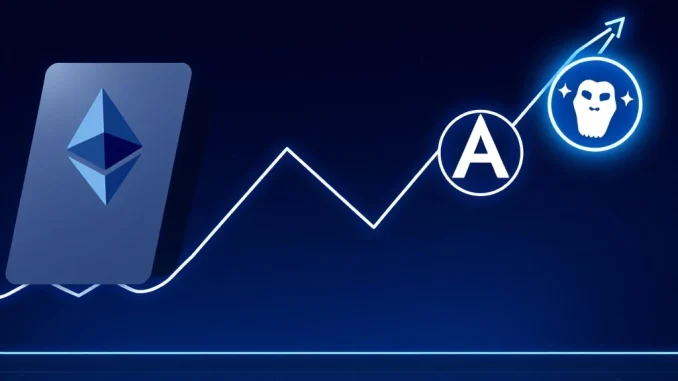
Global, May 2025: The cryptocurrency market enters a new phase of evaluation as Ethereum (ETH) shows signs of consolidation, with analysts closely watching its potential to reclaim the $2,100 threshold. This movement occurs within a broader altcoin ecosystem experiencing notable shifts, including sustained momentum for Avalanche (AVAX) and the entry of new projects like APEMARS, which recently concluded a presale phase. Understanding these dynamics requires a look at technical indicators, network fundamentals, and the evolving landscape for alternative digital assets.
Ethereum Price Prediction: Analyzing the Path to $2,100
Ethereum’s price action remains a primary focus for traders and long-term holders alike. The journey back to the $2,100 level, a significant psychological and technical resistance point, is influenced by several interconnected factors. Firstly, on-chain metrics such as network activity, gas fee trends, and the concentration of ETH on exchanges provide fundamental context. A decrease in exchange reserves often suggests accumulation, potentially reducing sell-side pressure.
Secondly, broader macroeconomic conditions continue to play a crucial role. Institutional interest, often measured through products like exchange-traded funds (ETFs) and corporate treasury allocations, can drive significant capital inflows. The technical chart analysis presents key levels; sustained trading above the 50-day and 200-day moving averages is typically viewed as a bullish signal, while failure to hold support could lead to further consolidation. It is critical to distinguish between short-term volatility, driven by trader sentiment, and long-term value accrual, driven by Ethereum’s utility as a settlement layer for decentralized applications and finance.
The Resurgent Altcoin Market: Beyond Ethereum Dominance
While Ethereum captures significant attention, the altcoin market demonstrates its own rhythms and opportunities. Alternative Layer 1 blockchains and niche application tokens often experience rallies during periods of renewed market optimism. This environment fosters both the growth of established projects and the launch of new ventures. Investors typically diversify portfolios based on technological differentiation, community strength, and clear use cases, moving beyond mere speculation to assess fundamental value propositions.
The current cycle shows several trends:
- Layer 1 Competition: Networks like Solana, Cardano, and Avalanche compete on transaction speed, cost, and developer appeal.
- DeFi and NFT Evolution: New financial primitives and digital asset formats emerge on various chains.
- Niche Communities: Projects often cultivate dedicated followings around specific themes or utilities, which can drive initial adoption.
This diversification indicates a maturing market where multiple platforms can coexist and thrive based on their unique advantages.
Avalanche (AVAX) Gains Momentum: A Case Study in Ecosystem Growth
Avalanche’s recent performance offers a concrete example of altcoin momentum. The AVAX token has seen increased valuation attention, which analysts often attribute to several verifiable developments. The Avalanche network has actively onboarded institutional partners through its “Avalanche Vista” initiative, focusing on real-world asset tokenization. Furthermore, consistent growth in its subnet architecture—customizable blockchains that run within the Avalanche ecosystem—has expanded its total value locked (TVL) and developer activity.
This momentum is not merely speculative; it is underpinned by measurable increases in network usage and strategic partnerships. For instance, collaborations with traditional finance entities to explore blockchain-based solutions provide a tangible use case that extends beyond cryptocurrency-native applications. The rise of AVAX highlights a market that rewards technological infrastructure and real-world adoption, setting a benchmark for other Layer 1 contenders.
The APEMARS Presale Context: Understanding New Market Entrants
Concurrent with these movements, the market observes the launch of new projects. APEMARS, identified by the ticker $APRZ, recently completed a presale event. In the cryptocurrency industry, a presale is an early funding round where tokens are offered to selected investors before a public launch. The reported raise of $190,000 falls within the range of many early-stage crypto projects seeking to bootstrap development and community growth.
New projects like APEMARS typically enter the market with stated features, which may include staking rewards mechanisms designed to incentivize holders to lock their tokens, potentially reducing circulating supply. It is standard analytical practice to examine such projects based on their whitepaper clarity, the experience of the development team, the audit status of their smart contracts, and the problem they aim to solve within the digital economy. Their long-term viability, like all assets in this space, depends on delivering utility, maintaining security, and fostering sustainable community engagement rather than short-term promotional activity.
Comparative Landscape: Investment Considerations in a Volatile Arena
For market participants, navigating between established assets like Ethereum, growing Layer 1s like Avalanche, and new entrants requires a disciplined framework. The following table outlines key differentiating factors investors often assess:
| Factor | Ethereum (ETH) | Avalanche (AVAX) | New Projects (e.g., APEMARS) |
|---|---|---|---|
| Primary Value Driver | Network effect, dominant DeFi/NFT platform | High throughput, institutional subnet adoption | Niche utility, community growth, novel features |
| Risk Profile | Lower (relative market maturity) | Medium (established but still scaling) | Higher (unproven track record) |
| Investor Timeframe | Long-term infrastructure hold | Medium-to-long-term ecosystem bet | Highly speculative, early-stage |
| Key Metric to Watch | Network upgrade success, Layer 2 adoption | Subnet growth, TVL, partner announcements | Roadmap execution, contract security, user adoption |
This comparative view underscores that asset selection is not a one-size-fits-all process but a function of individual risk tolerance, investment goals, and belief in specific technological theses.
Conclusion: A Market of Layers and Opportunities
The question of Ethereum’s price prediction and its ability to reach $2,100 is one piece of a larger, interconnected puzzle. Its trajectory will be shaped by its own network developments and its role as a benchmark for the wider smart contract platform sector. Simultaneously, the strength shown by Avalanche (AVAX) confirms that robust technology with clear use cases can capture significant market attention. The emergence of projects like APEMARS reflects the continuous innovation and high-risk, high-reward experimentation that defines the altcoin landscape. For observers and participants, the critical takeaway is the importance of foundational analysis—separating substantive development from market noise—in navigating the complex and evolving world of digital assets.
FAQs
Q1: What are the main technical factors analysts use for an Ethereum price prediction?
Analysts typically examine support and resistance levels on price charts, moving average convergences, trading volume trends, and on-chain data like exchange netflows and holder distribution to gauge market sentiment and potential price directions.
Q2: What does “presale” mean in cryptocurrency, like with APEMARS?
A presale is an early funding event where a project sells a portion of its tokens to initial backers, often at a discounted rate, to raise capital for development, marketing, and liquidity provision before the tokens are listed on public exchanges.
Q3: Why is Avalanche (AVAX) gaining momentum recently?
Avalanche is gaining attention due to growth in its subnet ecosystem, which hosts custom blockchains for enterprises and institutions, along with strategic partnerships focused on tokenizing real-world assets, leading to increased network utility and developer activity.
Q4: How do staking rewards work for new altcoins?
Staking rewards incentivize users to lock or “stake” their tokens in a project’s smart contract to help secure the network or participate in governance. In return, they earn additional tokens as a reward, a mechanism designed to encourage long-term holding.
Q5: What is the primary difference between investing in Ethereum versus a new altcoin?
The primary difference is risk profile. Ethereum is an established network with a vast ecosystem, representing a bet on the continued dominance of smart contract platforms. A new altcoin is a higher-risk bet on a specific, unproven technology or community achieving adoption and growth.
Related News
- Here's Why Bitcoin (BTC) May Hit Another ATH This Year: Analysts
- Tether Gold Loans: Antalpha and Tether Unveil Pioneering Gold-Backed Lending
- From Caution to Confidence: How South Africa Became a Crypto Hotspot
Related: DeepSnitch AI Analytics Attract Investor Attention as Broader Crypto Market Shows Mixed Signals
Related: Bitcoin Whale Alert: Massive $559M BTC Inflow to Binance Sparks Critical Volatility Concerns
Related: Crucial Crypto Market Framework Gains Momentum as Coinbase CEO Sees Path Forward