Presale Coins 2026: Analyzing ZKP Crypto, Bitcoin Hyper, Remittix, and BlazePay for Strategic Consideration
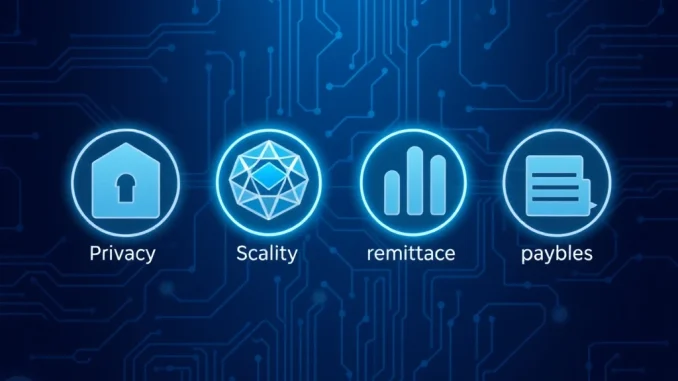
Global, December 2025: The cryptocurrency presale landscape continues to evolve, presenting projects that aim to address specific technological or market gaps. This analysis examines four distinct presale-stage projects—ZKP Crypto, Bitcoin Hyper, Remittix, and BlazePay—that have garnered attention for their underlying propositions as the market looks toward 2026. Understanding their stated goals, technological foundations, and the broader context in which they operate is crucial for any informed observer of the digital asset space.
Presale Coins 2026: A Framework for Evaluation
The term “presale coin” refers to a digital asset offered to early investors before a public launch, often to fund development. Evaluating such projects requires moving beyond hype and focusing on verifiable fundamentals. Key areas for analysis include the problem a project aims to solve, the novelty and feasibility of its proposed technical solution, the experience of its core team, its tokenomics model, and the roadmap clarity. The market in late 2025 shows a clear trend favoring projects with tangible utility over purely speculative assets. This shift in investor sentiment forms the critical backdrop for assessing any presale opportunity looking ahead to 2026.
Zero-Knowledge Proof (ZKP) Crypto: Advancing Privacy and Scalability
ZKP Crypto enters a presale with a focus on leveraging zero-knowledge proof technology. This cryptographic method allows one party to prove to another that a statement is true without revealing any information beyond the validity of the statement itself. In blockchain, ZKPs are primarily applied in two areas: enhancing transaction privacy and creating scalability solutions known as ZK-Rollups. The project’s stated goal is to build an accessible platform or suite of tools that democratizes the use of ZK technology for developers.
The historical context is important. Privacy has been a contentious issue in crypto, balancing individual rights with regulatory compliance. Scalability, meanwhile, remains a primary bottleneck for major networks like Ethereum. A project focusing on ZK technology is therefore operating at the intersection of two significant blockchain challenges. The long-term potential often cited by analysts hinges on the broader adoption of ZK-Rollups for layer-2 scaling and the growing demand for selective privacy in enterprise and DeFi applications. The project’s success would depend on its ability to deliver a developer-friendly, secure, and efficient implementation that gains traction within the builder community.
The Technical and Regulatory Landscape for Privacy Coins
Any project involving privacy-enhancing technology must navigate a complex regulatory environment. Global financial authorities, including the Financial Action Task Force (FATF), have issued guidelines concerning “Virtual Asset Service Providers” and their obligations, which impact privacy features. Consequently, a project like ZKP Crypto would need to demonstrate a robust compliance-by-design approach, potentially focusing on scalability applications first or implementing privacy features that allow for optional auditability. This real-world constraint is a critical factor in assessing its adoption timeline and potential market reach by 2026.
Bitcoin Hyper: A New Approach to the Bitcoin Ecosystem
Bitcoin Hyper presents itself as a project built within or alongside the Bitcoin ecosystem. Given Bitcoin’s dominance as a store of value, numerous projects aim to expand its functionality into smart contracts, DeFi, and faster payments. Bitcoin Hyper appears to position itself within this “Bitcoin L2” or sidechain trend. The project likely proposes a mechanism to enable more complex transactions or applications while leveraging Bitcoin’s security, possibly through a federated sidechain, a drivechain concept, or utilizing other protocols like the Lightning Network.
The implications of such a project are significant. Successfully adding programmability to Bitcoin could unlock trillions of dollars in dormant capital, but it also faces immense technical and communal challenges. The Bitcoin community is famously conservative regarding changes to its base layer. Therefore, a sidechain or L2 solution that does not require a Bitcoin soft fork has a more feasible path. The project’s potential will be judged on its security model, decentralization, ease of use, and its ability to attract developers to build applications that do not exist efficiently on Bitcoin today. Its 2026 outlook is tied directly to the growth of the broader Bitcoin utility ecosystem.
Remittix: Targeting the Global Remittance Market
Remittix explicitly targets the global remittance industry, a market valued at over $800 billion annually by the World Bank. Traditional cross-border money transfers are often slow and expensive, with average fees hovering around 6.3%. Blockchain technology offers a compelling alternative through faster settlement and lower costs. Remittix’s proposition likely involves creating a dedicated blockchain or payment rail optimized for high-volume, low-value cross-border transactions, potentially using a stablecoin or a native token to facilitate transfers.
The real-world context here is crucial. Success in remittances requires more than just technology; it necessitates partnerships with licensed financial institutions, liquidity providers, and on-ramp/off-ramp services in both sending and receiving countries. Regulatory compliance across multiple jurisdictions is a monumental task. Therefore, the long-term potential of Remittix depends less on pure technological innovation and more on business development, regulatory strategy, and achieving the network effects necessary to become a viable corridor for migrant workers and their families. Its progress by 2026 can be measured by live corridors, transaction volume, and key partnerships announced.
BlazePay: Focusing on Everyday Cryptocurrency Payments
BlazePay enters the presale arena with a focus on cryptocurrency payments for everyday goods and services. While crypto payments have been a long-stated goal of the industry, widespread merchant adoption has been slow due to price volatility, tax complexities, and technical integration hurdles. BlazePay likely proposes a solution that may involve instant conversion to fiat for the merchant, a user-friendly point-of-sale interface, or integration with existing payment processors.
The project operates in a competitive space with established players like BitPay and new solutions from traditional finance. Its differentiation could come from lower fees, support for a wider array of cryptocurrencies, superior user experience, or a novel loyalty/token reward system. The historical challenge has been achieving a two-sided market: convincing enough consumers to use crypto for payments and enough merchants to accept it. BlazePay’s potential will hinge on its ability to solve this chicken-and-egg problem, possibly by targeting a specific niche first (e.g., online gaming, digital services) before expanding. Its relevance in 2026 will be determined by its active merchant base and transaction throughput.
The Common Thread: Solving Real Problems
Despite their different focuses—privacy, Bitcoin utility, remittances, and payments—these four presale projects share a common theme: they attempt to address identifiable, real-world problems or inefficiencies. This is a marked evolution from earlier crypto cycles dominated by memes and pure speculation. This trend suggests a maturation in the types of projects seeking funding and the criteria early-stage investors are applying. However, identifying a problem is only the first step; execution, timing, and market conditions will determine which, if any, of these projects deliver on their potential by 2026.
Conclusion
Analyzing presale coins for 2026, such as ZKP Crypto, Bitcoin Hyper, Remittix, and BlazePay, requires a disciplined, fact-based approach centered on utility and execution. Each project operates in a distinct segment of the blockchain landscape—scalable privacy, Bitcoin expansion, global remittances, and consumer payments—facing unique technical and market challenges. Their long-term potential is not guaranteed but is linked to their ability to navigate development milestones, regulatory environments, and achieve real-world adoption. For market observers, these projects represent interesting case studies in the ongoing effort to translate blockchain technology into practical, widely-used solutions. As the industry moves forward, the emphasis continues to shift from speculative promise to demonstrable progress and tangible use cases.
FAQs
Q1: What is a cryptocurrency presale?
A cryptocurrency presale is an early funding round where a project offers its native tokens to select investors before a public sale or exchange listing. The capital raised is typically used to fund further development, marketing, and operations.
Q2: Why is zero-knowledge proof technology considered important?
Zero-knowledge proof (ZKP) technology is important because it can enhance privacy by validating transactions without revealing sensitive data and improve scalability through ZK-Rollups, which batch many transactions off-chain before submitting a single proof to the main blockchain.
Q3: What are the main challenges for blockchain-based remittance projects?
The primary challenges include building partnerships with regulated financial institutions in multiple countries, ensuring liquidity for local currency on-ramps and off-ramps, complying with diverse international anti-money laundering (AML) laws, and achieving a cost and speed advantage over established players like Wise or traditional banks.
Q4: How do projects aim to add functionality to Bitcoin?
Projects add functionality to Bitcoin primarily through layer-2 solutions like the Lightning Network for fast payments, or through sidechains and drivechains. These are separate blockchains that are pegged to Bitcoin, allowing for more complex smart contracts and applications while using Bitcoin as the base settlement layer.
Q5: What factors typically determine the success of a payment-focused cryptocurrency like BlazePay?
Success factors include forming partnerships with merchants and payment processors, creating a seamless user experience that rivals credit cards, solving the volatility problem for merchants (e.g., via instant fiat conversion), and navigating the complex accounting and tax reporting requirements for users in different jurisdictions.
Related News
- HODL Unites Dubai & Riyadh for a Landmark Blockchain Roadshow Across the Middle East
- Over 130M $GALA Bridged Daily as Node Staking Changes Go Live
- OKX Delisting: Urgent Action Needed for Six Margin Trading Pairs
Related: KuCoin Web3 Wallet and Aztec Network Launch Revolutionary $AZTEC Mario Challenge Airdrop
Related: Tokenization Breakthrough: TitanRWA Joins RubberVerseX to Digitize Global Rubber Supply Chains
Related: Bitcoin P2MR Upgrade: Quantum-Resistant Protocol Merged to Secure Network Future