Humanity Protocol Integrates Fireblocks: A Strategic Leap for Institutional Crypto Access
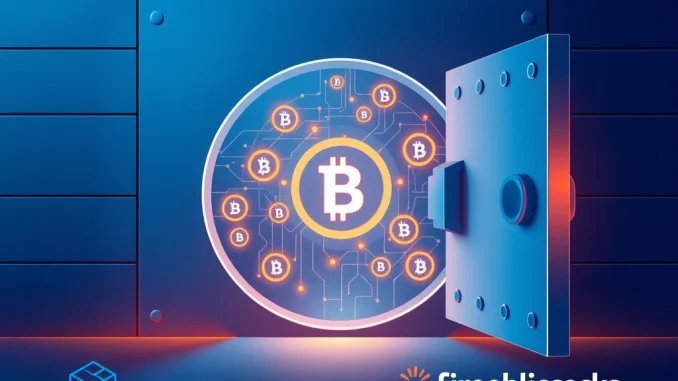
Global, May 2025: The blockchain ecosystem for digital identity and credentials, Humanity Protocol, has announced a significant technical integration with Fireblocks, the leading enterprise-grade platform for securing digital assets. This integration represents a pivotal development for institutional participation in the Humanity ecosystem, providing over 2,400 institutional clients of Fireblocks with direct, secure access to the $H token and other assets built on the protocol. The move signals a maturation phase for projects focused on decentralized identity, as they seek to bridge the gap between innovative Web3 technology and the rigorous demands of traditional finance.
Humanity Protocol and Fireblocks Integration: A Technical Breakdown
The core of this announcement is a direct technical bridge between the Humanity Protocol’s blockchain infrastructure and the Fireblocks Network. Fireblocks operates a multi-layer security architecture that includes MPC (Multi-Party Computation) technology, hardware isolation, and a proprietary transfer policy engine. By integrating, Humanity Protocol’s native $H token and any other standardized tokens or digital assets issued on its platform become natively accessible within the Fireblocks environment. This means institutional users—including hedge funds, asset managers, venture capital firms, and corporations—can now custody, trade, and manage these assets using the same secure workflows they employ for Bitcoin, Ethereum, and other major cryptocurrencies. The process eliminates the need for custom, insecure wallet setups, dramatically reducing operational risk and compliance overhead for institutions looking to gain exposure to the Humanity ecosystem.
The Institutional Gateway: Why Fireblocks Matters
Fireblocks has established itself as the de facto standard for institutional digital asset custody and transfer. Its client base spans the globe and includes some of the largest names in finance. For a protocol like Humanity, which aims to create a universal layer for verifiable credentials and identity, attracting institutional validators, developers, and capital is crucial for long-term network security and adoption. This integration is not merely a listing; it is a foundational upgrade to the protocol’s accessibility profile. Institutions can now:
- Securely Custody Assets: Store $H tokens in MPC-based wallets with insurance coverage, meeting stringent internal and regulatory security requirements.
- Execute Transactions Efficiently: Utilize Fireblocks’ streamlined settlement layer for fast, policy-controlled transfers between exchanges, counterparties, and internal accounts.
- Deploy in DeFi and Staking: Seamlessly interact with decentralized applications, staking pools, or governance mechanisms within the Humanity ecosystem directly from their Fireblocks vaults.
- Maintain Compliance: Leverage built-in transaction monitoring, audit trails, and policy controls that are essential for regulated entities.
This level of access was previously a significant barrier. The integration effectively demystifies and derisks the process for institutional actors.
The Evolution of Digital Identity Protocols and Market Readiness
The integration arrives at a critical juncture in the development of decentralized identity solutions. Following early conceptual projects, the industry is now entering a phase focused on utility, scalability, and real-world integration. Protocols that successfully onboard institutional partners gain not only capital but also credibility and development resources. Historically, similar integrations by layer-1 blockchains and major DeFi tokens have preceded periods of increased liquidity, developer activity, and mainstream recognition. For Humanity Protocol, partnering with a custody specialist like Fireblocks, rather than just a trading exchange, indicates a strategic focus on long-term holders and ecosystem builders who require robust security—a different signal than one aimed primarily at retail speculation.
Implications for the $H Token and Broader Ecosystem
The immediate implication is a substantial expansion of the potential investor base for the $H token. With over 2,400 institutional entities now technically enabled to hold the asset, the demand dynamics could shift. Furthermore, this infrastructure paves the way for more complex financial products. For example, institutional-grade staking services, derivatives, and structured products based on $H become more feasible when the underlying asset is held in a secure, widely-trusted custody environment. The integration also benefits projects building on top of Humanity Protocol. As they issue their own digital assets (representing credentials, access rights, or reputation scores), they can inherit the same institutional accessibility through the established Fireblocks pipeline, making the entire ecosystem more attractive to serious builders and investors.
| Aspect | Description | Impact |
|---|---|---|
| Security Model | MPC-based custody, hardware isolation, insured assets. | Meets institutional security and compliance standards, reducing barrier to entry. |
| Access Scope | $H token and future standardized assets on Humanity Protocol. | Provides a clear path for ecosystem growth and asset diversification. |
| User Base | Fireblocks’ 2,400+ institutional clients (banks, funds, corporations). | Dramatically expands potential liquidity and long-term holding base. |
| Functional Enablement | Custody, trading, transfers, DeFi interaction, staking. | Unlocks full suite of crypto-economic activities for professional players. |
| Industry Signal | Identity protocol prioritizing institutional infrastructure. | Signals maturity and a focus on sustainable, utility-driven growth. |
Conclusion
The integration of Humanity Protocol with the Fireblocks platform is a definitive step toward legitimizing decentralized identity infrastructure within the institutional financial landscape. By solving the critical custody and security challenge, the move unlocks a vast pool of sophisticated capital and participants for the Humanity ecosystem. This development is less about short-term price action and more about foundational growth, indicating that protocols facilitating real-world utilities like verifiable credentials are building the necessary rails for broad, professional adoption. The success of this Humanity Protocol integration will be measured by the quality and activity of the institutions it attracts, setting a new benchmark for how Web3 projects bridge into traditional finance.
FAQs
Q1: What does the Humanity Protocol and Fireblocks integration actually do?
A1: It technically connects the Humanity Protocol blockchain to the Fireblocks security and transfer network. This allows any institution using Fireblocks to securely store, send, receive, and use the $H token and other assets from the Humanity ecosystem within their existing, insured custody environment.
Q2: Why is integrating with a custody provider like Fireblocks important for a cryptocurrency project?
A2: Large financial institutions have strict security, compliance, and operational requirements. They typically cannot use consumer-grade software wallets. Integration with an institutional-grade custody provider like Fireblocks removes this major technical and regulatory barrier, making it feasible for them to hold and use the asset.
Q3: Does this mean the $H token is now listed on new exchanges?
A3: Not directly. This is a custody and infrastructure integration, not an exchange listing. However, by making it easier and safer for institutions to hold $H, it can increase demand and make the token more attractive for exchanges to list in the future. It also simplifies the process for institutions to move tokens between Fireblocks and their exchange accounts.
Q4: What are the benefits for the average user of Humanity Protocol?
A4: While directly aimed at institutions, the integration benefits all ecosystem participants. Increased institutional involvement can lead to greater network security (through more validators/stakers), more liquidity for the $H token, increased funding for ecosystem development, and greater overall credibility and adoption of the protocol’s digital identity tools.
Q5: What is the next likely step for Humanity Protocol after this integration?
A5: The logical progression would be to leverage this institutional foothold to attract more enterprise-level partners who wish to issue or utilize verifiable credentials on the protocol. This could include collaborations with financial institutions for KYC/AML credentials, universities for diplomas, or corporations for employment verification, all backed by institutional-grade asset management for the underlying token economy.