Tokenized Money Market Fund: Binance and Franklin Templeton’s Revolutionary Collateral Bridge
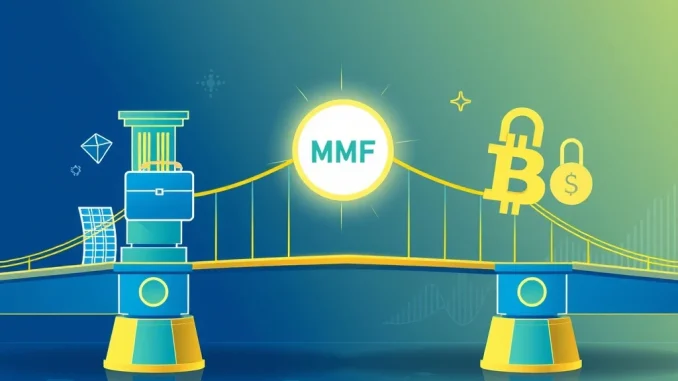
Global, May 2025: In a landmark move for financial integration, cryptocurrency exchange giant Binance and global investment manager Franklin Templeton have jointly launched a pioneering tokenized money market fund (MMF) collateral program. This initiative represents a significant step in linking traditional finance (TradFi) with digital asset markets, specifically designed to enhance capital efficiency for institutional participants. The program allows qualified institutions to use tokenized shares of a Franklin Templeton money market fund as collateral within Binance’s financial ecosystem, potentially unlocking billions in dormant capital and creating a new paradigm for institutional crypto engagement.
Tokenized Money Market Fund: The Core Innovation
The program’s foundation is the tokenization of a Franklin Templeton money market fund. Tokenization refers to the process of creating a digital representation of a real-world asset on a blockchain. In this case, shares of a regulated, yield-generating money market fund are minted as digital tokens. These tokens are not a new cryptocurrency but are digital securities that represent a direct claim on the underlying fund’s assets. This process involves several critical technological and regulatory steps. First, a legal framework establishes the digital token as a valid security. Next, a blockchain, likely a permissioned or highly compliant public chain, records ownership. Finally, smart contracts govern the issuance, transfer, and redemption of these tokens, ensuring automated compliance with regulatory rules like investor accreditation.
The choice of a money market fund is strategic. Money market funds are known for their stability, liquidity, and low volatility, as they invest in short-term, high-quality debt like government Treasury bills. By tokenizing this asset, the partners create a digital collateral instrument that carries the risk profile of TradFi but the technological utility of crypto. This directly addresses a major pain point in crypto finance: the volatility and perceived risk of native crypto assets used as collateral. Institutions can now pledge a stable, income-producing asset to access crypto markets.
Bridging TradFi and Crypto for Institutional Capital Efficiency
The primary stated goal of the program is to improve capital efficiency for institutional players. In traditional finance, capital posted as collateral often sits idle, earning little to no return. In crypto markets, while decentralized finance (DeFi) offers yield-generating collateral opportunities, they have been largely inaccessible or too risky for regulated institutions. This program creates a hybrid solution. An institution can allocate part of its treasury to the tokenized MMF, earn a yield from the fund’s underlying investments, and simultaneously use those tokenized shares as collateral on Binance. This collateral can then be used for various purposes.
- Secured Trading: Facilitating larger trades or securing borrowing positions without needing to sell underlying crypto holdings.
- Derivatives and Futures Margin: Posting collateral for sophisticated trading strategies on Binance’s derivatives platform.
- Institutional Lending: Participating as a lender in Binance’s institutional lending marketplace with TradFi-backed security.
This efficiency gain could lower the overall cost of participation for hedge funds, asset managers, and corporate treasuries, potentially attracting a new wave of institutional capital into the crypto ecosystem. The bridge works both ways, as it also introduces a familiar TradFi instrument into the crypto world, legitimizing the infrastructure for other asset managers to follow.
The Regulatory and Compliance Landscape
Launching such a program is impossible without navigating a complex web of global financial regulations. Franklin Templeton, as a registered investment advisor with decades of experience, brings crucial regulatory expertise. The tokenized MMF shares are likely offered under existing securities regulations, potentially leveraging frameworks for digital asset securities that have evolved in jurisdictions like the United States, Switzerland, or Singapore. Binance, which has significantly invested in its compliance and regulatory affairs divisions following past scrutiny, provides the licensed trading and custody infrastructure. The program is undoubtedly restricted to institutional and accredited investors who meet specific jurisdictional requirements, ensuring compliance with know-your-customer (KYC) and anti-money laundering (AML) laws. This careful, compliance-first approach is a clear indicator of the project’s target audience and its ambition to be a sustainable, long-term fixture rather than a speculative experiment.
Historical Context and Industry Implications
This collaboration is not the first attempt to merge TradFi and crypto, but its scale and participants make it a watershed moment. Previous efforts have included bank-issued stablecoins (like JPM Coin) and tokenized treasury products from firms like BlackRock. However, the direct integration of a major global asset manager’s product into the world’s largest crypto exchange’s collateral system is unprecedented. It follows a broader trend of “real-world asset” (RWA) tokenization, which analysts at firms like Boston Consulting Group predict could become a multi-trillion-dollar market by 2030.
The implications for the broader industry are profound. For other crypto exchanges, it sets a new standard for institutional offerings, likely triggering competitive products. For traditional asset managers, it demonstrates a viable, compliant path to engaging with digital asset ecosystems. For regulators, it provides a concrete case study of how existing frameworks can apply to hybrid models. Success could accelerate the tokenization of other assets, such as bonds, equities, and private funds, fundamentally changing how capital markets operate by increasing liquidity, enabling fractional ownership, and automating settlement.
Technical Architecture and Security Considerations
While specific technical details are proprietary, the architecture likely involves several layers. The tokenization probably occurs on a blockchain that supports smart contracts and digital securities standards, such as the Ethereum network with its ERC-3643 token standard (designed for compliant securities) or a private, permissioned ledger. A critical component is the custody solution. The tokenized shares, representing significant value, require institutional-grade custody, possibly involving a combination of Binance’s custody services and third-party qualified custodians. The smart contracts that manage the collateral locking, release, and potential liquidation in case of a margin call must be exhaustively audited for security and function. This entire stack must be resilient against cyber threats, operational failure, and market volatility to gain the trust of risk-averse institutional clients.
Conclusion
The launch of the tokenized money market fund collateral program by Binance and Franklin Templeton is a definitive step toward the maturation and integration of digital asset markets with the global financial system. By focusing on institutional capital efficiency, the partners have identified a clear, valuable use case for blockchain technology beyond speculation. The program’s success will depend on its adoption by institutions, its performance under market stress, and continued regulatory acceptance. Nevertheless, it stands as a powerful signal that the convergence of TradFi and crypto is accelerating, driven by pragmatic solutions that address real financial needs. The era of the tokenized money market fund as a cornerstone of hybrid finance may have just begun.
FAQs
Q1: What is a tokenized money market fund?
A tokenized money market fund is a traditional, regulated money market fund whose shares are represented as digital tokens on a blockchain. These tokens are digital securities that give the holder ownership rights to the underlying fund’s assets and yields.
Q2: How does this Binance and Franklin Templeton program work?
Franklin Templeton tokenizes shares of one of its money market funds. Qualified institutional clients can purchase these tokenized shares and then pledge them as collateral on the Binance exchange to secure trading, borrowing, or other financial activities, allowing their capital to earn yield while being used.
Q3: Who can participate in this collateral program?
The program is designed for institutional investors and accredited investors, such as hedge funds, family offices, and corporate treasuries, who meet specific regulatory and eligibility requirements set by Binance and Franklin Templeton.
Q4: What are the benefits of using a tokenized MMF as collateral?
The primary benefits are capital efficiency and risk profile. Institutions can earn a yield on their collateral (from the MMF) instead of it sitting idle, and they can use a stable, low-volatility asset familiar from TradFi to access crypto markets, reducing reliance on volatile crypto-native collateral.
Q5: Does this mean the tokenized shares are a cryptocurrency?
No, they are not a cryptocurrency like Bitcoin or Ethereum. They are digital securities, regulated financial instruments that happen to use blockchain technology for representation and transfer. Their value is directly tied to the net asset value of the underlying money market fund.
Q6: What risks are associated with this program?
Risks include smart contract or platform security vulnerabilities, regulatory changes in key jurisdictions, operational risks at either partner, and the fundamental risks of the underlying money market fund (though these are typically very low). Market risk from the activities the collateral secures (e.g., trading losses) also remains.
Related News
- Urgent: South Korea Stablecoin Policy Debate Kicks Off May 21
- Binance Margin Trading Expands with Strategic U/USDT and U/USDC Pair Listings
- Binance Delisting Shakeup: 20 Spot Trading Pairs Including AI/BTC Face Removal in Strategic Market Move
Related: Crypto Casino Revolution: Spartans' Instant Cashrake Challenges betPARX and Betrivers Promo Codes
Related: Gold Rally Nears Historical End Zone: What $5,600 Means for Investors