Groundbreaking: Malaysia Central Bank Launches Ringgit Stablecoin and Tokenized Deposit Pilots for 2026
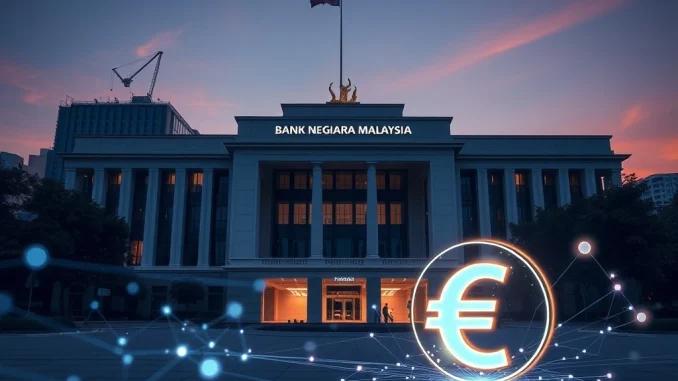
Kuala Lumpur, Malaysia – April 2025: In a decisive move that signals a major evolution in its financial infrastructure, Bank Negara Malaysia (BNM) has announced comprehensive pilot programs for a Ringgit-backed stablecoin and tokenized bank deposits. Scheduled to commence in 2026, these initiatives mark Malaysia’s most significant foray into leveraging blockchain technology for wholesale payments, positioning the nation at the forefront of central bank digital asset innovation in Southeast Asia.
Bank Negara Malaysia’s Strategic Digital Asset Roadmap
The central bank’s announcement outlines a clear, phased approach. The pilots will explore two distinct but complementary digital assets: a wholesale Ringgit stablecoin for interbank settlements and tokenized representations of commercial bank deposits. This dual-track strategy addresses different layers of the financial system. BNM’s decision follows years of research under its Project Dunbar, a collaborative initiative with other central banks exploring multi-central bank digital currencies (CBDCs). The 2026 timeline provides a two-year window for rigorous design, stakeholder engagement, and regulatory sandbox testing, ensuring systemic stability remains paramount.
Industry analysts point to growing institutional demand for faster, cheaper, and more transparent settlement mechanisms as a primary catalyst. The existing wholesale payment system, while robust, faces challenges with operating hours, cross-border friction, and settlement finality. A blockchain-based Ringgit stablecoin could facilitate 24/7 real-time gross settlement, potentially reducing counterparty risk and liquidity costs for financial institutions. This move aligns with BNM’s Financial Sector Blueprint 2022-2026, which explicitly prioritizes digitalization and innovative technology adoption to enhance the financial sector’s efficiency and resilience.
Understanding Ringgit Stablecoins Versus Tokenized Deposits
A critical distinction in BNM’s plan lies between the two technologies under examination. A Ringgit stablecoin, in this context, is a digital token issued by or directly under the authority of the central bank, with its value pegged 1:1 to the Malaysian Ringgit and fully backed by central bank reserves. It functions as a direct digital liability of BNM, primarily for use between financial institutions.
Conversely, tokenized deposits are digital tokens issued by commercial banks, representing a claim on a deposit held at that bank. They are a digitized form of existing commercial bank money, leveraging distributed ledger technology (DLT) to make these deposits programmable and easily transferable. The following table clarifies the core differences:
| Feature | Ringgit Stablecoin (Wholesale) | Tokenized Bank Deposit |
|---|---|---|
| Issuer | Central Bank (BNM) | Commercial Bank |
| Underlying Asset | Central Bank Reserves | Commercial Bank Deposit |
| Primary Users | Financial Institutions | Businesses & Financial Institutions |
| Key Innovation | Settlement Asset & Monetary Policy Tool | Programmability & Operational Efficiency |
This two-pronged approach allows BNM to modernize the core settlement layer while simultaneously encouraging innovation in the private banking sector, creating a more cohesive and advanced digital monetary ecosystem.
The Global Context and Institutional Momentum
BNM’s initiative is not occurring in isolation. It reflects a powerful global trend where central banks and financial institutions are moving beyond theoretical research into live experimentation. The Bank for International Settlements (BIS) has been a key proponent, with its Innovation Hubs running multiple projects, including those focused on tokenized deposits. Major financial hubs like Singapore, Hong Kong, and the European Union are conducting similar trials, creating a competitive and collaborative landscape for digital finance.
The driving force is a clear business logic. Tokenization can automate complex financial processes through smart contracts—self-executing code on a blockchain. For example, a corporate bond issuance, payment, and coupon payments could be bundled into a single automated tokenized process, slashing administrative time and cost. For cross-border payments, a wholesale stablecoin could bypass correspondent banking networks, settling directly between institutions in different jurisdictions on a common platform. BNM’s pilots will test these exact use cases, assessing gains in speed, cost reduction, and risk management.
Potential Implications for Malaysia’s Financial Ecosystem
The successful implementation of these pilots could reshape Malaysia’s financial landscape. For wholesale payments, the benefits are primarily institutional: enhanced liquidity management, near-instant settlement, and the potential for new financial products. It could make Malaysia a more attractive hub for Islamic finance, where the transparency and traceability of blockchain align well with Shariah principles.
For businesses, tokenized deposits could revolutionize treasury management. Companies could make large, time-sensitive payments instantly at any hour, manage liquidity across subsidiaries programmatically, and integrate payments directly into supply chain logistics. However, BNM will need to navigate significant challenges, including:
- Legal and Regulatory Frameworks: Existing financial laws must be assessed and potentially amended to recognize digital tokens as valid forms of money and settlement finality on DLT platforms.
- Interoperability: The chosen systems must work seamlessly with Malaysia’s existing real-time retail payment system, DuitNow, and potentially with other countries’ future digital currency systems.
- Cybersecurity and Resilience: As critical financial infrastructure, the platforms must demonstrate unparalleled security against cyber threats and operational resilience.
- Financial Stability: BNM must carefully model how the introduction of a central bank digital liability could impact bank funding and credit creation in the economy.
Technical Architecture and Privacy Considerations
While BNM has not disclosed specific technical partners, the pilots will likely utilize permissioned or private blockchain networks. These networks restrict participation to vetted financial institutions, unlike public networks like Ethereum. This design prioritizes control, scalability, and privacy. Transactions between institutions would be visible to participants and the regulator but not to the public, balancing transparency with necessary confidentiality for wholesale transactions. The architecture may also explore hybrid models, where the core settlement layer is centralized or uses a novel DLT design optimized for high throughput and finality, a key requirement for a national payment system.
Conclusion
Bank Negara Malaysia’s announcement to pilot a Ringgit stablecoin and tokenized deposits represents a pragmatic and ambitious step into the future of money. By targeting the wholesale and institutional segment first, BNM adopts a measured approach that prioritizes financial stability while unlocking efficiency gains. The 2026 timeline provides a crucial runway to tackle complex legal, technical, and operational questions. If successful, these pilots could establish Malaysia as a leader in digital asset innovation for wholesale payments, enhancing its financial sector’s competitiveness and paving the way for a more integrated, efficient, and resilient digital economy. The world will be watching as these foundational experiments unfold.
FAQs
Q1: Will the Ringgit stablecoin be available to the general public?
No. The initial pilots announced by Bank Negara Malaysia are focused exclusively on wholesale or interbank use. This means the stablecoin will be used for settlements between financial institutions, not for everyday consumer payments.
Q2: How is a tokenized deposit different from the digital money in my bank account today?
The balance in your current account is a digital record in your bank’s private database. A tokenized deposit is a standardized digital token on a shared ledger (blockchain). This makes it programmable and capable of moving instantly and automatically between parties based on pre-set conditions via smart contracts.
Q3: What is the main goal of these pilots?
The primary goal is to improve the efficiency, speed, and cost-effectiveness of wholesale financial transactions and settlements between institutions. Secondary goals include fostering innovation, enhancing financial inclusion for businesses, and future-proofing Malaysia’s payment infrastructure.
Q4: Does this mean Malaysia is getting a retail CBDC (like a digital Ringgit for everyone)?
Not yet. These pilots are specifically for wholesale and institutional use. BNM has been studying retail CBDC concepts but has made no decision to issue one. The stablecoin pilot is a separate project that informs broader digital currency research.
Q5: When will we know the results of the 2026 pilots?
Central bank projects of this scale typically involve multi-phase testing and evaluation. Preliminary findings on specific use cases may be published in 2027 or 2028, but a full decision on nationwide implementation would follow a comprehensive review of all technical, economic, and regulatory outcomes.
Related News
- Pudgy Penguins Forges Revolutionary Partnership with Manchester City in Groundbreaking Web3 Sports Deal
- xMoney Appoints Visionary Raoul Pal as Strategic Advisor to Revolutionize Global Payments
- Chainlink Price Analysis: Navigating the Critical $12-$16 Range Amidst Market Uncertainty
Related: Ethereum Whales Defy Fear with Strategic Accumulation as Price Crashes Below Critical Level
Related: Tokenized Money Market Fund: Binance and Franklin Templeton's Revolutionary Collateral Bridge