Base App’s Strategic Pivot: Drops Farcaster to Double Down on Trading
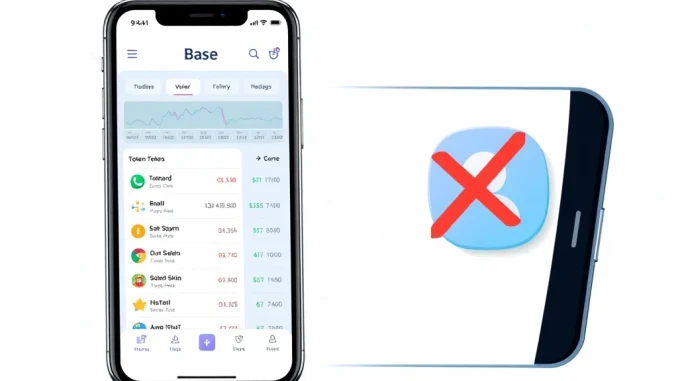
Global, April 2025: In a decisive move that clarifies its strategic direction, Base App, the non-custodial wallet developed by Coinbase, has removed its integrated Farcaster social feed. This significant product change marks a deliberate pivot away from a multi-feature ‘super app’ vision toward a sharpened, trading-centric tool. The decision to drop Farcaster underscores a broader industry trend where crypto wallets are being forced to specialize, prioritizing core utility and performance in an increasingly competitive market focused on direct onchain activity.
Base App Streamlines for a Trading-First Future
The removal of the Farcaster-powered social feed from the Base App interface is not a minor feature deprecation but a fundamental product realignment. Previously known as Coinbase Wallet, the application rebranded to Base App to align with the Coinbase-incubated Base Layer 2 blockchain. Initially, the integration of Farcaster—a decentralized social protocol—signaled an ambition to create a holistic Web3 hub where users could trade, collect, and socialize. However, the latest update strips away the social layer entirely, refocusing the application’s interface and development resources squarely on facilitating onchain trading and direct asset management. This shift reflects a calculated bet that user acquisition and retention in the current market are won through superior trading execution, deep liquidity access, and robust security, rather than ancillary social features.
The Evolution from Coinbase Wallet to a Focused Base App
To understand the significance of this pivot, one must examine the wallet’s evolution. Launched originally as Coinbase Wallet, it served as a companion to the central Coinbase exchange, offering users a gateway to the broader decentralized ecosystem. The rebrand to Base App in 2023 was a strategic move to leverage the growing ecosystem of the Base L2 chain, which has seen explosive growth in decentralized finance (DeFi) and non-fungible token (NFT) activity.
- Phase 1 (Utility): Functioned as a simple, secure self-custody wallet for storing and transferring assets.
- Phase 2 (Aggregation): Evolved into a DeFi and NFT aggregator, integrating swaps, bridges, and dApp discovery.
- Phase 3 (Social Experiment): Introduced the Farcaster feed, aiming to become a social-financial dashboard for the onchain era.
- Phase 4 (Specialization): Current phase, shedding social features to hyper-optimize for trading speed, gas efficiency, and portfolio management on Base and other networks.
This trajectory mirrors a common product lifecycle in tech: initial feature expansion followed by strategic contraction to hone in on a dominant, defensible core use case.
Market Forces Driving the Shift to Trading-Only
The decision is largely a response to intense market competition and clear user behavior patterns. The crypto wallet space has become fiercely contested, with players like MetaMask, Phantom, and Rabby offering specialized experiences. MetaMask maintains dominance through its extensive dApp browser and vast user base, while Phantom owns the Solana ecosystem. Rabby has gained traction by focusing intensely on transaction simulation and security for advanced DeFi users. By stepping back from the social arena, Base App is choosing not to compete directly with standalone social clients like Warpcast (the primary Farcaster client) or other social-finance apps. Instead, it aims to compete on the raw metrics that matter most to active traders: swap rates, transaction success speed, cross-chain functionality, and integrated access to Base-native liquidity pools and new token launches.
Implications for Users and the Onchain Ecosystem
For the existing user base, this change has immediate practical implications. Users who relied on the in-app feed for crypto news, project discoveries, and community sentiment will need to return to standalone platforms. However, the trade-off is a potentially faster, less cluttered application focused on execution. The development team can now allocate more engineering resources to improving swap aggregation algorithms, enhancing security audits for connected dApps, and streamlining the onboarding process for new users looking to trade on Base.
For the broader onchain ecosystem, particularly the Farcaster protocol, the move is a mixed signal. While it represents the loss of a major distribution partner, it also reinforces the protocol’s independence. Farcaster’s health is not tied to any single client or wallet, upholding its decentralized ethos. It suggests that successful decentralized social networks may thrive best as standalone protocols integrated across many clients, rather than as features within financial applications.
Expert Analysis on Crypto Product Strategy
Industry analysts often point to the ‘super app’ temptation in crypto—the idea that one application can successfully blend trading, lending, gaming, and socializing. However, historical precedent in both traditional tech and fintech suggests that deep specialization often wins. “This move by Base App is a classic example of strategic focus,” notes a fintech product strategist who requested anonymity due to client relationships. “In a crowded market, trying to be everything to everyone dilutes your value proposition. By removing the social feed, Base App is making a clear statement: ‘We are the best place to execute trades and manage assets on the Base network.’ This clarity can drive more effective marketing, simpler user onboarding, and a more coherent product roadmap.” The strategist further added that for mainstream adoption, simplicity and reliability in core financial functions are paramount, a lesson learned from the success of focused payment apps versus bloated banking software.
Conclusion: A Calculated Bet on Core Utility
The removal of the Farcaster social feed from Base App is a definitive strategic pivot, marking the end of one experiment and the doubling down on another. It signifies a maturation in the product’s strategy, choosing to excel as a premier trading and asset management wallet for the Base ecosystem rather than pursuing a broader but more diluted social-financial hub vision. This shift toward a trading-only focus for Base App reflects broader industry realities where user trust is built on performance, security, and simplicity in core financial activities. As the onchain landscape evolves, such deliberate specialization may prove to be the key to sustainable growth and user loyalty in the competitive world of crypto wallets.
FAQs
Q1: What exactly did Base App remove?
Base App has completely removed the integrated social feed powered by the Farcaster protocol. This feature previously allowed users to view and interact with posts from the decentralized social network directly within the wallet interface.
Q2: Can I still use Farcaster if I use Base App?
Yes. Farcaster is a decentralized protocol. You can still access it through dedicated client applications like Warpcast, or any other client that supports the protocol. Your Farcaster account and data are independent of any specific wallet or app.
Q3: Why would Base App make this change?
The change indicates a strategic decision to specialize. The development team is likely focusing all resources on improving the core trading, swapping, and asset management features to better compete with other leading wallets, rather than maintaining a social feature that may not be central to its most active users’ primary needs.
Q4: Does this affect the security or functionality of my wallet?
No. The removal of a social feature does not impact the security of your non-custodial wallet, your private keys, or your assets. The core functionality of storing, sending, and swapping cryptocurrencies remains intact and may receive more focused development attention.
Q5: Is this part of a larger trend in crypto wallets?
It reflects a trend toward specialization and focus. As the crypto wallet market matures, products are finding their core niches—some focus on DeFi power users, some on specific blockchains (like Solana), some on simplicity for beginners. Base App appears to be sharpening its focus on being the go-to wallet for trading and interacting with the Base L2 ecosystem.
Related News
- Major US Stock Indices Open Lower: A Detailed Analysis of Today's Market Decline
- TRM Labs Valuation Soars to $1 Billion in Pivotal $70 Million Series C Funding Round
- Cardano Whales Accumulate 455 Million ADA in Strategic Two-Month Buying Spree
Related: LayerZero's Crucial Role: How $70B in Cross-Chain Volume Anchors Tether's Ambitious Plan
Related: RWA Adoption Breakthrough: OpenEden Partners With Doppler Finance for XRP Ledger DeFi Access