Bitcoin News: Venture Capitalists Clash Over Web3’s Future as BTC Holds $70k, SOL Slides, and AI Token Presale Surges 160%
Global, May 2025: The cryptocurrency landscape presents a complex picture this week, defined by Bitcoin’s persistent volatility near the $70,000 psychological threshold, a continued downturn for Solana’s SOL, and a heated debate among venture capitalists regarding the tangible utility of Web3 applications. Simultaneously, a new project, DeepSnitch AI, has captured significant market attention with a presale event that surged over 160%, highlighting the enduring investor appetite for narratives intersecting artificial intelligence and blockchain technology. This confluence of events underscores the multifaceted and often divergent forces currently shaping digital asset markets.
Bitcoin Price Analysis: Navigating the $70,000 Volatility Zone
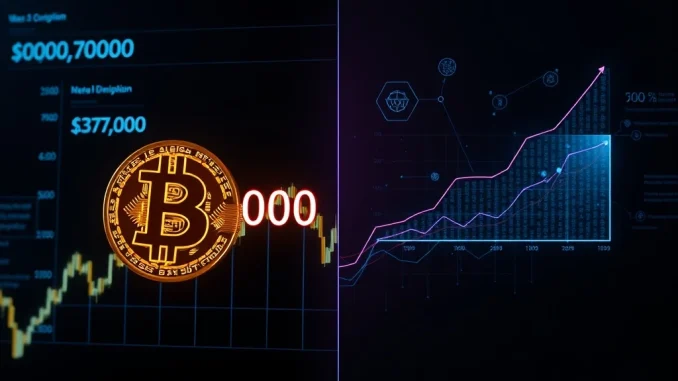
Bitcoin’s price action has entered a phase of consolidation characterized by elevated volatility. After several attempts to establish a firm footing above $70,000, the asset has repeatedly retreated, creating a trading range that analysts describe as a critical battleground between bullish and bearish sentiment. This price behavior is not occurring in a vacuum. Several macroeconomic and sector-specific factors contribute to the current climate.
Market participants point to shifting expectations around U.S. interest rate policy, institutional flows into recently approved spot Bitcoin ETFs, and broader equity market correlations as primary drivers. Historically, periods of consolidation following a significant rally, such as the one experienced earlier this year, are common. They often serve to redistribute assets, build stronger support levels, and set the stage for the next decisive move. Data from major exchanges shows that trading volume remains robust, indicating sustained interest, while on-chain metrics suggest accumulation by long-term holders continues despite the price uncertainty.
The Great Web3 Debate: Venture Capitalists Diverge on Utility
Beyond price movements, a substantive ideological debate is unfolding within the investment community. Prominent venture capital firms, traditionally the primary financiers of the crypto ecosystem, are publicly airing divergent views on the real-world utility and adoption trajectory of Web3. This term broadly encompasses decentralized applications, decentralized finance (DeFi), and user-owned internet platforms built on blockchain technology.
One camp, represented by firms like Andreessen Horowitz (a16z), continues to advocate aggressively for Web3 as the inevitable next phase of the internet. They argue that user ownership of data and digital assets, enabled by blockchain, will unlock new economic models and disrupt incumbent tech giants. Recent investments focus on decentralized social media, gaming infrastructure, and privacy-preserving technologies.
A contrasting viewpoint, voiced by some sector-specific and generalist funds, expresses skepticism. Critics point to several challenges:
- User Experience Hurdles: Managing private keys and navigating decentralized interfaces remains a significant barrier for mainstream adoption.
- Regulatory Ambiguity: Unclear regulations in major markets create uncertainty for builders and investors.
- Questionable Product-Market Fit: Some argue that many current Web3 applications solve problems that most users do not perceive as critical.
This debate is crucial because venture capital funding directly influences which projects get built and survive. A pullback in enthusiasm or a shift in investment thesis could slow development in certain sub-sectors while redirecting capital toward others perceived as having clearer utility, such as blockchain scalability solutions or enterprise-grade infrastructure.
Solana’s Continued Struggles: Network Performance and Market Sentiment
Amid these broader discussions, Solana’s native token, SOL, has faced sustained selling pressure, extending a decline that began after its last major peak. The downturn reflects a combination of factors specific to the Solana ecosystem and general market conditions. While the network’s technical performance has stabilized significantly since the congestion issues of 2022-2023, the market is now scrutinizing its growth metrics and competitive positioning more closely.
Analysts note that activity on leading Solana-based decentralized applications (dApps) has cooled from its frenetic pace earlier in the cycle. Furthermore, the competitive landscape for high-throughput blockchains has intensified, with Ethereum’s layer-2 scaling solutions achieving substantial adoption and new chains emerging. The price decline for SOL also appears correlated with profit-taking from earlier investors and a general reduction in risk appetite for altcoins during periods of Bitcoin dominance, which has recently increased. The coming months will be critical for Solana to demonstrate renewed developer traction and user growth to reverse the negative momentum.
DeepSnitch AI Presale Surge: Analyzing the AI-Crypto Convergence
The most striking market movement of the week comes from outside the major layer-1 tokens. DeepSnitch AI, a new project claiming to integrate artificial intelligence with on-chain security and analytics, has reported a presale fundraising surge exceeding 160%. This event highlights a persistent trend: investor capital continues to flow aggressively toward narratives that combine cryptocurrency with other cutting-edge technologies, particularly AI.
According to its published documentation, DeepSnitch AI proposes a suite of tools designed to monitor smart contracts and blockchain transactions for vulnerabilities, suspicious patterns, and compliance issues using machine learning models. The dramatic presale performance, while notable, follows a familiar pattern in crypto markets where projects with compelling narratives can attract rapid funding, especially in the early stages before a public token launch.
Industry observers urge caution, noting that presale success does not guarantee long-term viability or product delivery. The history of cryptocurrency is replete with projects that raised significant sums but failed to execute on their technical roadmaps. The key questions for DeepSnitch AI will be its ability to transition from a whitepaper to a functional, audited product, and to demonstrate clear superiority over existing blockchain security and analytics services. Nevertheless, its fundraising success is a definitive data point confirming that the “AI + Crypto” thesis retains powerful appeal for a segment of the investment community.
Conclusion: A Market at an Inflection Point
The current Bitcoin news cycle reveals a cryptocurrency market at a complex inflection point. Bitcoin’s struggle with the $70,000 level reflects macro uncertainty and a natural consolidation phase. The heated debate among venture capitalists over Web3 utility signals a maturation in sector analysis, moving beyond pure speculation to harder questions about adoption and value creation. Solana’s challenges illustrate the fierce competition and high expectations within the smart contract platform arena. Finally, the explosive presale for DeepSnitch AI underscores that innovation and speculative interest continue to drive capital toward new intersections of technology, with artificial intelligence remaining a primary focus. Together, these developments paint a picture of an industry grappling with its next phase of growth, where fundamental utility and real-world application are becoming increasingly important metrics for success alongside technical innovation and market sentiment.
FAQs
Q1: Why is Bitcoin struggling to stay above $70,000?
Bitcoin’s volatility near $70,000 is influenced by several factors, including macroeconomic uncertainty regarding interest rates, profit-taking by investors after a prior rally, the ebb and flow of institutional capital into spot ETFs, and the need to establish a strong technical support level before attempting a new upward leg. Such consolidation periods are typical in asset cycles.
Q2: What is the core of the venture capitalist debate on Web3?
The debate centers on whether Web3 applications offer genuine, necessary utility for mainstream users. Proponents believe they enable user ownership and disrupt centralized platforms. Skeptics question if current applications solve pressing problems, citing poor user experience and regulatory hurdles as major barriers to widespread adoption.
Q3: What is causing the price decline for Solana (SOL)?
SOL’s decline is attributed to a mix of factors: cooling activity on its ecosystem dApps, intensified competition from other blockchains and Ethereum layer-2s, general risk-off sentiment in the altcoin market, and likely profit-taking from earlier investors following its previous significant appreciation.
Q4: What does DeepSnitch AI claim to do?
According to its project materials, DeepSnitch AI aims to use artificial intelligence and machine learning to enhance blockchain security. Its proposed tools are designed to audit smart contracts for vulnerabilities and monitor on-chain transactions for suspicious behavior or compliance issues automatically.
Q5: Does a successful presale guarantee a project’s long-term success?
No, a successful presale does not guarantee long-term success. It indicates initial investor interest in the project’s narrative. Long-term viability depends entirely on the team’s execution, the delivery of a functional and secure product, achieving adoption, and navigating an often competitive landscape. Many highly-funded presale projects have ultimately failed to deliver.
Related News
- This Declining Bitcoin Metric Could Actually Signal Bullish Future for BTC Price: Santiment
- Has Bitcoin Dominance Topped? Here Are The Best Cryptos To Buy Now Before Altcoin Season
- Bitcoin Miner MARA Holdings and Two Prime Forge Strategic Partnership Expansion
Related: ZKP Presale Stuns Market with 190M Daily Allocation, Diverting Focus from ADA and SUI Prices
Related: IMF Stablecoins Warning: The Alarming Threat to Emerging Market Economies