Malicious Transfer Drains $118K in BUSD: A Stark Warning for Binance Smart Chain Users
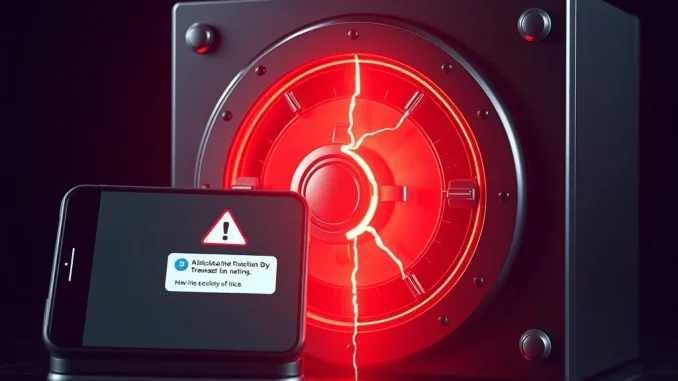
Global, March 2025: A single, unsuspecting signature led to a devastating financial loss this week, highlighting the persistent and evolving threats in the cryptocurrency ecosystem. A malicious transfer on the Binance Smart Chain (BSC) successfully drained $118,751.45 worth of Binance USD (BUSD) from a victim’s wallet in two swift transactions. This incident serves as a critical case study in the sophisticated social engineering and technical exploits that target digital asset holders.
Malicious Transfer Unfolds: The $118K BUSD Drain
The attack, which blockchain analysts first flagged on March 18, 2025, involved a common yet effective vector: a deceptive transaction prompt. The victim, whose wallet address has been identified but whose identity remains private, interacted with a malicious smart contract. This interaction triggered a request for the wallet holder to sign a transaction, a routine action in decentralized finance (DeFi). However, the signature granted permissions that went far beyond a standard token swap or approval.
Instead, it authorized the transfer of two substantial sums from the victim’s wallet to an address controlled by the attacker. The first transfer moved 23,750.29 BUSD, followed immediately by a second draining 95,001.16 BUSD. On-chain data confirms both transactions were finalized within minutes, leaving the wallet nearly empty. The speed and finality of blockchain transactions meant there was no recourse for recovery once the signatures were broadcast to the network.
Anatomy of a BSC Wallet Drainer Attack
This event is a textbook example of a “wallet drainer” or “approval phishing” attack. These schemes do not require stealing a private key or seed phrase. Their power lies in manipulating the normal user interface and trust mechanisms of Web3 wallets.
- The Bait: The victim likely clicked a link, perhaps from a fake airdrop announcement, a spoofed DeFi platform, or a malicious NFT mint site. These links are often distributed through Discord, Twitter, or phishing emails.
- The Hook: The website prompts a wallet connection, which seems normal. It then requests a transaction signature to “claim rewards,” “verify ownership,” or “increase gas fees.”
- The Attack: The signature data hidden within the transaction contains code that grants unlimited or high-value spending approval for specific tokens (in this case, BUSD) to the attacker’s address.
- The Drain: Once the signature is approved, the attacker’s smart contract instantly executes the transfer, moving the approved funds to their wallet.
The Binance Smart Chain’s low transaction fees make it a frequent target for such attacks, as attackers can execute numerous drain attempts for minimal cost.
Historical Context and Rising Threat Vectors
Approval phishing attacks are not new. They gained significant notoriety during the 2021-2022 bull market, with high-profile incidents affecting thousands of users. However, their sophistication continues to grow. Modern drainers can:
- Selectively target high-value tokens while ignoring others to avoid immediate suspicion.
- Use fake verification steps that mimic legitimate KYC processes.
- Employ wallet-draining kits sold as “stresser” services on dark web forums, lowering the barrier to entry for criminals.
The $118K BUSD loss is a sobering reminder that despite widespread warnings, these attacks remain highly effective. Security firms like CertiK and PeckShield regularly publish data showing hundreds of millions drained via similar methods annually, with BSC and Ethereum being the most targeted networks.
Protective Measures and User Responsibility
Preventing such attacks hinges on user vigilance and technical understanding. Cryptocurrency self-custody places the burden of security squarely on the individual. Key protective steps include:
- Revoke Unused Approvals: Regularly use approval-checking tools like Revoke.cash or BscScan’s Token Approval tool to review and revoke any unnecessary spending allowances granted to smart contracts.
- Inspect Every Signature: Advanced wallet users should learn to inspect the raw data of a transaction signature before approving. While complex, some wallets offer simplified risk warnings.
- Verify Websites Meticulously: Always double-check URLs, look for SSL certificates, and avoid clicking links from unsolicited messages. Bookmark legitimate sites.
- Use Hardware Wallets: A hardware wallet requires physical confirmation for transactions, adding a critical layer of defense against malicious sites, as the transaction details are displayed on the device screen itself.
- Employ Dedicated Wallets: Consider using a separate, low-balance “hot wallet” for interacting with new or unknown dApps, while keeping the majority of funds in a more secure “cold” or hardware wallet.
The Role of Wallets and Platforms in Mitigation
The industry is responding with better safeguards. Wallet providers like MetaMask have enhanced their warning systems, sometimes displaying clear alerts for known malicious domains or suspicious transaction requests. Some security extensions now scan transaction data for known drainer signatures. However, as this incident proves, these systems are not foolproof. The decentralized nature of blockchain means ultimate responsibility cannot be outsourced; platforms can warn, but users must act.
Conclusion: A Costly Lesson in Web3 Vigilance
The $118K BUSD malicious transfer is more than a statistic; it is a powerful, real-world lesson in the non-reversible nature of blockchain transactions and the cunning of modern digital thieves. As cryptocurrency adoption grows, so does the attractiveness of these assets to bad actors. This incident underscores that security is not a one-time setup but an ongoing practice of skepticism, education, and proactive management of wallet permissions. For all users, the mantra must be: trust nothing, verify everything, and never sign a transaction whose purpose you do not fully understand.
FAQs
Q1: What is a malicious transfer or wallet drainer attack?
A malicious transfer attack tricks a user into signing a blockchain transaction that secretly grants a hacker permission to withdraw specific tokens from their wallet. The user’s private key remains secure, but the approval acts as a signed withdrawal slip for the attacker.
Q2: Can the stolen $118K in BUSD be recovered?
Almost certainly not. Blockchain transactions are immutable and final. Unless the attacker voluntarily returns the funds, which is extremely rare, recovery is impossible. This highlights the critical importance of prevention.
Q3: How can I check if my wallet has given out dangerous approvals?
You can use blockchain-specific approval-checking websites. For Binance Smart Chain, visit BscScan and connect your wallet to their “Token Approvals” tool. For Ethereum, platforms like Revoke.cash provide a similar service. These tools show all active allowances and let you revoke them.
Q4: Why is Binance Smart Chain (BSC) often targeted for these attacks?
BSC is popular due to its low transaction fees and high throughput, making it a hub for retail DeFi users. The low cost allows attackers to launch widespread phishing campaigns and execute drains cheaply, targeting a large user base with significant asset volumes.
Q5: Does using a hardware wallet completely prevent this type of attack?
A hardware wallet significantly reduces the risk but does not eliminate it entirely. You could still be tricked into manually confirming a malicious transaction on the device’s screen. However, it prevents remote automated drains and forces a physical review, making you far less likely to fall victim.
Related News
- Critical Alert: Upbit Suspends Withdrawals for RVC, EXCL, and CRW Amid Network Block Generation Halt
- Tencent Cloud Announces New Web3 Initiatives
- Aster DEX Unleashes Riveting Season 2 of Human vs AI Trading Competition
Related: Cardano Foundation's Crucial Rosetta Java v2.0.0 Upgrade Revolutionizes Blockchain Infrastructure
Related: Crypto Scam Mastermind Receives Devastating 20-Year Sentence for $73M Global Fraud
Related: BankrCoin (BNKR) Surges 287.1% and 518.7%: Analyst Decodes the Astonishing Growth Wave