Real-World Assets Dominate: Why This Crypto Cycle Proves RWAs Matter More Than Prices
Global, May 2025: The cryptocurrency market’s latest evolution reveals a profound shift in focus from speculative trading to tangible utility. According to Chainlink co-founder Sergey Nazarov, the defining narrative of the current cycle is the accelerating tokenization of real-world assets (RWAs), a trend demonstrating greater resilience and long-term value than price movements alone. This maturation suggests the industry is building foundational infrastructure for the next phase of global finance, independent of Bitcoin’s volatility.
Real-World Assets Signal Crypto’s Growing Maturity
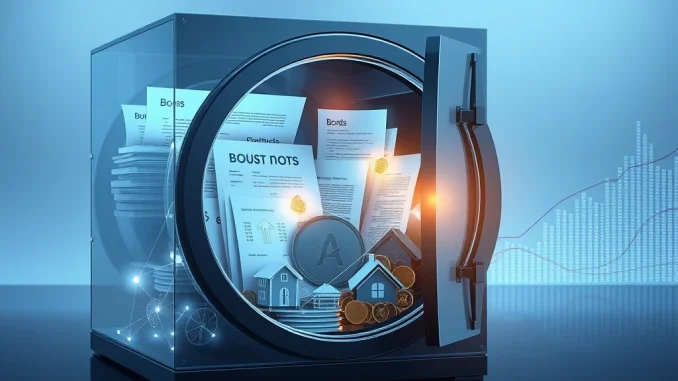
The cryptocurrency sector has weathered significant price corrections since late 2024 without triggering systemic failures akin to the FTX collapse of 2022. Analysts attribute this stability to improved risk management practices, more robust regulatory frameworks, and, crucially, the growth of non-speculative use cases. The most prominent of these is the tokenization of real-world assets—the process of creating digital tokens on a blockchain that represent ownership of physical or traditional financial assets. This includes treasury bonds, real estate, commodities, and private credit funds. Unlike purely native crypto assets, the value of an RWA token is intrinsically linked to an off-chain asset, providing a fundamental valuation floor and attracting institutional capital seeking yield and diversification.
The Decoupling of Tokenization from Market Volatility
Historical analysis shows that previous crypto bull cycles were almost exclusively driven by retail speculation and narratives around decentralized money (Bitcoin) and programmable contracts (Ethereum). While these remain core innovations, data from 2024-2025 indicates a divergence. Platforms facilitating RWA issuance and trading have reported consistent growth in total value locked (TVL) even during broader market downturns. This decoupling suggests that RWA tokenization is developing its own demand drivers, rooted in traditional finance’s search for efficiency, transparency, and new yield sources. The infrastructure enabling this—oracle networks like Chainlink that provide reliable off-chain data, compliant custody solutions, and regulatory-grade platforms—has become a critical battleground for developers.
Sergey Nazarov’s Perspective on Industry Evolution
In recent discussions, Chainlink’s Sergey Nazarov has emphasized that this cycle is fundamentally different. He posits that the survival of major protocols through volatility, without catastrophic collapses, proves the space has developed better risk management maturity. Nazarov’s core thesis is that the value created by connecting blockchains to real-world data and assets through decentralized oracle networks provides a utility that transcends market sentiment. “The focus is shifting from ‘what is the price?’ to ‘what is this actually doing?’,” he noted, highlighting that applications in trade finance, asset ownership, and verifiable data are gaining traction irrespective of Bitcoin’s price action.
The Path to a Tokenized Economy: Implications and Projections
Financial research firms like Boston Consulting Group have projected that the tokenized asset market could reach a staggering $16 trillion by 2030. If this trajectory holds, the value of on-chain RWAs could soon surpass the total market capitalization of all native cryptocurrencies. This would fundamentally reshape the industry’s core focus and business models. The implications are vast:
- For Institutions: Lower barriers to investing in alternative assets, fractional ownership, and 24/7 settlement.
- For Developers: A pivot towards building compliant, interoperable infrastructure that meets traditional finance standards.
- For Regulation: Increased pressure to create clear legal frameworks for digital asset ownership and cross-border compliance.
This shift does not render native cryptocurrencies obsolete but recontextualizes them. Bitcoin may function increasingly as digital gold or a settlement layer, while smart contract platforms like Ethereum become the foundational rails for a new tokenized asset system.
Conclusion
The current crypto cycle provides compelling evidence that the long-term viability of blockchain technology hinges on its integration with the global economy. The rapid growth of real-world asset tokenization, operating with increasing independence from crypto price swings, marks a pivotal turn towards utility and maturity. As Sergey Nazarov and other industry leaders observe, this trend towards tangible use cases matters more for the future of finance than short-term price speculation, setting the stage for a more stable and impactful next decade of innovation.
FAQs
Q1: What are Real-World Assets (RWAs) in crypto?
Real-World Assets (RWAs) are traditional financial or physical assets—like government bonds, real estate, or commodities—that are represented as digital tokens on a blockchain. This process, called tokenization, allows these assets to be traded, fractionalized, and settled with the efficiency and transparency of blockchain technology.
Q2: Why does Sergey Nazarov believe this crypto cycle is different?
Nazarov argues that the industry’s resilience during recent volatility, coupled with the sustained growth of RWA tokenization independent of Bitcoin’s price, demonstrates a shift towards utility-based value and better systemic risk management, moving beyond pure speculation.
Q3: How do RWAs decouple from cryptocurrency price volatility?
RWAs derive their primary value from the off-chain asset they represent (e.g., the yield from a bond or the rental income from property). This intrinsic value provides a stability anchor, attracting capital based on traditional financial metrics rather than crypto market sentiment alone.
Q4: What role does Chainlink play in RWA tokenization?
Chainlink’s decentralized oracle networks provide critical infrastructure by securely connecting blockchains to real-world data. For RWAs, this includes delivering accurate price feeds, interest rates, proof of reserves, and compliance data, ensuring the digital token accurately reflects the state of the underlying asset.
Q5: Could RWAs eventually be bigger than the entire crypto market?
Yes, multiple financial analyses project the total value of tokenized real-world assets could reach tens of trillions of dollars within the next decade, a figure that could eclipse the current total market capitalization of all native cryptocurrencies, fundamentally reshaping the blockchain industry’s focus.
Related News
- TRANSFORMING FINANCE: EMPOWERING FINANCIAL INNOVATION FOR A DIGITAL VIETNAM: Fintech Revolution Summit 2025
- Thailand Crypto Spending Unlocks Seamless Tourist Payments
- Grayscale Files Pivotal Application for Near Protocol ETF, Signaling Major Institutional Validation
Related: MrBeast Crypto Gateway: How a YouTuber Could Redefine Youth Finance
Related: Solana Undervalued: New Model Flags SOL at $87 as a Potential Discount
Related: Ethereum $2,000 Support Level: The Critical Juncture Defining Market Sentiment