RESOLV Cryptocurrency Reaches $0.07787 as Analysts Spot Crucial Bullish Pattern in Emerging Altcoin
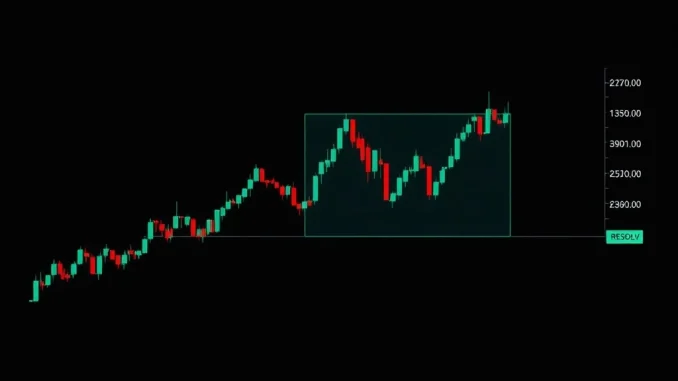
Global, March 2025: The cryptocurrency RESOLV has reached a trading price of $0.07787, drawing attention from market analysts who are now closely monitoring a specific, lesser-known digital asset. Technical analysts point to the formation of a classic chart pattern, the inverse head-and-shoulders, coupled with specific volume data, as a potential indicator of a significant price movement. This development occurs within a broader context of renewed institutional interest and regulatory clarity in the digital asset space.
RESOLV Price Movement and Current Market Context
The RESOLV token, which facilitates transactions and governance within a decentralized resolution protocol network, has seen its value appreciate to $0.07787. This price point represents a notable level within its recent trading history. Market data from several exchanges confirms this valuation, reflecting the aggregated sentiment of buyers and sellers. The movement is not occurring in isolation. Broader market indices for digital assets have shown increased volatility, with capital often rotating between large-cap cryptocurrencies like Bitcoin and Ethereum and smaller altcoins. Analysts frequently track these rotations to identify assets that may be poised for independent momentum, based on project developments, partnership announcements, or technical setups on price charts.
Understanding the Inverse Head-and-Shoulders Pattern
Technical analysis is a discipline used by traders to evaluate investments and identify trading opportunities by analyzing statistical trends gathered from trading activity, primarily price and volume. Among the many patterns chartists use, the inverse head-and-shoulders is considered one of the more reliable bullish reversal indicators. The pattern forms after a downtrend and consists of three distinct troughs. The middle trough, the “head,” is the lowest point. The two outside troughs, the “shoulders,” are roughly equal in depth and higher than the head. A “neckline” resistance level connects the high points between the troughs. A confirmed breakout occurs when the price closes above this neckline with significant volume, suggesting selling pressure has been exhausted and a new uptrend may begin.
- Formation: Develops over weeks or months, indicating a gradual shift in market sentiment.
- Volume Confirmation: Ideally, volume should diminish as the pattern forms and expand sharply on the neckline breakout.
- Price Target: Technical theory suggests a minimum price target is calculated by measuring the vertical distance from the head’s low to the neckline and projecting that upward from the breakout point.
It is critical to note that no pattern guarantees future performance. They are probabilistic tools that must be considered alongside fundamental project health, overall market conditions, and relevant news.
The Role of Trading Volume in Pattern Validation
For chart patterns to carry weight, analysts insist on volume confirmation. Volume represents the number of units of an asset traded in a given period. High volume on an upward price move suggests strong conviction among buyers, lending credibility to the move. Conversely, a price increase on low volume might indicate a lack of broad participation and could be unsustainable. In the context of the pattern identified by analysts, scrutinizing the volume profile as the right shoulder forms and during any potential breakout attempt is a standard practice. Exchanges provide transparent, on-chain, and order book data that allows for this analysis, contributing to a more complete market picture than price action alone.
Analyst Methodology and Risk Considerations
When analysts identify such patterns, their process typically involves several verification steps. First, they clean the price data, often using closing prices from reputable sources to filter out intra-day noise. They then plot the data to visually identify potential patterns before applying mathematical tools to confirm trendlines and volume averages. The final step involves contextualizing the technical finding. This means examining the asset’s fundamentals: the team behind the project, its use case, tokenomics, community activity, and recent developments on its roadmap. A technically bullish pattern on an asset with weak fundamentals is generally viewed with more skepticism than the same pattern on a project demonstrating real-world utility and growth.
All cryptocurrency investments carry substantial risk. Markets are highly volatile, and prices can fluctuate wildly based on regulatory news, technological advancements, market sentiment, and macroeconomic factors. Technical patterns can fail, and past performance is never indicative of future results. Responsible analysis always couples optimistic technical setups with clear discussions of downside risks, including the possibility of the pattern invalidating if the price falls back below key support levels.
Broader Implications for the Altcoin Market
The identification of classic technical patterns in smaller-cap cryptocurrencies often signals a maturation of market analysis within the sector. In the early years of crypto trading, markets were driven predominantly by speculation and news. The increased application of traditional financial technical analysis suggests a growing cohort of professional traders and analysts are engaging with these assets, bringing with them established frameworks for evaluation. This can lead to increased liquidity and potentially less erratic price movements over the long term as analysis becomes more standardized. Furthermore, when analysts publicly discuss these patterns, it contributes to market education, allowing a wider audience to understand the tools used by professionals, though it does not constitute financial advice.
Conclusion
The rise of RESOLV to $0.07787 and the subsequent technical analysis highlighting a potential inverse head-and-shoulders pattern in a related asset underscores the dynamic and analytical nature of modern cryptocurrency markets. While the pattern itself suggests a potential bullish outcome based on historical precedents in traditional finance, its relevance in the crypto domain depends heavily on volume confirmation and the fundamental strength of the underlying project. For market observers, this situation serves as a practical case study in how traditional technical analysis is being applied to digital assets, emphasizing the importance of a balanced, research-driven approach that weighs both technical indicators and inherent project value in a highly volatile and evolving financial landscape.
FAQs
Q1: What is an inverse head-and-shoulders pattern?
It is a technical analysis chart pattern that predicts a potential bullish reversal in a market trend. It is characterized by three troughs, with the middle one being the deepest, forming a shape that resembles an inverted head and two shoulders.
Q2: Does the pattern guarantee a price increase?
No. No technical pattern offers a guarantee. It is a probabilistic indicator used to assess the balance of buying and selling pressure. It must be confirmed by high trading volume and considered alongside other market factors.
Q3: What does trading volume indicate?
Volume measures how much of an asset is traded in a period. High volume during a price move suggests stronger conviction and participation, making the move more significant. Low volume can indicate a lack of consensus or a weak move.
Q4: How is technical analysis different in cryptocurrency markets?
While the principles are the same, crypto markets operate 24/7 and can be more volatile and influenced by different factors (like network upgrades or regulatory tweets) compared to traditional markets. This can sometimes lead to faster pattern formations and failures.
Q5: Should investment decisions be based solely on chart patterns?
Absolutely not. Sound investment decisions, especially in volatile assets like cryptocurrencies, should be based on comprehensive research, including the project’s technology, team, use case, tokenomics, and competitive landscape, in addition to any technical analysis. Diversification and risk management are essential.
Related: Bitcoin Neo-Bank Breakthrough: Core's SatPay Aims to Redefine BTC Financial Infrastructure
Related: UK FCA Stablecoins: Regulator Reveals Four Firms for Critical Sandbox Testing Before 2027 Rules
Related: $SHOLA Token Launch: Shola's Strategic Collaboration with Pump.fun on Solana