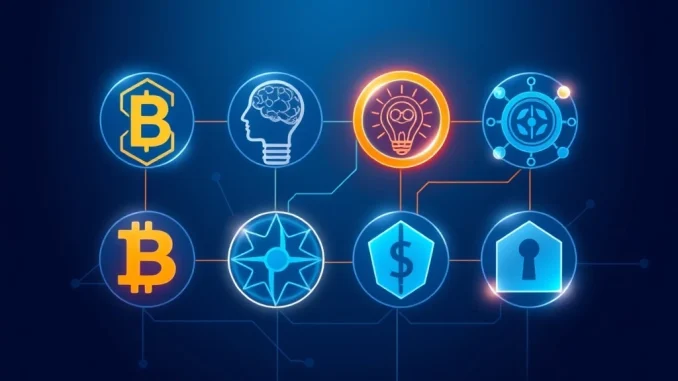
Global, March 2026: The cryptocurrency presale landscape for 2026 is shifting decisively toward projects with demonstrable, real-world applications. This analysis examines four notable presales—ZKP Crypto, DeepSnitch AI, Nexchain, and BMIC—that are attracting attention not for speculative hype, but for their foundational technology and clear utility. These projects represent a maturation phase for the blockchain sector, where tangible problem-solving takes precedence.
Analyzing the Top Crypto Presales of 2026
The concept of a token presale, where early investors can purchase tokens before a public launch, remains a cornerstone of blockchain project funding. The criteria for evaluating these opportunities have evolved significantly. In 2026, investors and analysts prioritize a robust technological foundation, a viable economic model, a competent development team with proven experience, and a clear path to solving a genuine market need. The projects highlighted here were selected based on these parameters, moving beyond mere whitepaper promises to assess their potential for integration and impact.
ZKP Crypto: Leading with Privacy-Enhancing Technology
ZKP Crypto is building its platform around Zero-Knowledge Proof (ZKP) technology. This cryptographic method allows one party to prove to another that a statement is true without revealing any information beyond the validity of the statement itself. The project’s primary use case focuses on bringing transactional privacy to public blockchains. For instance, in decentralized finance (DeFi), users could prove their creditworthiness or satisfy regulatory requirements without exposing their entire financial history. The token, ZKPT, is designed to power these privacy protocols, acting as the fuel for generating and verifying proofs.
Industry observers note that ZKP technology has moved from theoretical research to practical implementation over the last five years. ZKP Crypto’s approach appears to be targeting enterprise adoption, where data confidentiality is paramount. The presale structure typically involves phased allocations, with early contributors receiving tokens at a lower price point, locked under a vesting schedule to align long-term interests. The project’s potential hinges on the scalability of its proof systems and its ability to form partnerships with existing financial and data platforms.
The Evolution of Zero-Knowledge Proofs in Blockchain
The application of ZKPs is not new; protocols like Zcash pioneered their use for payments. However, the current wave, often called “ZK-Rollups,” aims to scale Ethereum and other networks by bundling transactions off-chain and submitting a single validity proof. ZKP Crypto is positioning itself within this broader technological trend, suggesting its tools could be used by other projects to build private layers on top of public ledgers. This interoperability focus could be a key differentiator in a crowded field of privacy-focused coins.
DeepSnitch AI: Merging Artificial Intelligence and On-Chain Security
DeepSnitch AI enters the market with a specific mandate: to enhance blockchain security through artificial intelligence. The project proposes a decentralized network of AI nodes that continuously monitor smart contracts and blockchain transactions for malicious patterns, vulnerabilities, and fraudulent activities. The DSAI token would be used to pay for security audits, subscribe to threat intelligence feeds, and reward node operators for contributing computational resources and accurate analysis.
The rise of smart contract exploits and sophisticated phishing attacks has created a clear demand for more proactive security solutions. DeepSnitch AI’s model draws parallels to crowdsourced security platforms in traditional web2, but with incentives structured on a blockchain. The success of such a project depends heavily on the quality of its AI models, the diversity of its data sources, and its ability to attract skilled white-hat hackers and data scientists to its network. The presale funds are ostensibly directed toward further model training and network bootstrapping.
Nexchain: Targeting Supply Chain Transparency and Efficiency
Nexchain is a blockchain project aimed squarely at the global supply chain industry. Its proposed system uses distributed ledger technology to create immutable, transparent records of a product’s journey from raw material to end consumer. Each step—manufacturing, quality checks, customs clearance, logistics—can be recorded and verified by permissioned participants. The NEX token facilitates this ecosystem, used to pay for data uploads, access verified supply chain histories, and execute smart contracts for automated payments upon delivery milestones.
Supply chain management represents a classic problem of fragmented data and lack of trust between multiple parties. Blockchain’s promise of a single, shared source of truth has driven pilot projects in this sector for nearly a decade. Nexchain’s challenge will be to onboard large enterprises and integrate with existing legacy systems like Enterprise Resource Planning (ERP) software. Its presale narrative emphasizes not just the technology, but the team’s alleged experience in logistics and enterprise software sales.
BMIC: Blockchain-Based Micro-Insurance Concepts
BMIC, or Blockchain Micro-Insurance Collective, explores the application of decentralized finance to the insurance sector, specifically targeting micro-coverage and parametric insurance. Parametric insurance pays out based on the occurrence of a predefined, objectively measured event (e.g., rainfall below a certain level, a flight delay over 3 hours) rather than assessed loss. BMIC’s platform would allow communities or individuals to pool funds and create customized, automated insurance contracts for specific risks. The BMIC token would be the medium for capital pools, premium payments, and claim disbursements.
This model could potentially lower administrative costs and increase accessibility to insurance products in underserved markets. The technical hurdles involve securing reliable “oracles”—trusted data feeds that report real-world events to the blockchain—and ensuring the smart contracts governing the policies are legally sound and actuarially fair. The presale for BMIC is framed as capital to build the initial protocol, fund legal research, and establish partnerships with data providers.
Comparative Analysis of Presale Structures and Tokenomics
A critical aspect of any presale is its token economic design. The table below outlines a hypothetical comparison of key tokenomics factors based on common structures seen in the market. Actual details would require direct verification from each project’s official documentation.
| Project | Token Symbol | Primary Utility | Common Vesting Period for Presale |
|---|---|---|---|
| ZKP Crypto | ZKPT | Pay for ZKP generation/verification | 12-24 months, linear release |
| DeepSnitch AI | DSAI | Pay for security services, reward nodes | 6-18 months, with cliff |
| Nexchain | NEX | Access data, execute supply chain contracts | 18-36 months, tiered release |
| BMIC | BMIC | Capital pool formation, premium/claim vehicle | 12-30 months |
Important considerations for potential participants include:
- Vesting Schedules: Lock-up periods prevent immediate sell pressure post-launch but limit liquidity.
- Token Allocation: The percentage of total supply sold in the presale versus reserved for team, foundation, and ecosystem.
- Use of Proceeds: A clear roadmap for how raised capital will be deployed (development, marketing, legal, reserves).
- Governance: Whether token holders will have voting rights on protocol upgrades or treasury management.
The Critical Role of Due Diligence
Participating in any crypto presale carries significant risk. Beyond the inherent volatility of cryptocurrency markets, presale investors face risks of project failure, code vulnerabilities, regulatory changes, and, in worst cases, fraud. Essential due diligence steps include verifying the identities and backgrounds of core team members, auditing the smart contract code (or having it audited by a reputable firm), understanding the legal jurisdiction of the project, and critically evaluating the realism of the project’s roadmap and market assumptions. The projects discussed here are presented as examples of a trend toward utility; their inclusion does not constitute an endorsement or investment advice.
Conclusion: A Focus on Fundamentals Defines 2026 Crypto Presales
The landscape for the top crypto presales of 2026 appears to be defined by a return to technological fundamentals and identifiable utility. Projects like ZKP Crypto, with its focus on core cryptographic innovation; DeepSnitch AI, applying AI to a critical security need; Nexchain, tackling enterprise supply chains; and BMIC, reimagining insurance models, exemplify this shift. While the promise is significant, the path from presale to successful, adopted network is long and fraught with technical, commercial, and regulatory challenges. For the informed observer, these presales offer a window into the evolving priorities of the blockchain industry, where solving real-world problems is becoming the primary metric for potential success, far surpassing the speculative narratives of previous cycles.
FAQs
Q1: What is a cryptocurrency presale?
A cryptocurrency presale is an early funding round where a project sells its native tokens to selected investors before the tokens are listed on public exchanges. This capital is typically used to fund further development.
Q2: Why are real-world use cases important for evaluating crypto presales in 2026?
Real-world use cases demonstrate a project’s potential for adoption beyond speculative trading. They indicate whether the blockchain solution addresses a genuine market need, which is a key factor for long-term sustainability and value.
Q3: What are Zero-Knowledge Proofs (ZKPs), and why are they significant?
Zero-Knowledge Proofs are a cryptographic method that allows one party to prove the truth of information to another party without revealing the information itself. They are significant for enabling privacy and scalability on public blockchains.
Q4: What are the major risks associated with participating in a crypto presale?
Major risks include project failure (the team cannot deliver), smart contract bugs or exploits, extreme token price volatility, regulatory uncertainty, lack of liquidity due to vesting locks, and the potential for fraudulent schemes.
Q5: How does token vesting work in a typical presale?
Token vesting means purchased tokens are locked and released to investors gradually over a set period (e.g., 20% every 6 months). A “cliff” period is common, where no tokens are released for an initial timeframe (e.g., 6 months), after which regular vesting begins. This aligns investor and project incentives.