Pharos Builder Program: A $10M+ Catalyst for the Tokenized Finance Revolution
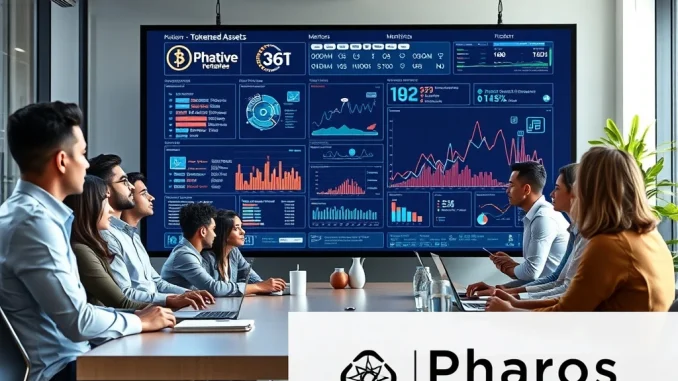
Global, April 2025: The convergence of blockchain technology and traditional finance enters a new phase of structured growth. Pharos, a prominent layer-1 blockchain platform specializing in real-world asset (RWA) tokenization, has formally unveiled its “Native to Pharos” builder program. This initiative represents a significant capital commitment of over $10 million, backed by established venture firms Draper Dragon and Lightspeed, aimed explicitly at accelerating startups within the RealFi (Real-World Finance) ecosystem. The program’s launch signals a strategic move to provide more than just funding, offering a comprehensive incubator model designed to solve critical infrastructure and go-to-market challenges for early-stage projects.
Pharos Builder Program: A Deep Dive into Structure and Strategy
The “Native to Pharos” program is not a simple grant or investment fund. It functions as a dedicated incubator with a multi-faceted support system for selected startups. The core offering is a blend of financial capital, hands-on technical mentorship, strategic business guidance, and deep integration with the Pharos blockchain’s native infrastructure. This holistic approach addresses common pain points for RealFi founders, who often grapple with the complexities of regulatory compliance, asset custody, and creating scalable on-chain models for off-chain value. The involvement of Draper Dragon, known for its cross-border tech investments between Asia and the US, and Lightspeed, a global venture capital firm with a strong fintech and crypto portfolio, provides not just capital but also extensive networks and sector expertise. The program will operate through cohort-based selections, ensuring focused support and fostering collaboration between builders tackling adjacent problems in the tokenization stack.
The Rising Imperative for Real-World Asset Tokenization
To understand the significance of this builder program, one must contextualize the rapid evolution of the RealFi sector. The concept of representing physical or traditional financial assets—like real estate, treasury bills, private credit, or commodities—as digital tokens on a blockchain has moved from theoretical whitepapers to live, multi-billion dollar markets. Proponents argue tokenization can unlock immense value by enhancing liquidity, reducing settlement times, enabling fractional ownership, and increasing transparency in historically opaque markets. However, the path to mainstream adoption is fraught with technical, legal, and operational hurdles. Early projects have often operated in silos, building redundant infrastructure. The Pharos program explicitly aims to streamline this development by providing a shared, purpose-built layer-1 foundation, thereby allowing startups to focus on their unique application layer and business logic rather than core blockchain mechanics.
From Concept to Commercial Scale: The Builder’s Journey
The lifecycle of a RealFi startup within an incubator like “Native to Pharos” typically follows a structured path. Initial selection criteria likely emphasize a team’s domain expertise in a specific financial vertical, the clarity of their tokenomics model, and their approach to regulatory engagement. Once admitted, teams gain access to the program’s core pillars:
- Capital Injection: Direct investment to fund development, legal costs, and initial operations.
- Technical Mentorship: Guidance from Pharos core developers on optimizing for the chain’s architecture, which may include features tailored for RWA compliance, such as identity modules or permissioned transaction layers.
- Go-to-Market & Partnership Support: Assistance in forging connections with traditional financial institutions, legal advisors, and custody providers—a critical bridge between crypto-native tech and incumbent finance.
- Ecosystem Access: Priority integration with other projects in the Pharos ecosystem, potentially creating synergistic financial products.
This support structure is designed to de-risk the early stages and compress the timeline from minimum viable product (MVP) to a sustainable, scalable business.
Comparative Landscape: How “Native to Pharos” Fits In
The launch of this builder program places Pharos within a competitive field of blockchain ecosystems vying to become the home for RealFi development. Other layer-1 and layer-2 networks have also announced accelerator programs and grant initiatives. The differentiation for Pharos appears to be its singular focus on real-world assets from its inception, rather than RealFi being one use case among many. This focused specialization can translate into more relevant tooling, a more knowledgeable mentor pool, and a community of builders all aligned on the same overarching goal. The table below outlines a high-level comparison of support mechanisms.
| Initiative | Primary Focus | Capital Scale | Key Partners |
|---|---|---|---|
| Native to Pharos | Real-World Asset (RWA) Tokenization | $10M+ | Draper Dragon, Lightspeed |
| Other Chain X Accelerator | General DeFi & Web3 | Varies | Mixed VC Firms |
| Corporate RWA Innovation Lab | Specific Asset Class (e.g., Real Estate) | Not Disclosed | Single Financial Institution |
Implications for the Future of Finance and Blockchain Adoption
The strategic implications of a well-funded, VC-backed builder program in this space are multifaceted. First, it acts as a signal of institutional confidence in the long-term viability of the RealFi thesis. The participation of firms like Lightspeed and Draper Dragon suggests a maturation of the sector, moving it closer to the mainstream venture capital radar. Second, by concentrating talent and resources, the program could accelerate the development of interoperable standards and best practices for RWA tokenization, benefiting the entire industry. Third, successful projects emerging from the incubator will serve as live case studies, demonstrating tangible use cases and returns, which could attract further institutional capital and user adoption. However, the ultimate success metric will not be the number of startups funded, but the volume of real-world value securely and compliantly brought on-chain, and the utility generated for end-users.
Conclusion
The launch of the Pharos builder program, “Native to Pharos,” marks a pivotal institutional commitment to structuring the growth of tokenized real-world finance. By deploying over $10 million in capital alongside mentorship and ecosystem access, Pharos and its partners Draper Dragon and Lightspeed are addressing the foundational needs of early-stage RealFi startups. This move reflects a broader industry shift from speculative experimentation to building durable infrastructure for financial assets. The program’s focused, incubator-style model has the potential to significantly accelerate the development of practical applications, bringing the promise of blockchain—increased efficiency, liquidity, and accessibility in finance—closer to realization for a wider global audience. The progress of its inaugural cohorts will be a key indicator of the near-term trajectory for the entire RealFi sector.
FAQs
Q1: What is the “Native to Pharos” builder program?
The “Native to Pharos” program is a $10 million+ incubator initiative launched by the Pharos blockchain platform. It is designed to accelerate early-stage startups focused on tokenizing real-world assets (RealFi) by providing them with capital, technical mentorship, business guidance, and deep integration into the Pharos ecosystem.
Q2: Who is backing the Pharos builder program?
The program is backed by two prominent venture capital firms: Draper Dragon, which focuses on cross-border technology investments, and Lightspeed, a global venture firm with significant investments in fintech and cryptocurrency sectors.
Q3: What is RealFi or real-world asset (RWA) tokenization?
RealFi refers to the application of decentralized finance (DeFi) principles to traditional, real-world financial assets. Tokenization is the process of creating a digital representation (a token on a blockchain) of an asset like real estate, government bonds, or private credit. This aims to improve liquidity, enable fractional ownership, and streamline processes.
Q4: How does this program differ from other blockchain accelerators?
While many blockchain accelerators have a broad focus on Web3 or general DeFi, the “Native to Pharos” program is specifically and exclusively dedicated to startups building in the RealFi and real-world asset tokenization space. This specialization allows for more targeted support, relevant expertise, and a cohesive ecosystem for builders.
Q5: What are the expected outcomes of this builder program?
The primary expected outcomes are the successful launch and scaling of multiple startups that bring tangible real-world value onto the blockchain. Success would be measured by the volume of assets tokenized, the utility created for users, and the demonstration of compliant, sustainable business models that bridge traditional finance and blockchain technology.
Related News
- Upbit ORDER Listing: Crucial Impact on South Korean Crypto Market
- Ethereum Completes Bellatrix in Final Pre-Merge Update
- Agora-Backed AUSD Stablecoin is Live on Sui
Related: XRP Surge: Binance and Upbit Record Massive 45.8M Token Inflow as Price Holds Near $1.35
Related: DeepSnitch AI Bonus: Analyzing the 300% Reward Structure Amidst SBI's $64.5M XRP Bond
Related: DeFi Institutional Momentum: How Uniswap, Aave, and Chainlink Are Driving a Historic February 2026