San Francisco, April 2025: In a significant move to bridge the worlds of centralized and decentralized finance, leading cryptocurrency exchange Kraken has officially launched its DeFi Earn product for users in the United States, the European Economic Area, and Canada. This new offering provides a streamlined gateway for retail and institutional clients to access decentralized finance yields, with reported annual percentage yields (APY) reaching up to 8%. The launch marks a pivotal moment in the maturation of crypto financial services, as major regulated platforms seek to integrate the innovative yield mechanisms of DeFi within a familiar custodial framework.
Kraken DeFi Earn Product Details and Mechanics
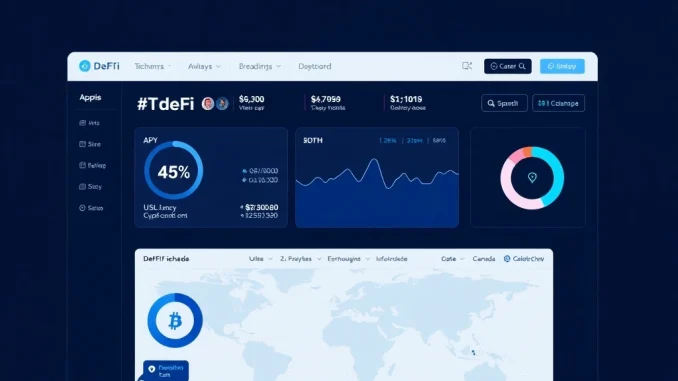
Kraken’s DeFi Earn is a deposit product designed to simplify user exposure to decentralized finance protocols. Unlike traditional staking or savings products managed entirely by the exchange, DeFi Earn allocates user funds to a curated selection of on-chain DeFi lending and liquidity protocols. Kraken manages the technical complexity, including smart contract interactions, gas fees, and protocol selection, presenting users with a single, simplified yield figure. The company has confirmed that while yields are variable and dependent on on-chain market conditions, they are targeting APYs of up to 8% for supported assets. This product directly addresses a common user pain point: the technical barrier and capital requirements for profitable participation in DeFi ecosystems like Ethereum, Arbitrum, or Optimism.
The operational model involves several key steps. First, users deposit supported cryptocurrencies, such as Ethereum (ETH) or stablecoins, into their Kraken Earn account. Kraken’s infrastructure then pools these funds and deploys them across pre-vetted DeFi strategies. Crucially, Kraken assumes responsibility for the security audits of these strategies and the management of private keys for the deployment transactions. Users see a single, aggregated yield on their dashboard, abstracting away the underlying complexity. However, Kraken has been transparent about a distinct risk: while withdrawals are typically processed immediately, they may face temporary delays during periods of extreme network congestion or low liquidity in the underlying DeFi pools—a risk profile different from purely centralized systems.
The Strategic Expansion into Regulated DeFi Access
Kraken’s launch across three major regulatory jurisdictions—the U.S., Canada, and the EEA—is a calculated strategic expansion. It reflects a growing trend of crypto-native institutions building compliant pathways between traditional finance (TradFi), centralized finance (CeFi), and decentralized finance (DeFi). For years, a regulatory and operational chasm has separated the high-yield potential of DeFi from the vast user bases of exchanges like Kraken, Coinbase, and Binance. This product serves as a bridge, allowing Kraken to leverage its established trust, security, and regulatory licenses to offer a new service class.
The timing is also significant. Following the market turbulence of 2022-2023, which highlighted risks in both centralized lending platforms and unaudited DeFi protocols, there is heightened demand for yield products that balance innovation with security and regulatory oversight. By curating the DeFi protocols and managing the technical execution, Kraken aims to provide a mitigated risk profile compared to direct, self-custody DeFi participation. This move can be seen as a direct competitive response to similar earn products from rivals and a play to retain assets on-platform that might otherwise seek yield elsewhere.
- Market Context: The product enters a market where yield generation has become a central utility for holding digital assets.
- Regulatory Navigation: Launching in the U.S. and EEA suggests Kraken has engaged with regulators to structure a compliant product framework.
- User Acquisition: It provides a compelling reason for both existing users to allocate more funds and new users to choose Kraken over competitors.
Understanding the Yield Source and Associated Risks
The promised yield of up to 8% APY does not materialize from thin air; it is generated through fundamental DeFi activities. Primarily, yields are accrued through lending protocols where deposited assets are supplied as liquidity for borrowers, who pay interest. These protocols operate autonomously via smart contracts on blockchains like Ethereum. The yield is a function of supply and demand for specific crypto assets. For example, high demand to borrow stablecoins for trading leverage can drive up lending rates for stablecoin suppliers.
Kraken’s disclosure regarding potential withdrawal delays during “periods of low liquidity” is a critical, honest delineation of DeFi-native risk. In a traditional bank or centralized exchange, withdrawal capacity is a function of the institution’s treasury management. In DeFi, a user’s ability to withdraw is contingent on the available liquidity in a specific smart contract pool. If many users withdraw simultaneously or trading activity drains a pool, the smart contract’s mechanics can impose delays or require transactions to be processed over time to protect remaining users—a process distinct from a traditional bank run but with similar user impact. This transparency is part of building trust and educating users on the nuanced differences between financial systems.
Comparative Analysis with Existing Earn Products
Kraken is not the first platform to offer yield services. However, DeFi Earn represents an evolution from its own and others’ existing offerings. Traditionally, exchanges have offered staking rewards (for proof-of-stake assets) and fixed-term savings products backed by their own lending desks. DeFi Earn differs fundamentally by sourcing yield from public, on-chain protocols rather than the exchange’s internal balance sheet.
| Product Type | Yield Source | Risk Profile | Custody Model |
|---|---|---|---|
| Traditional Staking | Network Inflation Rewards | Protocol Slashing, Network Risk | Custodial (Exchange-held keys) |
| Centralized Lending/Savings | Exchange’s Lending Desk & Treasury | Counterparty (Exchange) Solvency Risk | Full Custodial |
| Kraken DeFi Earn | On-Chain Lending & Liquidity Pools | Smart Contract Risk, DeFi Market Liquidity Risk | Custodial Gateway to Non-Custodial Protocols |
| Self-Directed DeFi | User-Chosen Protocols | Full User Responsibility (Smart Contract, Key Management, Execution) | Non-Custodial (User-held keys) |
This positioning allows Kraken to offer potentially higher yields than standard savings (which are limited by the exchange’s own borrowing rates) while arguably presenting a different risk vector than products reliant solely on the exchange’s creditworthiness. It is a hybrid model, aiming to capture the best of both worlds.
Implications for the Broader Cryptocurrency Landscape
The successful rollout of Kraken DeFi Earn could have several long-term implications. First, it legitimizes DeFi yield generation as a viable, scalable product for mainstream audiences. Second, it may pressure other major exchanges and even traditional financial institutions to develop similar gateways, accelerating capital flow into the DeFi ecosystem. Third, it creates a new benchmark for transparency; users will increasingly expect clear explanations of where their yield originates and the specific risks involved, moving beyond vague promises of high returns.
Furthermore, this development continues the trend of financial infrastructure convergence. The lines between broker, bank, and protocol are blurring. Kraken, a centralized exchange, is now acting as a fund manager and risk assessor for exposure to decentralized protocols. This could pave the way for more sophisticated, tokenized investment products that blend CeFi and DeFi, potentially attracting a new wave of institutional capital seeking regulated on-ramps to decentralized finance yields.
Conclusion
The launch of Kraken’s DeFi Earn product in the United States, Europe, and Canada represents a calculated and significant evolution in cryptocurrency-based financial services. By offering users a simplified path to decentralized finance yields of up to 8% APY, Kraken is addressing a clear market demand while navigating complex regulatory environments. This hybrid model acknowledges the innovative potential of DeFi while applying the guardrails of a established, centralized platform. The product’s success will hinge not only on the yield it delivers but also on Kraken’s ability to effectively communicate and manage the unique risks associated with on-chain liquidity, thereby fostering trust in this new bridge between two distinct financial paradigms. The Kraken DeFi Earn launch is more than a new feature; it is a signal of the ongoing integration and maturation of the entire digital asset ecosystem.
FAQs
Q1: What is Kraken DeFi Earn?
Kraken DeFi Earn is a new custodial product that allows users to deposit cryptocurrencies. Kraken then deploys these funds into selected decentralized finance (DeFi) protocols to generate yield, offering users a simplified way to earn potential returns up to 8% APY.
Q2: Where is Kraken DeFi Earn available?
The product is initially available to qualified clients in the United States, the European Economic Area (EEA), and Canada. Availability is subject to local regulatory approval and Kraken’s terms of service.
Q3: How does the yield for DeFi Earn work?
The yield is generated by supplying user-deposited assets to on-chain DeFi lending and liquidity protocols. The annual percentage yield (APY) is variable and depends on the real-time supply and demand dynamics within those decentralized markets.
Q4: What are the main risks of using Kraken DeFi Earn?
Key risks include smart contract vulnerability in the underlying DeFi protocols, potential delays in withdrawals during periods of low on-chain liquidity, and the variable nature of the yield. It carries different risks compared to Kraken’s traditional staking or savings products.
Q5: How is this different from regular crypto staking on Kraken?
Traditional staking involves participating in a blockchain’s consensus mechanism (e.g., for Ethereum or Cardano) to earn network rewards. DeFi Earn involves lending assets in decentralized markets. The yield source, risk profile, and underlying technology are distinct.
Q6: Can I withdraw my funds from DeFi Earn at any time?
Kraken states that withdrawals are generally processed immediately upon request. However, the company explicitly notes that temporary delays can occur during periods of low liquidity in the underlying DeFi pools, which is an inherent characteristic of how these decentralized protocols function.