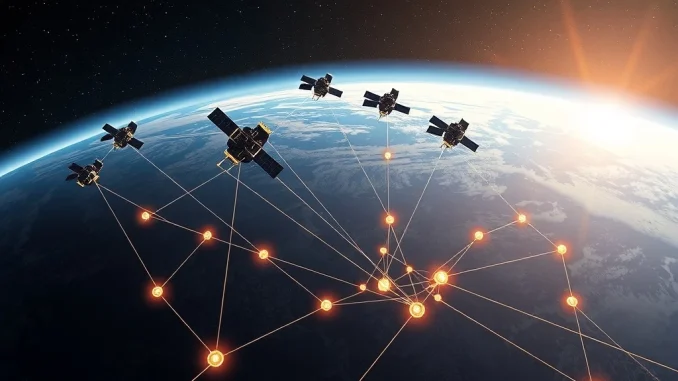
SpaceCoin Airdrop Plan Unveils Strategic SPACE Token Distribution for Satellite Internet Project
In a significant move for the decentralized physical infrastructure (DePIN) sector, SpaceCoin has formally announced the detailed distribution plan for its upcoming SPACE token airdrop. This announcement, first reported by the industry news source Wu Blockchain on March 15, 2025, outlines a phased, multi-season approach designed to balance immediate community access with long-term network stability. The project aims to leverage blockchain technology to create a decentralized, satellite-based internet network, challenging traditional telecommunications models. Consequently, the token distribution strategy reflects a careful calibration of incentives for early supporters and long-term builders.
SpaceCoin Airdrop Details and Vesting Schedule
The SpaceCoin airdrop will occur across two distinct seasons, each with a structured unlock schedule. For Season One participants, 25% of the allocated SPACE tokens will unlock immediately upon the Token Generation Event (TGE). The remaining 75% will then distribute in equal monthly installments over the subsequent three months. This structure provides initial liquidity while encouraging continued engagement with the ecosystem.
Season Two commences precisely one month after the TGE. Its schedule features a more accelerated vesting period. Participants in this season will receive their allocations through a monthly unlock of 33.3% over three consecutive months. This two-season model allows SpaceCoin to reward different cohorts of early community members and testnet participants systematically. The clear, pre-defined schedule aims to mitigate the market volatility often associated with large, sudden token releases.
- Season One Unlock: 25% at TGE, then 25% monthly for 3 months.
- Season Two Unlock: 33.3% monthly for 3 months, starting 1 month post-TGE.
- Total Airdrop Allocation: Specific percentage of total supply not disclosed in initial report.
Staking Incentives and Strategic Partnerships
Alongside the airdrop announcement, SpaceCoin revealed a complementary staking program. This initiative offers token holders an annual percentage rate (APR) of 10% for locking their SPACE tokens. The staking mechanism serves a dual purpose: it provides a yield opportunity for holders and helps secure the nascent network by reducing circulating supply. Typically, such programs aim to align holder incentives with the project’s long-term health.
This development follows a previously established token swap partnership with World Liberty Financial (WLFI). That collaboration allowed holders of the WLFI token to swap their assets for SPACE tokens under agreed-upon terms. Strategic partnerships like this are common in the crypto space for building initial treasury depth and uniting community efforts. They provide a foundation of locked value before a public token launch.
Context Within the DePIN and Satellite Internet Arena
The SpaceCoin project enters a competitive and capital-intensive field. Decentralized satellite internet seeks to provide global broadband coverage, especially in underserved regions, using a network of low-Earth-orbit (LEO) satellites managed via blockchain governance and incentives. Analysts often compare this model to centralized ventures like Starlink, but with ownership and decision-making distributed among token holders.
Successful token distribution is critical for DePIN projects. It must fund development, incentivize hardware operators, and create a functional economy for network services. The phased unlock approach adopted by SpaceCoin is a recognized best practice. It prevents the sell-pressure that can cripple a new token’s price if too many coins hit the market simultaneously. Furthermore, the staking program directly addresses the “dump” concern by offering a compelling reason to hold and stake tokens rather than sell them immediately.
Technical and Market Implications of the Plan
The announced plan has several immediate implications. First, it provides clarity for eligible recipients, allowing them to plan their financial strategies. Second, it signals to the broader market that SpaceCoin’s team is considering tokenomics seriously. A transparent vesting schedule builds trust, which is a valuable commodity in the cryptocurrency industry. Market observers will closely watch the token’s performance at and after the TGE, using it as a gauge for investor sentiment toward satellite DePIN projects.
From a technical perspective, the success of the airdrop and staking program depends on seamless smart contract execution. Security audits of these contracts will be paramount to prevent exploits that could drain funds or disrupt distribution. The project’s ability to onboard users to its staking portal smoothly will also be a key test of its operational readiness. Community feedback during the claim process often shapes a project’s early reputation.
Expert Analysis on Vesting Schedules
Industry analysts frequently emphasize the importance of sensible vesting. “A well-structured unlock schedule is a hallmark of a mature project,” notes a report from the blockchain analytics firm TokenUnlocks. “It demonstrates a long-term vision that prioritizes ecosystem growth over short-term speculation.” Projects that release too many tokens too quickly often struggle to maintain developer funding and community morale during market downturns. SpaceCoin’s three to four-month linear vesting for airdrop recipients is generally viewed as a moderate and reasonable timeframe, more conservative than immediate full unlocks but more aggressive than multi-year locks.
Conclusion
The SpaceCoin airdrop distribution plan marks a pivotal step in the project’s journey to establish a decentralized satellite internet network. By implementing a phased, two-season unlock schedule and coupling it with a 10% APR staking program, the team aims to foster sustainable growth and align holder incentives. This structured approach to the SPACE token release reflects evolving best practices in crypto-economics, focusing on stability and long-term participation over hype. The execution of this plan, alongside the ongoing technical development of the satellite network, will ultimately determine SpaceCoin’s position in the competitive and ambitious DePIN landscape.
FAQs
Q1: What is the total percentage of SPACE tokens allocated to the airdrop?
The initial announcement from Wu Blockchain did not specify the total percentage of the SPACE token supply dedicated to the airdrop. The report detailed the unlock schedules for the allocated tokens but not the overall size of the airdrop pool relative to the total token supply.
Q2: Who is eligible for the SpaceCoin (SPACE) airdrop?
The specific eligibility criteria for the Season One and Season Two airdrops were not detailed in the initial report. Typically, such airdrops reward early testnet users, community contributors, or holders of partner project tokens (like WLFI). Official channels from SpaceCoin will provide exact eligibility requirements.
Q3: How does the staking program work, and are there any risks?
The staking program offers a 10% APR for locking SPACE tokens. This likely involves sending tokens to a smart contract for a flexible or fixed term. Risks standard to staking include smart contract vulnerability (risk of hack), protocol slashing conditions (if applicable), and the illiquidity of staked tokens during the lock-up period.
Q4: How does SpaceCoin’s model differ from traditional satellite internet?
SpaceCoin proposes a decentralized model where network infrastructure (satellites, ground stations) could be owned and operated by a distributed group of individuals or entities incentivized by SPACE tokens. This contrasts with traditional models like Starlink, where a single company (SpaceX) owns and controls the entire satellite constellation and network.
Q5: What was the previous partnership with World Liberty Financial (WLFI)?
SpaceCoin and World Liberty Financial entered a token swap partnership. This allowed holders of the WLFI token to exchange them for SPACE tokens at a predetermined ratio, effectively merging community efforts and providing WLFI holders with early access to the SPACE ecosystem before its public launch.
Related News
- Nexo donates 1 BTC to secure the bitcoin network & fund core development
- Bitcoin May Hit $150K, but These Altcoins Offer 1,000x Returns
- ASTER Cryptocurrency Surges 40% After Breaking Key Accumulation Zone - Is $10 Still a Viable Target?
Related: Ispoverse and Gata Forge a Revolutionary Path for AI-Driven Web3 Gaming
Related: Ethereum Price Analysis: CPI Cools to 2.4%, Will $1,866 Support Hold?
Related: PIPPIN Price Action Reveals Resilient Rally As Blockchain Data Confirms Major Whale Accumulation