OCC Defies Senator Warren’s Demands, Proceeds with World Liberty Financial Bank Charter Review
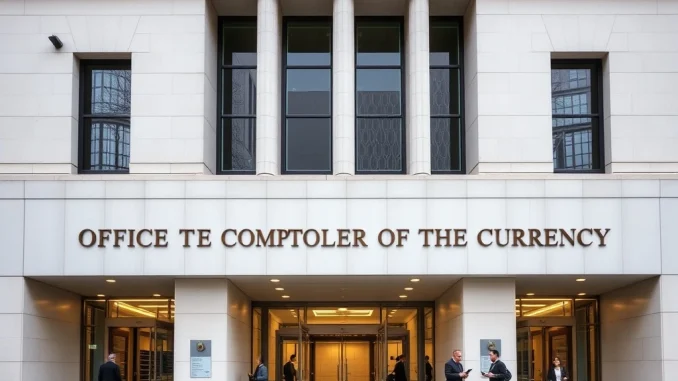
WASHINGTON, D.C. – March 15, 2025 – The U.S. Office of the Comptroller of the Currency (OCC) has firmly rejected Senator Elizabeth Warren’s call for a special investigation into World Liberty Financial’s bank charter application, choosing instead to proceed with its standard evaluation process. This decision represents a significant development in the ongoing regulatory debate surrounding cryptocurrency integration within traditional banking systems.
OCC Maintains Standard Procedures for World Liberty Financial Charter Review
The OCC confirmed its commitment to established protocols when reviewing World Liberty Financial’s application for a national bank charter. Agency officials emphasized their dedication to consistent regulatory standards. They stated that all applications receive equal treatment under existing guidelines. The agency’s response to Senator Warren came through official channels this week. This procedural adherence maintains regulatory predictability for financial institutions.
Bank charter applications typically undergo rigorous multi-stage reviews. The OCC examines financial stability, management competence, and compliance frameworks. World Liberty Financial’s application entered this standard pipeline last quarter. The company seeks to operate as a nationally chartered bank with cryptocurrency services. Regulatory experts note this represents a growing trend in financial technology.
Senator Warren’s Investigation Request and Political Context
Senator Elizabeth Warren, a Massachusetts Democrat and prominent cryptocurrency critic, formally requested the special investigation last month. Her letter to the OCC cited concerns about potential conflicts of interest. Warren specifically referenced former President Donald Trump’s financial stake in World Liberty Financial. She urged the agency to halt the chartering process until Trump divested his holdings completely.
Warren has consistently advocated for stricter cryptocurrency regulations throughout her Senate career. She chairs the Senate Banking Committee’s Subcommittee on Economic Policy. Her recent legislative efforts include the Digital Asset Anti-Money Laundering Act. This proposed legislation would extend Bank Secrecy Act requirements to cryptocurrency entities. Warren’s position reflects broader Democratic concerns about financial system risks.
Regulatory Precedent and Historical Context
The OCC’s decision aligns with historical regulatory practice. The agency has maintained consistent chartering procedures for decades. Previous administrations faced similar political pressures regarding bank approvals. Regulatory independence remains a cornerstone of the federal banking system. The OCC’s statutory mandate emphasizes objective evaluation criteria.
Recent years have seen increased cryptocurrency integration within traditional finance. The OCC granted its first cryptocurrency custody charter in 2020. Subsequent approvals have followed established regulatory frameworks. World Liberty Financial represents the seventh cryptocurrency-related charter application this year. Each application undergoes identical scrutiny regardless of political considerations.
World Liberty Financial’s Business Model and Application Details
World Liberty Financial operates as a hybrid financial services platform. The company combines traditional banking services with cryptocurrency offerings. Their proposed charter would enable nationwide deposit-taking and lending operations. The application includes specific provisions for digital asset custody services. Company executives emphasize their compliance-first approach to regulatory requirements.
Key components of WLFI’s application include:
- Traditional checking and savings accounts with FDIC insurance
- Cryptocurrency trading and custody services
- Business lending programs for technology companies
- Comprehensive anti-money laundering protocols
- Multi-layered cybersecurity infrastructure
The company’s leadership team includes former regulators and banking executives. Their application reportedly exceeds minimum capital requirements. Independent audits have verified their financial disclosures. Industry analysts predict the OCC will complete its review within standard timelines.
Potential Impacts on Cryptocurrency Regulation and Banking
The OCC’s decision carries significant implications for financial regulation. Maintaining standard procedures reinforces regulatory consistency. Financial institutions value predictable oversight frameworks. This approach supports innovation within established boundaries. The banking sector closely monitors charter approval trends.
Cryptocurrency integration faces ongoing regulatory challenges. Different agencies maintain varying approaches to digital assets. The Securities and Exchange Commission classifies most tokens as securities. The Commodity Futures Trading Commission views them as commodities. Banking regulators focus on safety and soundness concerns.
Expert Perspectives on Regulatory Independence
Financial regulation experts emphasize the importance of procedural consistency. Dr. Michael Chen, former FDIC senior advisor, notes that political pressures inevitably arise. “Regulatory agencies must balance multiple considerations,” Chen explains. “Their primary duty involves protecting financial system stability. Political considerations cannot override statutory mandates.”
Professor Sarah Johnson of Georgetown Law School highlights historical precedents. “The OCC has maintained chartering independence for 160 years,” Johnson states. “This independence withstands changing political administrations. The agency’s decision reflects this institutional resilience. Standard procedures ensure equal treatment for all applicants.”
Comparative Analysis of Recent Bank Charter Approvals
| Institution | Application Year | Special Features | Review Timeline | Outcome |
|---|---|---|---|---|
| Anchorage Digital | 2020 | First crypto-native bank | 14 months | Approved |
| Protego Trust | 2021 | Digital asset custody | 16 months | Approved |
| Paxos National Trust | 2021 | Stablecoin issuance | 15 months | Approved |
| Kraken Financial | 2020 | Exchange integration | 13 months | Approved |
| World Liberty Financial | 2024 | Hybrid banking model | Ongoing | Pending |
This comparative data reveals consistent review patterns. The OCC maintains similar timelines across applications. Special features receive additional scrutiny but follow standard procedures. World Liberty Financial’s review aligns with historical precedents. The agency’s approach demonstrates regulatory continuity.
Conclusion
The OCC’s decision to proceed with World Liberty Financial’s bank charter application represents regulatory consistency in action. The agency maintains its standard review procedures despite political pressures. This approach supports financial system stability and innovation. The World Liberty Financial case illustrates ongoing cryptocurrency integration challenges. Regulatory frameworks continue evolving alongside technological advancements. The banking sector watches this development closely for future implications.
FAQs
Q1: What is the OCC’s role in bank charter approvals?
The Office of the Comptroller of the Currency regulates national banks and federal savings associations. It evaluates charter applications based on financial stability, management competence, and compliance capabilities. The agency maintains consistent procedures for all applicants.
Q2: Why did Senator Warren request a special investigation?
Senator Warren expressed concerns about potential conflicts of interest related to former President Trump’s financial stake in World Liberty Financial. She advocates for stricter cryptocurrency regulations and requested the investigation to ensure proper oversight.
Q3: How long do bank charter applications typically take?
Standard OCC reviews generally require 12-18 months for completion. The timeline depends on application complexity and regulatory requirements. World Liberty Financial’s application follows this established pattern.
Q4: What makes World Liberty Financial’s application unique?
The company proposes a hybrid model combining traditional banking with cryptocurrency services. This includes FDIC-insured accounts alongside digital asset custody. Their application represents growing fintech integration trends.
Q5: How does this decision affect cryptocurrency regulation?
The OCC’s commitment to standard procedures reinforces regulatory predictability. This supports responsible innovation within established frameworks. The decision maintains consistency in financial oversight approaches.
Related News
- Blum Unlocks Revolutionary Perpetual Futures Trading on Telegram
- Mastercard's Strategic Pivot: Considering Zerohash Investment After Failed Acquisition Talks
- Cryptocurrency Exchange WhiteBIT Banned by Russia in Stunning Move Over Ukraine Support
Related: Tokenized Aviation Asset: Ethzilla's Groundbreaking Ethereum Launch Unlocks Engine Leasing
Related: Coinbase Q4 2025 Revenue: Stunning 20% Drop as Crypto Winter Bites
Related: Bitcoin Bull Market: Bitwise CIO Reveals 4 Critical Catalysts for the Next Surge