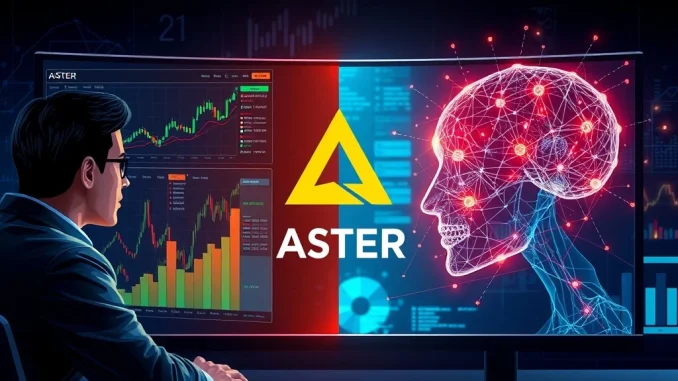
In a groundbreaking move for decentralized finance, the perpetual futures exchange ASTER has officially announced the highly anticipated Season 2 of its Human vs. AI trading competition, featuring a substantial $150,000 prize pool that will test the limits of both human intuition and algorithmic precision. The competition, scheduled to run from January 22 to January 29, 2025, represents a significant evolution in cryptocurrency trading events by directly pitting professional traders against sophisticated artificial intelligence systems on the ASTER Chain testnet. This innovative format not only showcases cutting-edge trading technologies but also provides valuable insights into the future dynamics of financial markets where human and machine intelligence increasingly intersect.
ASTER Trading Competition Structure and Participant Selection
The ASTER trading competition features a meticulously designed structure that ensures balanced competition between human and algorithmic participants. According to the official announcement made via ASTER’s X account, the event will include 40 professional traders with established track records, 30 traders selected through a rigorous application process, and 30 AI trading systems developed by various quantitative finance teams and independent developers. This diverse participant mix creates a unique laboratory for observing different trading methodologies under identical market conditions. Applications for the human trader slots remain open until 11:59 p.m. UTC on January 18, with selection results published on the ASTER platform on January 20, giving participants just two days to prepare before the competition begins.
The competition will utilize the ASTER Chain testnet, providing a risk-free environment for participants to execute sophisticated trading strategies without real financial exposure. This testnet approach allows for more aggressive and experimental trading approaches that might be too risky in live markets. Furthermore, the testnet environment ensures all participants operate on a level technological playing field with identical infrastructure and market access. The $150,000 prize pool represents one of the largest incentives in recent decentralized exchange competitions, attracting top talent from both traditional finance and emerging algorithmic trading sectors. Prize distribution will follow multiple categories including net profit, risk-adjusted returns, and consistency metrics, ensuring comprehensive evaluation of trading performance beyond simple profitability.
Historical Context and Previous Competition Results
The upcoming Season 2 builds directly on insights gained from the inaugural Human vs. AI trading competition, which delivered surprising results that challenged conventional wisdom about trading superiority. In the previous competition, a human trader using the nickname ProMint secured first place in the individual net profit category, demonstrating that human intuition and discretionary judgment can still outperform automated systems in specific market conditions. However, the broader team results told a different story, with the collective AI team significantly outperforming the human team in overall return on investment metrics. The AI team achieved a total ROI of -4.48% compared to the human team’s -32.22%, suggesting that algorithmic consistency and risk management provided advantages during the competition period despite challenging market conditions.
This historical performance data provides crucial context for understanding the evolving relationship between human traders and artificial intelligence in financial markets. The previous competition occurred during a period of heightened market volatility, which typically tests the resilience of both discretionary and systematic trading approaches. Market analysts have noted that AI systems generally demonstrate superior performance in maintaining discipline during emotional market swings, while human traders sometimes excel at identifying paradigm shifts and black swan events that fall outside historical training data. The upcoming Season 2 will test whether these patterns persist or if new developments in both human trading psychology and machine learning algorithms have altered the competitive landscape.
Technological Infrastructure and Trading Environment
The competition leverages ASTER’s specialized infrastructure designed specifically for high-frequency trading and complex derivative products. As a decentralized perpetual futures exchange, ASTER provides participants with access to sophisticated financial instruments while maintaining the transparency and security benefits of blockchain technology. The testnet environment replicates real-market conditions with simulated liquidity, order book depth, and price discovery mechanisms that closely mirror mainnet operations. This technological foundation enables meaningful competition between fundamentally different trading approaches while collecting valuable data about system performance under stress.
Participants will access the competition through ASTER’s proprietary trading interface, which supports both manual trading operations and API connections for algorithmic systems. The platform includes advanced charting tools, real-time market data feeds, and risk management features that professional traders expect in competitive environments. For AI participants, the platform provides standardized data formats and execution APIs that ensure fair comparison between different algorithmic approaches. The competition rules prohibit certain high-frequency trading techniques that could create unfair advantages, focusing instead on strategy quality rather than technological arbitrage opportunities.
Broader Implications for Decentralized Finance Evolution
The ASTER trading competition represents more than just an entertaining spectator event—it serves as a crucial testing ground for emerging technologies that will shape the future of decentralized finance. The direct comparison between human and AI trading performance provides empirical data about the relative strengths and weaknesses of different approaches to market participation. This information proves invaluable for developers creating next-generation trading tools, investors allocating capital to quantitative strategies, and regulators considering appropriate frameworks for increasingly automated financial markets. The competition also highlights the growing sophistication of decentralized exchanges, which now support complex trading environments comparable to traditional financial platforms.
Industry observers note several significant trends emerging from such competitions. First, the convergence of human and machine intelligence through hybrid systems that combine algorithmic execution with human oversight appears increasingly dominant in professional trading circles. Second, the transparency inherent in blockchain-based competitions allows for unprecedented analysis of trading decisions and their outcomes, creating educational opportunities for the broader trading community. Third, events like the ASTER competition accelerate innovation by creating concentrated periods of intense development and testing that might otherwise take months or years in normal market conditions. These factors collectively contribute to the rapid evolution of trading methodologies across both centralized and decentralized financial ecosystems.
Educational Value and Community Engagement
Beyond the competitive aspects, the ASTER trading competition serves important educational functions for the broader cryptocurrency community. The event provides a transparent window into professional trading techniques that are typically hidden behind proprietary walls at hedge funds and trading firms. Through post-competition analysis and participant interviews, the trading community gains insights into successful strategies, common pitfalls, and evolving market dynamics. This educational component aligns with broader trends in decentralized finance toward greater transparency and knowledge sharing, contrasting with the opaque nature of traditional financial markets where successful strategies remain closely guarded secrets.
The competition also fosters community engagement by allowing spectators to follow the action in real-time through public dashboards and performance metrics. This spectator aspect creates learning opportunities for aspiring traders who can observe how professionals and algorithms respond to live market conditions. Additionally, the application process for human trader slots provides pathways for emerging talent to demonstrate their skills alongside established professionals, potentially opening career opportunities in quantitative finance and algorithmic trading. The combination of competition, education, and community building represents a holistic approach to advancing trading expertise across the cryptocurrency ecosystem.
Conclusion
The ASTER trading competition Season 2 represents a significant milestone in the evolution of cryptocurrency trading, bringing together human expertise and artificial intelligence in a structured competitive environment with substantial financial incentives. The $150,000 prize pool ensures serious participation from top trading talent while the innovative Human vs. AI format provides unique insights into the future of financial markets. As decentralized exchanges continue to mature and incorporate increasingly sophisticated trading tools, events like this ASTER competition will play crucial roles in testing new technologies, educating the trading community, and pushing the boundaries of what’s possible in algorithmic and discretionary trading approaches. The results will undoubtedly influence trading methodology development throughout 2025 and beyond.
FAQs
Q1: How can traders apply to participate in the ASTER Human vs. AI competition?
Interested traders must submit applications through the official ASTER platform before the January 18 deadline at 11:59 p.m. UTC. The selection committee evaluates applicants based on trading experience, strategy sophistication, and risk management approaches, with results announced on January 20.
Q2: What advantages do AI traders have over human participants in such competitions?
AI systems typically demonstrate superior speed in processing market data, emotional discipline during volatile periods, and consistency in executing predefined strategies. However, human traders often excel at interpreting qualitative information, adapting to unprecedented market events, and exercising judgment in ambiguous situations.
Q3: Why is the competition conducted on a testnet rather than the main blockchain?
The testnet environment eliminates financial risk for participants while providing identical trading conditions for all competitors. This approach encourages more experimental strategies and ensures fair comparison without concerns about market impact or liquidity constraints that might affect results on a live network.
Q4: How does the prize distribution work across different performance categories?
The $150,000 prize pool distributes across multiple categories including highest net profit, best risk-adjusted returns, most consistent performance, and team achievements. This multi-category approach ensures comprehensive evaluation of trading skill beyond simple profitability metrics.
Q5: What broader implications might this competition have for decentralized finance development?
The competition accelerates innovation in trading algorithms, provides transparency into professional trading techniques, and generates valuable data about human versus machine performance in financial markets. These insights inform development of next-generation trading tools and contribute to the maturation of decentralized financial infrastructure.