In the fast-paced world of cryptocurrency, market dynamics can shift in an instant, often revealing fascinating insights into investor sentiment and regional preferences. Recent data from Upbit, one of South Korea’s largest cryptocurrency exchanges, has sent ripples across the market, offering compelling Ethereum news and highlighting a surprising leader in trading volume. While many might expect Bitcoin to reign supreme, it was XRP that truly captured the spotlight, signaling a significant shift in liquidity and investor focus. Let’s dive deep into what this means for the broader crypto landscape.
Unpacking the Upbit Volume Shockwave: Why XRP Upbit Volume Soared
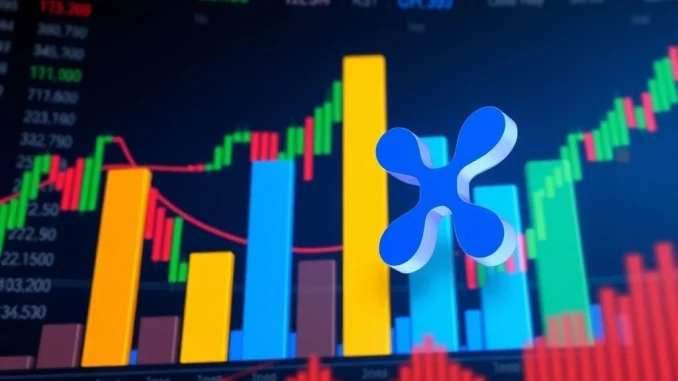
The latest 24-hour trading volume ranking on Upbit has revealed a compelling narrative: XRP, Ethereum, and GLM have emerged as the top three assets by activity, reshaping perceptions of where market liquidity is currently flowing. According to detailed CoinGecko data, XRP demonstrated remarkable dominance, capturing a substantial 14.05% share of Upbit’s colossal $3.147 billion trading volume. This translates to an impressive $440 million in activity specifically for the XRP/KRW trading pair.
This surge in XRP Upbit volume isn’t just a fleeting moment; it underscores sustained demand for XRP’s cross-border payment solutions, particularly within the Korean market. Despite ongoing regulatory scrutiny in various jurisdictions, XRP’s utility-driven appeal continues to resonate with a significant segment of traders and investors. Its efficiency in facilitating international transactions remains a key driver for its liquidity on platforms like Upbit.
Ethereum News: A Steady Force in a Volatile Market
Following XRP’s lead, Ethereum (ETH) secured the second position, commanding 8.24% of Upbit’s total trading volume, equating to $258 million in activity. While not leading the pack in volume, Ethereum’s consistent presence in the top tier reinforces its foundational role within the cryptocurrency ecosystem.
Despite a modest price gain of 0.26% at the time of reporting (20:37 ET), Ethereum’s strength lies beyond mere daily price fluctuations. It stands as the cornerstone of decentralized finance (DeFi), NFTs, and a vast array of smart contract applications. The continuous development and upgrades to the Ethereum network, such as the ongoing transition to Ethereum 2.0 (now known as the Merge and subsequent upgrades), consistently attract developer activity and user adoption. This makes any Ethereum news regarding its market presence crucial for understanding the health and direction of the broader crypto space.
Key Takeaways for Ethereum:
- DeFi Backbone: Ethereum remains the primary blockchain for decentralized applications, attracting significant capital and innovation.
- Network Upgrades: Continuous improvements enhance scalability, security, and sustainability, maintaining investor confidence.
- Ecosystem Growth: A burgeoning ecosystem of dApps, stablecoins, and Layer-2 solutions fuels ongoing demand for ETH.
GLM’s Ascent: A Deeper Look into Upbit Trading Preferences
Securing the third spot in Upbit’s volume rankings was GLM (Golem), with a 5.02% share, generating $157 million in trading activity. GLM’s prominent placement might surprise some, but it speaks volumes about the specific preferences and interests of Upbit’s user base.
Golem is a decentralized computing network that allows users to rent out their idle computing power or utilize it for various tasks, from rendering CGI to machine learning. Its appeal on Upbit likely stems from its platform’s promise of low-cost transactions and decentralized governance, attracting traders looking for niche projects with specific utility. The high Upbit trading volume for GLM could indicate:
- Localized Adoption: Targeted marketing or partnerships within the Korean market.
- Speculative Interest: Traders capitalizing on perceived growth potential or short-term price movements.
- Utility-Driven Demand: Growing recognition of GLM’s decentralized computing capabilities.
While GLM’s long-term success will heavily depend on its ecosystem’s growth and fundamental project developments, its current performance on Upbit highlights the diversity of assets attracting significant liquidity in regional markets.
Understanding Altcoin Dominance on Upbit: Beyond Bitcoin
Perhaps one of the most striking revelations from the Upbit data is Bitcoin’s absence from the top three volume leaders. This isn’t necessarily a bearish signal for Bitcoin itself, but rather a clear indicator of Upbit’s user base prioritizing altcoins for specific use cases and liquidity opportunities. This trend of altcoin dominance in specific exchange rankings is increasingly observed in niche project traction.
Unlike general market indices where Bitcoin often leads due to its market capitalization and status as a benchmark, exchange-specific volume rankings reflect immediate trading activity and liquidity. On Upbit, traders appear to be more focused on assets that offer:
- Specific Utility: Like XRP’s cross-border payments or GLM’s decentralized computing.
- Higher Volatility: Potential for quicker gains in short-term trading.
- Localized Interest: Projects that resonate strongly with the Korean market’s preferences.
This emphasizes that market fragmentation is a real phenomenon, where different exchanges and regions exhibit unique trading behaviors. What performs well in terms of volume on one platform might not be reflected globally, urging analysts to contextualize data within broader conditions.
Navigating Korean Crypto Market Trends: What the Data Reveals
The Upbit rankings provide a valuable snapshot of immediate market behavior within a significant regional market. They underscore that liquidity often takes precedence over pure returns in daily trading activities. XRP’s consistent demand for its payment solutions, Ethereum’s reinforced status as a foundational asset, and GLM’s surprising performance all contribute to a nuanced understanding of current crypto market trends in South Korea.
For market observers, it’s crucial to contextualize these rankings. While Ethereum’s marginal price movement may hint at short-term confidence or macroeconomic factors, the overall picture suggests a market where traders are actively seeking out specific altcoins for their utility and liquidity, rather than solely relying on traditional benchmarks like Bitcoin for volume.
Analysts caution that trading volume rankings, while indicative of current demand, are not predictive of future price movements. They offer a window into immediate market sentiment and where capital is actively moving. Therefore, traders and analysts must consider these movements alongside project-specific developments, the evolving regulatory landscape, and broader industry trends to form a comprehensive market outlook.
Conclusion: A Dynamic Landscape Unveiled
The Upbit 24-hour trading volume data offers a compelling glimpse into the dynamic nature of the cryptocurrency market, particularly within the influential Korean sphere. XRP’s surprising dominance, alongside Ethereum’s steadfast presence and GLM’s notable rise, paints a picture of a market driven by diverse utilities, regional preferences, and the relentless pursuit of liquidity. This data reminds us that while global trends are important, understanding the nuances of specific exchanges and their user bases is paramount. As the crypto ecosystem continues to mature, such granular insights will become increasingly valuable for investors navigating its exciting, ever-evolving landscape.
Frequently Asked Questions (FAQs)
1. What is Upbit and why is its trading volume significant?
Upbit is one of the largest cryptocurrency exchanges in South Korea. Its trading volume is significant because it reflects the active participation and preferences of a major regional market, often indicating specific trends and liquidity dynamics that might differ from global averages.
2. Why did XRP dominate Upbit’s trading volume?
XRP’s dominance on Upbit, with a 14.05% share, suggests strong demand for its cross-border payment utility within the Korean market. Despite regulatory discussions, its efficiency in facilitating international transactions continues to attract a large volume of trading activity from users prioritizing this specific use case.
3. How does Ethereum’s performance on Upbit reflect its market position?
Ethereum securing the second spot in Upbit’s volume rankings, despite a modest price gain, reinforces its status as a foundational asset. It highlights its consistent demand as the backbone for decentralized finance (DeFi) and smart contract ecosystems, indicating its long-term importance rather than just short-term speculative interest.
4. What does GLM’s high ranking on Upbit indicate?
GLM’s third-place ranking on Upbit indicates a strong localized interest or speculative activity around its decentralized computing platform. It suggests that Upbit’s user base is attracted to projects offering specific utility, low-cost transactions, or potential for growth in niche areas, showcasing the diversity of assets gaining traction in regional markets.
5. Why was Bitcoin absent from Upbit’s top three volume rankings?
Bitcoin’s absence from Upbit’s top three volume leaders signifies that the exchange’s user base prioritizes altcoins for specific use cases and liquidity opportunities. This highlights market fragmentation, where regional exchanges may exhibit unique trading behaviors focused on utility-driven or higher-volatility altcoins rather than traditional benchmarks like Bitcoin for daily volume.
6. Are trading volume rankings predictive of future price movements?
No, trading volume rankings are not necessarily predictive of future price movements. They are indicative of current demand and liquidity. While high volume suggests active interest, analysts caution that it should be contextualized with other factors like project fundamentals, regulatory developments, and broader market sentiment to determine future price trends.