The cryptocurrency landscape is a constantly shifting terrain, and July 2025 brought a seismic shift, particularly within the altcoin sector. South Korea’s largest exchange, Upbit, became the epicenter of this activity, showcasing remarkable surges in XRP, CKB, and ENA. This period offered a compelling glimpse into the evolving dynamics of altcoin trading, driven by a confluence of exchange-specific liquidity, regulatory pressures, and fluctuating market sentiment. For both seasoned traders and long-term investors, understanding these trends is crucial for identifying actionable opportunities and navigating potential pitfalls.
The Upbit Effect: Decoding Altcoin Momentum
Upbit’s role in the July 2025 altcoin rally cannot be overstated. As a dominant force in the South Korean crypto market, its trading volumes often act as a barometer for broader market sentiment and liquidity, especially for assets popular in the region. The data revealed a fascinating divergence between speculative activity and value-driven adoption.
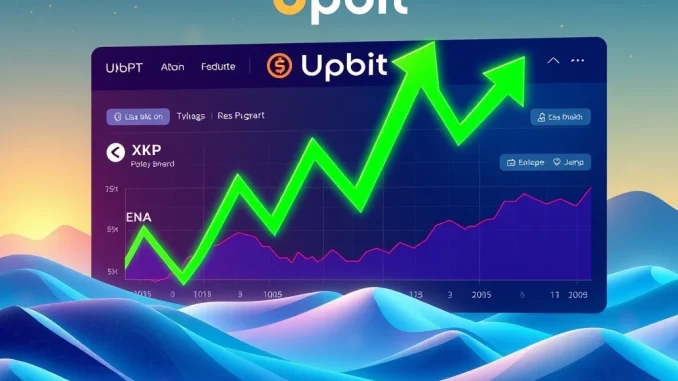
- XRP as a Liquidity Magnet: XRP’s trading volume on Upbit soared to an astonishing $3.2 billion on July 20, capturing 15.15% of the exchange’s total volume. This made XRP the highest-traded altcoin on the platform, underscoring its immense appeal as a liquidity magnet. However, this surge was followed by a significant 75 million XRP sell-off on July 24, which triggered a 15% price drop and resulted in $90 million in long liquidations. This volatility highlights the dual nature of exchange-driven volume: while it can signal strong interest, it also exposes assets to sudden, sharp corrections.
- Strategic Listings for CKB and ENA: The performance of CKB (Nervos Network) and ENA (Ethena) demonstrated the potent impact of strategic exchange listings. ENA, for instance, experienced a robust 20% price surge immediately following its July 17 listing on Upbit. This exemplifies how a major exchange’s decision can swiftly catalyze both retail and institutional demand. CKB, despite a 28% monthly decline, maintained a substantial 24-hour volume of $167 million, reflecting its dedicated appeal within the Nervos Network’s Layer 2 infrastructure. These trends suggest that short-term speculative opportunities often emerge directly from exchange-specific events, such as new listings or significant regulatory news.
Here’s a snapshot of key metrics on Upbit during this period:
| Symbol | Peak Daily Volume (July 20) | Upbit Volume Share | Key Event/Observation |
|---|---|---|---|
| XRP | $3.2 Billion | 15.15% | Highest altcoin volume; followed by 75M sell-off & 15% price drop |
| ENA | Significant Post-Listing Volume | N/A (New Listing) | 20% price surge post-July 17 listing |
| CKB | $167 Million (24-hour) | N/A (Niche Appeal) | Reflects interest in Nervos Layer 2, despite monthly decline |
Navigating XRP Volatility: A Trader’s Guide
For active traders, Upbit’s July activity served as a masterclass in exploiting exchange-driven volatility, particularly with XRP. The asset’s price action was heavily influenced by a dynamic interplay of large institutional orders and broader retail sentiment. On July 20, significant inflows into XRP exceeded typical retail trading patterns, strongly suggesting substantial institutional participation. However, the subsequent 75 million XRP sell-off, executed within a mere 24 hours, starkly exposed the fragility of short-term positions and the risks associated with high liquidity.
The crucial lesson for speculative traders is the imperative to monitor exchange-level liquidity metrics closely. A 28% drop in Upbit’s overall spot trading volume in early July, coupled with that massive XRP sell-off, served as a clear signal of a shift from bullish to bearish momentum. Tools like CoinGlass liquidation data, which tracks forced closures of leveraged positions, and on-chain order book depth, which shows the concentration of buy and sell orders at various price levels, can be invaluable for anticipating such significant market movements. Understanding these metrics can provide an edge, allowing traders to adjust their strategies before major price swings occur.
Strategic Listings: The Rise of CKB and ENA
The success stories of CKB and ENA on Upbit underscore a fundamental truth in the crypto market: exchange listings are powerful catalysts. While XRP benefits from established liquidity, newer or niche altcoins can experience dramatic shifts following a major exchange listing. For ENA, its 20% price surge immediately after being listed on Upbit demonstrates how such events can unlock significant retail and institutional demand, creating high-risk, high-reward opportunities for agile traders who can time these narratives.
CKB, the native token of the Nervos Network, tells a slightly different but equally compelling story. Its sustained $167 million 24-hour volume, even amidst a monthly decline, reflects its specific appeal within the Layer 2 infrastructure space. Nervos aims to create a universal blockchain platform, and CKB is integral to its scaling solutions and interoperability. The continued interest in CKB, despite broader market fluctuations, indicates that projects with clear technical upgrades and real-world use cases can attract and retain a dedicated investor base, transcending mere speculative hype fueled by new listings.
Beyond the Hype: Long-Term Value and Upbit‘s Influence
While short-term traders focus on volume spikes and immediate price action, long-term investors must look beyond the noise of exchange volatility and assess the fundamental strengths of altcoins. Upbit’s influence, while significant for short-term price discovery, is just one piece of the puzzle for sustained growth.
- XRP’s Enduring Utility: XRP’s primary utility lies in cross-border payments, offering faster and cheaper transactions compared to traditional banking systems. Its March 2025 SEC settlement, which clarified its status as a non-security in secondary markets, was a landmark event. This legal clarity significantly de-risked XRP for institutional adoption, positioning it as a hybrid asset with both speculative and utility-driven value. The subsequent launch of XRP ETFs, including the ProShares Ultra XRP ETF, further legitimizes its role in diversified investment portfolios, providing regulated avenues for exposure.
- CKB’s Technical Foundation: CKB’s value proposition is tied directly to the technical advancements of the Nervos Network. Its focus on Layer 2 scaling solutions, designed to improve transaction speed and reduce costs, addresses critical blockchain challenges. Investors looking for long-term growth often seek projects with robust technological roadmaps and practical applications.
- ENA’s DeFi Integration: ENA’s integration into decentralized finance (DeFi) protocols provides a strong long-term use case. Ethena is known for its synthetic dollar protocol, offering a censorship-resistant, stable asset. ENA’s price resilience post-listing, despite broader market declines, suggests its value is increasingly tied to its utility within the Ethena ecosystem, rather than solely on exchange-driven hype.
For long-term investors, the focus remains on projects with clear utility, strong development teams, and a growing ecosystem that transcends temporary exchange-driven surges.
Regulatory Currents: Impact on ENA and the Broader Market
The regulatory environment, particularly in South Korea, remains a critical variable influencing the performance of assets like ENA and the broader crypto market. Upbit’s announcement in July 2025 regarding a won-pegged stablecoin in collaboration with Naver Pay is a significant development. Such initiatives could dramatically boost local trading activity by providing a familiar and stable on-ramp for Korean users, indirectly benefiting altcoins traded on the platform.
Conversely, the looming threat of a $131.5 billion fine for KYC (Know Your Customer) violations highlights the inherent risks of regulatory overreach and the stringent compliance demands placed on exchanges. Investors must weigh these domestic regulatory factors against broader global trends, such as the increasing number of U.S. SEC crypto ETF approvals. These approvals, especially for mainstream cryptocurrencies, have the potential to unlock vast amounts of institutional capital, which could eventually flow into a wider array of altcoins like XRP and ENA, legitimizing them further in the eyes of traditional finance.
Strategic Investment Recommendations
Navigating the complex interplay of exchange dynamics, fundamental value, and regulatory landscapes requires a nuanced approach. Here are tailored recommendations for different investor profiles:
For Short-Term Traders:
- XRP: Maintain vigilance over Upbit’s order book depth and real-time liquidation data. A retest of the $3.60 resistance level could signal either a strong breakout opportunity or a significant reversal, demanding quick decision-making.
- ENA: Capitalize on post-listing volatility by setting exceptionally tight stop-losses. Given its susceptibility to exchange-driven sentiment and potential for rapid price swings, swift risk management is paramount.
- General Rule: Prioritize liquidity and be prepared for sudden shifts. Exchange-specific news and large order flows can create fleeting, but profitable, opportunities.
For Long-Term Investors:
- XRP: Consider allocating a portion of your portfolio to XRP ETFs. These regulated products offer exposure to XRP’s price movements while hedging against exchange-specific operational risks or direct custody concerns.
- CKB and ENA: Focus on projects with demonstrable real-world applications and strong underlying technology. For CKB, this means its Layer 2 scaling solutions for Nervos; for ENA, its integration into the Ethena DeFi ecosystem. These use cases are key to capturing long-term value that transcends short-term market hype.
- Diversification: Always diversify your altcoin holdings across projects with distinct use cases and technological foundations. This strategy helps mitigate exchange-driven liquidity shocks and reduces overall portfolio risk.
Risk Management Essentials:
- Trailing Stops: Implement trailing stops on high-volume altcoins like XRP to protect gains during periods of high volatility, allowing positions to ride upward trends while limiting downside exposure.
- Position Sizing: Never over-allocate to any single altcoin, especially those prone to rapid price swings.
- Stay Informed: Continuously monitor regulatory developments and exchange announcements, as these can have immediate and profound impacts on market dynamics.
Conclusion
The July 2025 altcoin surge on Upbit served as a potent reminder of the importance of leveraging exchange volume trends to navigate the dynamic cryptocurrency market. While abundant short-term opportunities exist in speculative assets like XRP and ENA, true enduring value is found in projects with robust fundamentals and tangible real-world utility. Investors who adeptly balance technical analysis with a keen foresight into regulatory shifts and macro trends will be best positioned to capitalize on both fleeting opportunities and the sustained growth offered by the evolving altcoin landscape. As the crypto market continues to mature, the intricate interplay between exchange dynamics and broader economic and regulatory forces will remain a critical lens for identifying true investment potential.
Frequently Asked Questions (FAQs)
Q1: What is the significance of Upbit’s trading volume for altcoins like XRP, CKB, and ENA?
Upbit is South Korea’s largest cryptocurrency exchange, and its trading volumes, particularly for altcoins, often serve as a strong indicator of regional and sometimes global market sentiment and liquidity. High volumes on Upbit can signal strong retail and institutional interest, influencing price discovery and short-term momentum for listed assets like XRP, CKB, and ENA.
Q2: How did the 75 million XRP sell-off impact its price on Upbit?
The 75 million XRP sell-off on July 24, 2025, triggered a significant 15% price drop and resulted in $90 million in long liquidations on Upbit. This event highlighted the inherent volatility of exchange-driven trading, where large sell orders, even from a single entity, can cause rapid price corrections and force the closure of leveraged positions.
Q3: What role do strategic listings play in the price surges of CKB and ENA?
Strategic listings on major exchanges like Upbit can act as powerful catalysts for altcoin price surges. For ENA, its 20% price jump post-listing exemplified how increased accessibility and visibility can rapidly attract new retail and institutional demand. For CKB, sustained interest despite market fluctuations indicates that listings can also validate projects with strong underlying technology and real-world applications.
Q4: What fundamental factors contribute to the long-term value of XRP, CKB, and ENA beyond speculative trading?
Beyond speculation, XRP’s long-term value is tied to its utility in cross-border payments and its clear regulatory status post-SEC settlement. CKB’s value derives from its role in the Nervos Network’s Layer 2 scaling solutions, addressing blockchain efficiency. ENA’s long-term potential is linked to its integration into DeFi protocols, particularly its synthetic dollar offering within the Ethena ecosystem, showcasing real-world adoption.
Q5: How do regulatory changes in South Korea affect altcoin trading on Upbit?
Regulatory changes in South Korea, such as Upbit’s potential won-pegged stablecoin or threats of large KYC fines, significantly impact altcoin trading. Positive developments can boost local liquidity and adoption, while stricter regulations or penalties can increase operational risks for exchanges and influence investor sentiment, potentially leading to reduced trading activity or capital outflow.
Q6: What risk management strategies are recommended for trading high-volume altcoins like XRP?
For high-volume altcoins like XRP, recommended risk management strategies include monitoring exchange-level liquidity metrics (order book depth, liquidation data), setting tight stop-losses, and utilizing trailing stops to protect gains during volatile periods. Diversifying across different altcoins with distinct use cases and avoiding over-allocation to any single asset are also crucial to mitigate exchange-driven liquidity shocks.