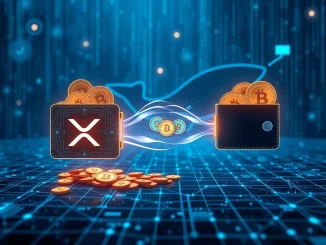
A seismic event just rippled through the crypto world, catching the attention of investors and enthusiasts alike: a colossal XRP transfer of 200 million tokens has been moved from an unknown wallet directly to Ripple. This isn’t just a minor blip on the blockchain radar; it’s a significant transaction valued at approximately $592 million, as swiftly reported by the vigilant eyes of Whale Alert. For many, such a massive movement sparks immediate questions: What does this mean? Who is behind it? And what are the potential ripple effects (pun intended) for the broader cryptocurrency market, particularly for XRP?
This article dives deep into the heart of this intriguing Ripple transaction, exploring its potential implications, the vital role of services like Whale Alert, and what these large-scale movements tell us about the enigmatic world of cryptocurrency whale activity. Get ready to unpack the layers behind this monumental transfer and understand its significance in the ever-evolving digital asset landscape.
Understanding the Ripple Transaction: What Just Happened?
At the core of this buzz is a single, massive blockchain event: 200,000,000 XRP changing hands. The source, described simply as an “unknown wallet,” initiated the transfer, with the recipient being the blockchain payments company, Ripple. This isn’t the first time such large movements have occurred, but the sheer volume—equating to nearly $600 million at the time of the report—makes it stand out.
Think of it like a giant cargo ship pulling into a major port. While individual containers move constantly, a ship carrying this much value demands attention. In the crypto realm, these “cargo ships” are often referred to as “whales”—entities holding substantial amounts of a particular cryptocurrency. When a whale moves such a significant portion of their holdings, it inevitably raises eyebrows and prompts speculation across the market.
Key details of this particular Ripple transaction include:
- Asset: XRP (Ripple’s native digital asset)
- Amount: 200,000,000 XRP
- Approximate Value: $592,000,000 (at the time of transfer)
- Sender: An unknown wallet
- Recipient: Ripple
Such transactions are transparently recorded on the XRP Ledger, a public blockchain, allowing anyone to verify the movement. However, while the transaction itself is public, the identity behind the “unknown wallet” remains shrouded in mystery, fueling much of the intrigue and discussion. This inherent transparency, coupled with the anonymity of participants, is a defining characteristic of the blockchain world.
The Indispensable Role of Whale Alert in Tracking Large Crypto Movements
How do we even know about such colossal transfers? Enter Whale Alert, a blockchain tracking and analytics system that has become an indispensable tool for anyone monitoring the cryptocurrency markets. Imagine having a digital sonar system that detects every large underwater creature—Whale Alert does precisely that for the crypto ocean.
Whale Alert continuously scans various blockchains, including the XRP Ledger, for transactions exceeding a certain threshold. When a significant transfer occurs, it broadcasts this information in real-time, often via social media platforms like X (formerly Twitter), bringing immediate attention to these “whale movements.”
Why is this service so vital?
- Transparency: It brings an unprecedented level of transparency to a market often perceived as opaque. While identities might be pseudonymous, the movement of funds is laid bare for all to see.
- Market Insights: For traders and analysts, Whale Alert provides crucial real-time data that can hint at potential market shifts. A large deposit to an exchange, for instance, might signal an upcoming sell-off, while a withdrawal could suggest accumulation.
- Security Monitoring: It helps in identifying potentially suspicious activities, such as large hacks or illicit fund movements, though in this case, the transfer to Ripple is not indicative of malicious activity.
- Community Engagement: It fosters discussion and analysis within the crypto community, as enthusiasts and experts alike weigh in on the possible implications of each reported transfer.
Without services like Whale Alert, the vast majority of these significant on-chain activities would go unnoticed by the general public, leaving a crucial gap in market understanding. Their prompt reporting allows for immediate analysis and discussion, keeping the crypto community informed and engaged.
Decoding the Implications of a Massive XRP Transfer
Now for the million-dollar (or rather, $592 million) question: Why would an unknown wallet send such a gargantuan XRP transfer directly to Ripple? The answer isn’t straightforward, as several scenarios could explain this monumental movement. It’s a bit like a detective trying to piece together clues without knowing the full story.
Let’s explore some of the most plausible theories:
- Return from a Strategic Partnership or Loan: Ripple frequently engages with institutional partners, financial institutions, and even developers globally. It’s possible this XRP was part of a previously extended loan, a strategic partnership agreement, or a return of funds for a specific project that has concluded or pivoted. Ripple often provides XRP to partners for liquidity purposes, particularly for its On-Demand Liquidity (ODL) solution.
- Escrow Release and Internal Consolidation: Ripple holds a significant portion of XRP in escrow, released periodically to fund operations, develop the ecosystem, and facilitate ODL. While this particular transfer is to Ripple, not from their known escrow wallets, it could be part of an internal re-organization or consolidation of funds from various operational wallets. Sometimes, funds are moved from older or less active wallets into more centralized, active ones for better management.
- Over-the-Counter (OTC) Deal Fulfillment: Large institutional investors or high-net-worth individuals often execute large trades directly with companies like Ripple, rather than through public exchanges, to minimize market impact. This could be the fulfillment of an OTC deal where Ripple was the buyer, receiving XRP from a large holder.
- Settlement of a Debt or Obligation: Less commonly, but still possible, it could represent the settlement of a past debt or a contractual obligation where XRP was the agreed-upon form of payment.
- A Strategic Move for On-Demand Liquidity (ODL): Ripple’s ODL product leverages XRP for real-time, cross-border payments. It’s conceivable that this XRP transfer is part of a larger strategy to bolster liquidity for ODL corridors, perhaps in anticipation of increased demand from a new partner or region.
It’s crucial to remember that without an official statement from Ripple or the sender, these remain educated guesses. However, the nature of the recipient (Ripple itself) suggests it’s likely a planned, legitimate business operation rather than a speculative market move or an accidental transfer. The blockchain’s transparency reveals the “what” but often keeps the “who” and “why” a tantalizing mystery.
What Does This Mean for XRP Price and the Broader Market?
Whenever a significant XRP transfer hits the news, one of the immediate questions on everyone’s mind is, “What will happen to the XRP price?” It’s a natural reaction, given the volatility inherent in cryptocurrency markets and the influence that large holders can wield.
Historically, large transfers don’t always translate into immediate, drastic price movements. Here’s why:
- Not Necessarily a Sell-Off: A transfer to Ripple is generally viewed more favorably than a transfer to an exchange. When large amounts of crypto are moved to an exchange, it often signals an intent to sell, which can create downward pressure. A transfer to the issuer (Ripple, in this case) is less likely to be a direct precursor to a market sell-off and could even be interpreted as a positive sign of internal consolidation or strategic use.
- Market Absorption: The crypto market, especially for established assets like XRP, is vast. While $592 million is a substantial sum, the daily trading volume of XRP often dwarfs this amount. The market can absorb large movements without immediate shockwaves, particularly if the funds are not immediately dumped onto public order books.
- Speculation vs. Fundamentals: The initial reaction is often driven by speculation and sentiment. If the community perceives the transfer as a positive development (e.g., related to ODL expansion), it might even generate positive sentiment. Conversely, if it’s perceived negatively, FUD (Fear, Uncertainty, Doubt) can set in. However, the long-term XRP price is ultimately driven by fundamental factors like adoption, utility, regulatory clarity, and overall market trends.
Key considerations for XRP price impact:
- Context is King: The “unknown wallet” aspect adds mystery, but the destination (Ripple) provides some reassurance that it’s likely a controlled, strategic move rather than a random whale dumping tokens.
- Volume vs. Liquidity: While the dollar value is high, if these tokens are intended for OTC deals or internal use rather than immediate market sale, their impact on liquid exchange markets might be minimal.
- News Cycle and Sentiment: The news itself generates buzz. If the buzz is positive (e.g., rumors of a new ODL partnership), it could indirectly support the price. If it leads to unfounded fears, it could cause temporary dips.
In essence, while such a massive XRP transfer is certainly newsworthy and merits attention, its direct and immediate impact on the XRP price is often more nuanced than a simple cause-and-effect relationship. Investors should look beyond the headline and consider the broader context and Ripple’s ongoing strategic objectives.
Exploring the World of the Cryptocurrency Whale: Who Are They?
The term “cryptocurrency whale” conjures images of mysterious, powerful entities capable of swaying entire markets with a single move. In the crypto world, a whale is an individual or entity that holds a significantly large amount of a particular cryptocurrency, enough to potentially influence its market price if they choose to buy or sell a substantial portion of their holdings.
These whales can be:
- Early Adopters: Individuals who invested heavily in a cryptocurrency during its nascent stages, accumulating vast sums when prices were low.
- Institutional Investors: Hedge funds, investment firms, or even large corporations that have allocated significant capital to digital assets.
- Exchanges: Cryptocurrency exchanges themselves hold massive amounts of various tokens on behalf of their users.
- Project Developers/Founders: The teams behind a cryptocurrency project often retain a large portion of the tokens, as is the case with Ripple and XRP.
The influence of a cryptocurrency whale stems from the sheer size of their holdings. A typical retail investor’s buy or sell order has negligible impact on the market price. However, a whale executing a multi-million dollar trade can create significant price volatility, especially in less liquid markets. This is why services like Whale Alert are so closely watched—they offer a glimpse into the movements of these market movers.
Why do whales move such large sums?
- Security: Moving funds from an high-risk location (like an exchange) to a private cold wallet (offline storage) for enhanced security.
- Consolidation: Bringing funds from multiple wallets into one for easier management.
- Diversification: Selling one asset to buy another.
- Over-the-Counter (OTC) Deals: Executing private trades with other large entities without impacting public exchange order books. This is a common practice for very large transactions.
- Funding Operations: For projects or companies like Ripple, moving funds to cover operational costs, development, or strategic investments.
- Liquidity Provision: As seen with ODL, providing liquidity for specific services.
While the “unknown wallet” remains anonymous, the fact that the recipient is Ripple suggests that this particular cryptocurrency whale is likely an entity with a direct business relationship or strategic interaction with Ripple, rather than a purely speculative individual trader. Understanding the motivations behind these colossal movements is key to deciphering their true market impact.
Challenges and Opportunities Arising from Whale Activity
The presence and activity of cryptocurrency whales present both unique challenges and significant opportunities within the digital asset ecosystem.
Challenges:
- Market Manipulation Fears: The primary concern is that whales could potentially manipulate prices. A coordinated large-scale sell-off could crash prices, while massive buy orders could artificially inflate them, creating a pump-and-dump scenario. This fear often leads to FUD (Fear, Uncertainty, Doubt) among smaller investors.
- Volatility: Large whale movements, especially deposits to exchanges, can introduce sudden volatility, making it difficult for everyday traders to predict market direction.
- Centralization Concerns: While blockchain promotes decentralization, the concentration of wealth in a few “whale” hands can lead to concerns about power dynamics and influence over governance (in some decentralized autonomous organizations or DAOs).
- Lack of Transparency (Identity): While transactions are transparent, the anonymity of “unknown wallets” means we often don’t know who is behind the move, leading to speculation and uncertainty.
Opportunities:
- Market Depth and Liquidity: Whales provide significant liquidity to the market. Their large positions ensure there’s enough capital flowing to facilitate large trades without extreme slippage.
- Early Indicators: Monitoring whale movements, especially those reported by Whale Alert, can sometimes serve as an early indicator of market sentiment or upcoming trends. For example, consistent accumulation by whales might suggest bullish sentiment.
- Blockchain Transparency: The very fact that we can track these movements on a public ledger is a testament to blockchain’s transparency. In traditional finance, such large, anonymous movements would be far more opaque.
- Institutional Interest: The presence of large holders, particularly institutional ones, signifies growing maturity and adoption of the cryptocurrency market. This can attract further investment.
Navigating the crypto market means understanding that whale activity is an inherent part of the landscape. While it can introduce uncertainty, it also reflects the robust, liquid nature of these markets and the transparency afforded by blockchain technology.
Actionable Insights for Investors: Navigating the Whale Waters
For the average investor, a massive XRP transfer like the one we’ve discussed can be intimidating. How should one react to such news? Here are some actionable insights to help you navigate the “whale waters” of the crypto market:
- Don’t Panic (or FOMO): The first rule of large crypto movements is not to make impulsive decisions based solely on a single transaction. Avoid panicking and selling, or succumbing to FOMO (Fear Of Missing Out) and buying without proper research.
- Seek Context, Not Just Headlines: A transaction’s destination is as important as its size. A transfer to an exchange might warrant more caution than a transfer to a project’s official wallet or an internal consolidation. Always try to understand the potential reasons behind the move.
- Utilize Reliable Tracking Tools: Services like Whale Alert are invaluable for staying informed. Follow reputable crypto news outlets and tracking services to get real-time updates on significant on-chain activity.
- Focus on Fundamentals: While whale movements create short-term buzz, the long-term value of an asset like XRP is tied to its utility, adoption, regulatory environment, and the strength of its underlying technology. Don’t let short-term whale movements distract from your long-term investment thesis.
- Consider Your Own Strategy: Does a large Ripple transaction align with or contradict your existing investment strategy? If you’re a long-term holder, minor fluctuations or even significant transfers might not necessitate a change in your approach.
- Understand Market Dynamics: Educate yourself on how liquidity, trading volume, and market depth influence how large transactions affect price. A large transfer might barely cause a ripple if the market is highly liquid and has deep order books.
- Diversify Your Portfolio: Never put all your eggs in one basket. Diversification helps mitigate risks associated with the volatility of individual assets, including those influenced by whale activity.
By adopting a calm, analytical approach and focusing on broader market trends and fundamental developments, investors can better interpret whale movements and make more informed decisions, rather than being swept away by the immediate currents of large transactions.
Conclusion: The Unfolding Saga of On-Chain Movements
The recent 200 million XRP transfer from an unknown wallet to Ripple, diligently reported by Whale Alert, serves as a powerful reminder of the dynamic and often mysterious nature of the cryptocurrency world. Valued at an astounding $592 million, this Ripple transaction highlights the sheer scale of wealth that moves across public blockchains every day, often behind the veil of anonymity.
While the exact purpose of this particular movement remains speculative without an official confirmation, its occurrence underscores several critical aspects of the digital asset landscape: the unparalleled transparency of blockchain technology, the indispensable role of tracking services like Whale Alert in illuminating large-scale activities, and the constant intrigue surrounding the behavior of cryptocurrency whales.
For investors and enthusiasts, such events are not merely data points; they are narratives unfolding in real-time, prompting analysis, discussion, and a deeper understanding of market mechanics. While a single XRP transfer may not dictate the asset’s long-term trajectory or the XRP price, it certainly adds another fascinating chapter to the ongoing saga of on-chain movements, urging us all to look beyond the headlines and appreciate the complex, interconnected world of digital finance. As the crypto ecosystem continues to mature, the transparency offered by blockchain, coupled with sophisticated tracking tools, will continue to empower market participants with valuable insights into the movements of the largest players.
Frequently Asked Questions (FAQs)
1. What is Whale Alert?
Whale Alert is a popular blockchain tracking and analytics service that monitors various cryptocurrency blockchains for large transactions (often referred to as “whale movements”). It provides real-time alerts and data, typically via social media, allowing users to stay informed about significant fund transfers that could potentially impact market sentiment or prices.
2. Why are large XRP transfers significant?
Large XRP transfers, especially those involving hundreds of millions of dollars, are significant because they indicate substantial movement of capital. While not always indicative of immediate price changes, they can signal strategic moves by large holders (whales), internal operations by companies like Ripple, or shifts in institutional interest, all of which can influence market perception and potentially future price action.
3. Does a large XRP transfer always impact the XRP price?
No, a large XRP transfer does not always lead to an immediate or significant impact on the XRP price. The impact depends heavily on the context:
- Destination: Transfers to exchanges might signal selling intent, potentially leading to downward pressure, whereas transfers to a project’s own wallets (like Ripple’s) are often seen as less bearish or even neutral/positive (e.g., for internal use or ODL).
- Market Liquidity: A highly liquid market with deep order books can absorb large transactions without major price fluctuations.
- Overall Market Sentiment: The broader crypto market sentiment and news cycle can often overshadow the impact of individual large transfers.
4. Who are crypto whales?
Crypto whales are individuals or entities that hold a very large amount of a specific cryptocurrency, substantial enough to potentially influence its market price through their buying or selling activities. They can include early investors, institutional funds, cryptocurrency exchanges, or the project’s development team and founders.
5. How can I track large crypto transactions myself?
You can track large crypto transactions by using blockchain explorers specific to the cryptocurrency (e.g., XRP Ledger explorer for XRP). Additionally, services like Whale Alert aggregate and broadcast these large movements across multiple blockchains, making it easier for the public to monitor them in real-time through their website or social media feeds.
6. What is Ripple’s role in XRP transfers?
Ripple is the company that developed XRP and the XRP Ledger. While the XRP Ledger is decentralized, Ripple holds a significant portion of XRP (much of it in escrow) and uses it for various purposes, including funding its operations, developing the ecosystem, and facilitating its On-Demand Liquidity (ODL) product for cross-border payments. Therefore, transfers to or from Ripple’s wallets are often related to their strategic business activities.