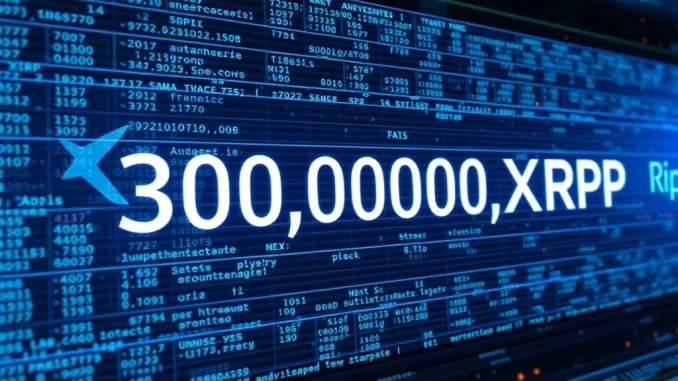
The cryptocurrency world is abuzz with the latest XRP transfer news. A staggering 300,000,000 XRP, valued at approximately $886 million, was recently moved from an unknown wallet directly to Ripple. This colossal transaction, flagged by Whale Alert, has ignited a flurry of speculation across the digital asset community. What does such a monumental shift of funds signify for Ripple, the XRP Ledger, and the broader crypto market? Let’s dive deep into the potential implications of this extraordinary event.
Understanding the Enormous XRP Whale Movement
When a transaction of this magnitude occurs, it’s natural for investors and enthusiasts to pay close attention. Whale Alert, a popular blockchain tracking service, brought this particular XRP transfer to light. The specifics are simple yet profound: 300 million XRP, a sum that dwarfs many daily trading volumes, found its way into a Ripple-associated wallet. The ‘unknown wallet’ designation often means the sending address is not publicly identified as belonging to a known entity like an exchange or a major institution, but in many cases involving Ripple, these are internal movements from their operational or escrow wallets.
Why is this significant?
- Scale: $886 million is not pocket change. It represents a substantial portion of XRP’s circulating supply and market capitalization.
- Recipient: The destination being Ripple itself is key. This suggests an internal re-organization, a return of funds, or a strategic deposit rather than a sale to an external party.
- Transparency: Despite the ‘unknown’ sender, the blockchain’s inherent transparency allows us to see the movement, fostering discussions and analysis.
Decoding Ripple’s Role in the Crypto Transaction
To fully grasp the implications of this Ripple-bound transfer, it’s essential to understand Ripple’s operational structure and its relationship with XRP. Ripple, the company, is a leading provider of enterprise blockchain solutions, leveraging the XRP Ledger (XRPL) for fast, low-cost international payments. While XRP is a decentralized digital asset, Ripple holds a significant portion of the total supply, much of which is held in escrow to manage supply and demand.
Ripple’s business model relies on the utility of XRP for its On-Demand Liquidity (ODL) service, which facilitates cross-border payments by using XRP as a bridge currency. They also engage in strategic partnerships and investments to grow the XRP ecosystem. Given this context, a large inflow of XRP to Ripple’s wallets could signal several things:
- Escrow Release or Re-organization: Ripple regularly releases XRP from escrow for operational expenses, partnerships, and sales. It’s plausible this ‘unknown wallet’ was a temporary holding address or part of a larger internal treasury management strategy. Funds might be moving from an older, less active wallet to a more frequently used operational wallet.
- Return from a Partner/Client: Less likely for such a large sum from an ‘unknown’ wallet, but theoretically, a major partner or institutional client could be returning XRP for a specific purpose, perhaps unwinding a large position or fulfilling a contractual obligation.
- OTC Purchase/Buyback: Ripple could have executed an over-the-counter (OTC) purchase from a large holder or institution, bringing a significant amount of XRP back into their direct control. This is a common practice for companies managing their digital asset holdings.
The Significance of Blockchain News and Whale Alerts
Whale Alert’s role in flagging these massive blockchain news events cannot be overstated. In the opaque world of cryptocurrency, tools like Whale Alert provide a layer of transparency, allowing the public to monitor significant movements of digital assets. These alerts serve as important indicators, often preceding market volatility or revealing strategic moves by major players.
However, it’s crucial to interpret these alerts with caution. A large transfer, while attention-grabbing, doesn’t automatically imply a sale or a bearish outcome. As seen with this XRP transfer to Ripple, the recipient being the company itself suggests a more nuanced interpretation, likely involving internal treasury management rather than an immediate market dump.
Key aspects to consider when analyzing whale movements:
- Sender and Recipient: Are they known entities (exchanges, institutions, project treasuries)?
- Timing: Does the transfer coincide with other market events or company announcements?
- Historical Patterns: Do these wallets typically engage in similar transactions?
What Does This Mean for XRP’s Price and Market Sentiment?
Any substantial XRP transfer can send ripples (pun intended) through the market. Initially, such an alert might cause a momentary dip in sentiment if traders fear an impending sell-off. However, once the recipient is identified as Ripple itself, the narrative often shifts from fear of distribution to an understanding of internal operations.
For XRP, this particular transfer is unlikely to have a direct negative impact on its price. In fact, if it represents a consolidation of funds or an OTC buyback, it could be seen as a bullish signal, indicating Ripple’s active management of its holdings or even an accumulation phase. It reaffirms Ripple’s commitment to and involvement with the XRP ecosystem, despite the ongoing legal challenges with the SEC.
Challenges and Opportunities
Challenges:
- Misinterpretation: Large transfers can be easily misinterpreted by retail investors, leading to unnecessary panic or FOMO.
- Transparency Limits: While the blockchain is transparent about transactions, the intent behind ‘unknown’ wallets can still be speculative.
Opportunities:
- Market Insight: Whale movements offer valuable insights into the activities of major players.
- Confidence in Transparency: The ability to track such large sums reinforces the transparency of blockchain technology.
- Ripple’s Strategic Moves: These transfers provide glimpses into Ripple’s operational strategies and financial health.
Actionable Insights for XRP Holders
For those holding XRP or considering an investment, this event offers a few takeaways:
- Stay Informed, Not Alarmed: While whale alerts are important, always verify the context. A transfer to Ripple is very different from a transfer to an exchange.
- Understand Ripple’s Business Model: Familiarize yourself with how Ripple uses XRP for its operations, including ODL and strategic partnerships. This context helps in interpreting large movements.
- Focus on Fundamentals: The long-term value of XRP will depend more on its utility, adoption, and regulatory clarity than on isolated large transactions.
- Diversify: As with any investment, do not put all your eggs in one basket. Large whale movements are a reminder of the inherent volatility and unique dynamics of the crypto market.
Conclusion: A Glimpse into Ripple’s Strategy
The 300,000,000 XRP transfer to Ripple is more than just a large number; it’s a significant piece of blockchain news that offers a window into the ongoing operations of one of the crypto industry’s most prominent companies. Far from signaling a sell-off, this substantial crypto transaction likely represents an internal strategic maneuver by Ripple, possibly related to their treasury management, escrow releases, or an OTC acquisition. As the digital asset space continues to mature, understanding these ‘whale’ movements and their underlying context becomes increasingly vital for informed participation. This event underscores the transparency of the XRP Ledger and Ripple’s active role in managing its vast XRP holdings, ensuring the stability and utility of its ecosystem.
Frequently Asked Questions (FAQs)
Q1: What is the significance of a 300,000,000 XRP transfer?
A1: A transfer of 300 million XRP, valued at nearly $900 million, is significant due to its sheer size. It represents a substantial portion of XRP’s circulating supply and can influence market sentiment, although its impact depends heavily on the sender and recipient.
Q2: Who is ‘Whale Alert’ and why are their reports important?
A2: Whale Alert is a blockchain tracking and analytics service that monitors and reports large cryptocurrency transactions. Their reports are important because they provide transparency into the movements of major holders (‘whales’), which can offer insights into market trends and the strategic actions of large entities.
Q3: Why would an ‘unknown wallet’ transfer such a large amount of XRP to Ripple?
A3: While labeled ‘unknown,’ such wallets are often controlled by Ripple itself or closely associated entities. Common reasons for large transfers to Ripple include internal treasury management, consolidation of funds from various operational wallets, escrow releases being moved to active accounts, or even an over-the-counter (OTC) purchase from a large holder.
Q4: Does this XRP transfer mean Ripple is going to sell these tokens on the open market?
A4: Not necessarily. Given that the XRP was transferred *to* Ripple, it is more likely an internal consolidation or a strategic acquisition rather than an immediate intent to sell on the open market. Ripple manages its XRP holdings carefully, often through structured releases from escrow or OTC deals, to avoid destabilizing the market.
Q5: How does this transaction relate to Ripple’s ongoing legal situation with the SEC?
A5: This specific transaction is unlikely to have a direct bearing on the SEC lawsuit. It appears to be a routine (albeit large) operational or treasury management activity by Ripple. However, the broader context of Ripple’s operations and financial health, as indicated by such transfers, can indirectly influence investor confidence amidst the legal proceedings.
Q6: What should XRP holders do in response to such a large transfer?
A6: XRP holders should remain informed but avoid panic. Large transfers to Ripple often indicate internal company operations rather than a bearish market event. It’s crucial to look at the context, consider Ripple’s business model, and focus on the long-term fundamentals and utility of XRP rather than reacting impulsively to isolated large transactions.