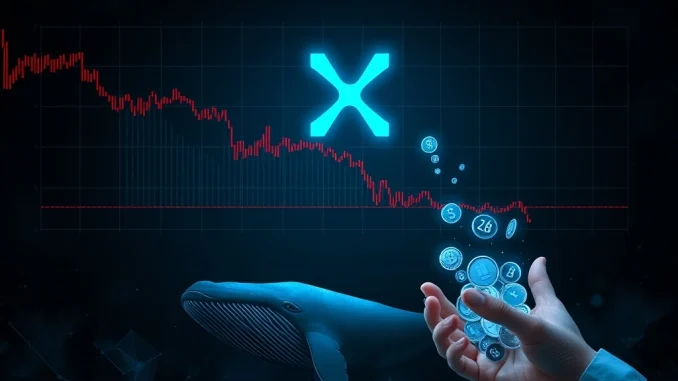
The cryptocurrency world was rocked on July 24, 2025, as XRP experienced a dramatic 12% drop in its value. This sudden XRP price plummet followed a significant transaction: the transfer of 175 million tokens by Ripple co-founder Chris Larsen. This massive sell-off immediately ignited crypto market volatility, leaving investors on edge and prompting widespread discussion across the digital asset landscape.
What Caused the Sudden XRP Price Drop?
The core of the recent XRP price decline can be directly attributed to the actions of Ripple co-founder Chris Larsen. On July 24, 2025, a transfer of 175 million XRP tokens from an address linked to Larsen occurred, signaling a substantial sell-off. This event sent immediate shockwaves through the market, leading to:
- Price Plunge: XRP’s value fell by over 12% in a short period.
- Increased Risk Aversion: Investors reacted by reducing exposure to riskier assets, including XRP.
- Long Position Liquidations: Over $89 million in long positions were liquidated across major exchanges, intensifying the downward pressure as traders were forced to close their leveraged bets.
This kind of large-scale movement by a prominent figure often triggers a cascade effect, as market participants interpret it as a signal of potential future price movements or a shift in sentiment from an insider.
How Did Chris Larsen’s Sale Impact the Broader Crypto Market?
The ripple effects of Larsen’s significant XRP sale extended beyond just the asset itself, highlighting the interconnected nature of the digital asset ecosystem. While XRP bore the brunt of the decline, other major cryptocurrencies also experienced minor pullbacks:
- Bitcoin (BTC): Saw a slight dip, reflecting general market sensitivity to liquidity shifts.
- Solana (SOL): Also experienced a minor correction, indicating a broader cautious sentiment among investors.
This interconnectedness means that significant events in one major cryptocurrency can often cause a ripple effect across the entire market, contributing to overall crypto market volatility. Ripple CEO Brad Garlinghouse, while not directly addressing Larsen’s sale, issued a timely warning during this period of turbulence. He cautioned the community against deepfake scams and fraudulent XRP airdrops, emphasizing the need for vigilance during periods of heightened market activity and emotional responses.
Is Whale Activity a Sign of Long-Term Confidence in XRP?
Despite the immediate bearish reaction to Chris Larsen‘s token transfer, an interesting dynamic emerged: intensified whale activity. As the XRP price dropped, large investors, often referred to as ‘whales,’ began accumulating tokens near the $3.00 mark. This behavior is often seen as a sign of ‘smart money’ positioning, indicating a belief in the asset’s long-term value despite short-term setbacks.
AI Invest, an analytics platform, specifically flagged the $3.00 accumulation zone as a key area of strategic buying. This suggests that while retail investors might panic sell, institutional and large individual investors are viewing the dip as an opportunity to buy XRP at lower price levels. This accumulation pattern, especially during periods of high crypto market volatility, can be a powerful indicator of underlying confidence in the asset’s fundamentals and future potential.
Navigating Market Volatility: Historical Patterns and Regulatory Headwinds
Understanding crypto market volatility often requires looking at historical context. While the recent XRP price drop was sharp, the asset remains up a significant 220% year-to-date, showcasing its underlying resilience. Historical data provides further insights:
- July Performance: Historically, July has been a strong month for XRP.
- August Correction: August, however, typically sees an average 12% correction for XRP.
- Past Whale Sales: Similar large-scale sales by whales in the past have resulted in temporary price shocks, but often followed by eventual rebounds.
Analysts note that the current market reaction aligns with these prior trends, suggesting that the recent dip might be a temporary setback rather than a fundamental shift. Concurrently, broader regulatory uncertainty, particularly delays in the SEC’s approval of a spot crypto ETF, continues to weigh on overall investor sentiment. This regulatory overhang contributes to the general cautious atmosphere, even as whale activity signals confidence in XRP’s long-term prospects.
The Path Forward for XRP: Will Recovery Follow?
The immediate aftermath of Chris Larsen‘s token sale saw significant downward pressure on the XRP price, amplifying existing crypto market volatility. However, the surge in whale activity, particularly the strategic accumulation around the $3.00 mark, suggests a strong belief in XRP’s underlying fundamentals. The long-term outlook for XRP will largely depend on two critical factors: the sustained purchasing pace of institutional buyers and the emergence of clearer regulatory guidance to stabilize the broader crypto sector. While short-term fluctuations are expected, the historical resilience of XRP and continued institutional interest paint a nuanced picture for its future trajectory.
Frequently Asked Questions (FAQs)
1. Why did XRP’s price drop by 12% on July 24, 2025?
The significant 12% drop in XRP price was primarily triggered by the transfer of 175 million tokens by Ripple co-founder Chris Larsen, which was perceived as a major sell-off event, sparking market volatility.
2. Who is Chris Larsen and why is his token sale significant?
Chris Larsen is a co-founder of Ripple. His token sales are significant because large movements by prominent insiders can signal a shift in sentiment or strategy, often leading to immediate market reactions due to their perceived influence and knowledge.
3. What is “whale activity” and what does it mean for XRP?
“Whale activity” refers to the trading actions of large investors (whales) who hold substantial amounts of cryptocurrency. In XRP‘s case, intensified whale activity involved accumulation near $3.00, suggesting that large investors view the price dip as a buying opportunity and maintain long-term confidence in the asset.
4. How did this XRP event affect other cryptocurrencies?
While XRP saw the sharpest decline, other major cryptocurrencies like Bitcoin and Solana also experienced minor pullbacks. This demonstrates the interconnectedness of the crypto market volatility, where significant events in one asset can create a cautious sentiment across the broader market.
5. Is XRP still a good long-term investment despite the recent volatility?
Despite the recent short-term XRP price drop and crypto market volatility, XRP remains up 220% year-to-date. The accumulation by ‘whales’ and historical patterns of recovery after temporary shocks suggest underlying resilience. However, long-term outlook depends on sustained institutional buying and future regulatory clarity.