Are you keeping up with the latest XRP News? The cryptocurrency world is buzzing after prominent analyst Armando Pantoja made a significant move, aggressively purchasing XRP during a recent 19% price decline. His decision wasn’t just a speculative gamble; it was a calculated play rooted in Ripple’s ambitious push for a U.S. national banking license and XRP’s critical role in transforming global finance. For many investors, such a sharp dip might trigger panic, but Pantoja saw it as a golden opportunity to accumulate an asset he believes is on the cusp of exponential growth. Let’s dive into why this strategic bet could signal a pivotal moment for XRP and the broader crypto landscape.
Armando Pantoja’s Bold Move: Capitalizing on the XRP Price Drop
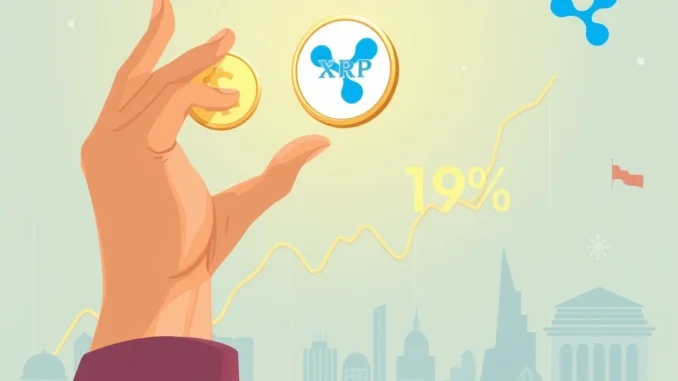
On July 23, 2025, XRP experienced a notable XRP Price Drop, falling from above $3.50 to $2.99. While this 19% decline might have sent jitters through the market, it prompted cryptocurrency analyst Armando Pantoja to execute a substantial purchase. Pantoja framed his decision as a strategic maneuver, aiming to capitalize on what he views as a temporary market correction rather than a fundamental flaw in XRP’s long-term prospects. Some market observers even characterized the dip as a “healthy correction,” suggesting it was a necessary rebalancing after overbought conditions [2].
Pantoja’s rationale centered on accumulating discounted exposure to an asset he believes is poised for significant appreciation. He sees the decline as an opportunity, allowing investors to acquire XRP at a more favorable entry point before its potential integration into the core infrastructure of global finance. This approach reflects a common sentiment among seasoned investors: volatility can present accumulation opportunities for assets with strong underlying utility and institutional backing.
Why the Ripple Banking License is a Game Changer
Central to Pantoja’s bullish stance is Ripple’s strategic pivot: its application for a U.S. national banking license. This isn’t just another partnership; it’s a fundamental shift that could redefine Ripple’s position in the financial world. As Pantoja emphatically stated, “Ripple isn’t just partnering with banks anymore—it’s becoming one” [1]. This transition from a technology provider to a regulated financial institution holds immense implications for XRP.
Consider these potential impacts of a successful Ripple Banking License:
- Enhanced Trust: Direct regulatory alignment could significantly increase trust from institutional investors and traditional financial players who prioritize compliance and regulatory oversight.
- New Services: A banking license could unlock new services, such as licensed custodial offerings for digital assets, further integrating XRP into traditional financial products.
- Broader Integration: It paves the way for deeper integration of XRP’s settlement capabilities into the core infrastructure of global finance, moving beyond just payment networks.
This strategic move distinguishes Ripple and XRP from many other digital assets that lack tangible integration with legacy financial systems. It positions XRP not merely as a speculative asset, but as a crucial component of a regulated, future-proof financial ecosystem.
Unlocking Global Finance with XRP Utility
Beyond speculative trading, the true strength of XRP lies in its practical application. The core argument for XRP Utility revolves around its ability to address deep-seated inefficiencies in traditional cross-border transactions. Globally, an estimated $26 trillion remains idle in pre-funded accounts, locked up to support traditional settlement systems [1]. This bottleneck represents a massive drain on capital and a significant opportunity for disruption.
XRP’s design offers a compelling solution:
- Rapid Settlement: With a settlement time of just three seconds, XRP can enable near real-time transfers.
- Elimination of Frozen Funds: It removes the need for pre-funded accounts, freeing up trillions in idle capital.
- Low Cost: Transactions on the XRP Ledger are incredibly inexpensive, making it a viable alternative for high-volume payments.
Pantoja argues that this fundamental utility creates a durable demand for XRP that transcends short-term speculative cycles. As more financial institutions seek efficient and cost-effective ways to move money across borders, XRP’s inherent advantages become increasingly appealing. This real-world application is what proponents believe underpins XRP’s long-term value, setting it apart in the crowded crypto market.
Revolutionizing Crypto Cross-Border Payments
The vision for Crypto Cross-Border Payments with XRP is not just theoretical; it’s actively being pursued by Ripple through its extensive network of partnerships. While legal challenges with U.S. regulators have cast a shadow, Ripple’s institutional collaborations persist, reinforcing the conviction that XRP’s value is rooted in real-world adoption [1].
Imagine a world where businesses and individuals can send large sums of money across continents almost instantly, with minimal fees. This is the promise of XRP-powered payments. Traditional systems, often reliant on correspondent banking networks, are slow, expensive, and opaque. XRP offers a transparent, efficient, and cost-effective alternative that could fundamentally reshape global remittances and corporate treasury management.
Despite market shifts, such as Ethereum’s 5% 24-hour decline potentially siphoning capital away from XRP [4], the focus on XRP’s foundational utility remains. Its ability to facilitate fast, low-cost international transfers positions it as a key player in the future of global finance, especially as the demand for digital, instant payments continues to grow worldwide.
What’s Next for XRP News? Market Outlook and Investor Sentiment
Following the recent dip, the broader market for XRP shows mixed signals, reflecting ongoing debates and evolving sentiment. While some analysts viewed the XRP Price Drop as a “healthy correction” [2], others highlighted inherent risks, including unresolved regulatory uncertainties and the broader volatility inherent in the crypto space [3]. Technical analyses have indicated the need for sustained buying pressure to confirm a robust recovery, with some rare chart patterns even suggesting a potential rebound to $5 this year [6]. However, the recent 14% pullback from XRP’s multi-year high of $3.66 also serves as a stark reminder of the risks associated with short-term speculation [5].
Armando Pantoja’s aggressive accumulation, while an individual decision, may reflect a growing sentiment among investors who are increasingly viewing price dips as strategic opportunities to secure assets with strong foundational utility. The trajectory of XRP continues to be tied closely to its practical applications and Ripple’s ability to navigate the regulatory landscape. Proponents remain confident that XRP’s low-cost, high-speed settlement model offers a significant competitive advantage for global payment networks.
The ongoing narrative in XRP News will largely depend on whether buying interest can consistently counter bearish pressures and validate the asset’s long-term potential for institutional integration and widespread adoption. As Ripple continues its pursuit of regulatory clarity and expands its utility, the market will be watching closely to see if Pantoja’s strategic bet pays off, ushering in a new era for XRP in global finance.
Conclusion
Armando Pantoja’s bold acquisition of XRP amidst a significant price dip underscores a deeper conviction in the asset’s long-term value, particularly in light of Ripple’s strategic pursuit of a U.S. national banking license. This move signals a pivotal shift, transforming Ripple from a mere technology provider into a potential regulated financial institution, which could profoundly impact XRP’s integration into global finance. XRP’s inherent utility in enabling swift, cost-effective Crypto Cross-Border Payments remains its strongest suit, offering a compelling solution to the multi-trillion-dollar problem of idle pre-funded accounts. While market volatility and regulatory uncertainties persist, the foundational utility and institutional ambition behind XRP suggest a resilient asset with significant potential. Whether Pantoja’s foresight proves correct, the ongoing developments in XRP News highlight a critical juncture for the digital asset, poised at the intersection of traditional finance and the burgeoning crypto economy.
Frequently Asked Questions (FAQs)
1. Who is Armando Pantoja and why did he buy XRP during the dip?
Armando Pantoja is a cryptocurrency analyst who made a significant purchase of XRP during its 19% price drop on July 23, 2025. He views the dip as a strategic opportunity to accumulate XRP, believing in its long-term utility in cross-border payments and Ripple’s evolving role in the banking sector.
2. What is the significance of Ripple seeking a U.S. national banking license?
Ripple’s application for a U.S. national banking license is a game-changer because it signifies a transition from a technology provider to a regulated financial institution. This could enhance institutional trust, unlock new services like licensed custodial offerings, and deepen XRP’s integration into the core infrastructure of global finance.
3. How does XRP address inefficiencies in cross-border payments?
XRP addresses inefficiencies by offering rapid (three-second) settlement times and eliminating the need for pre-funded accounts, which currently tie up an estimated $26 trillion globally. This allows for real-time, low-cost international transfers, creating a more efficient and liquid global payment system.
4. What are the current market sentiments and price predictions for XRP?
Market sentiments for XRP are mixed following the recent dip. Some analysts see it as a “healthy correction,” while others point to regulatory uncertainties and broader crypto volatility as risks. Technical analyses suggest potential for a rebound, with some patterns indicating a possible rise to $5 this year, though short-term speculation carries risks.
5. Are there risks associated with investing in XRP?
Yes, like any cryptocurrency, XRP carries risks. These include ongoing regulatory uncertainties, particularly with U.S. regulators, and the inherent volatility of the broader crypto market. Short-term price fluctuations can be significant, and market sentiment can shift rapidly.