The crypto world was recently rocked by a significant development in the XRP news cycle, sending ripples of concern through the investor community. Imagine waking up to discover that a major figure, a co-founder of Ripple itself, has offloaded a staggering amount of tokens, coinciding with a sharp price decline. This isn’t just a hypothetical scenario; it’s precisely what happened when Ripple co-founder Chris Larsen reportedly sold $200 million in XRP tokens over a mere ten-day period in July 2025, leading to a notable 17% plunge in the token’s value. This event has ignited intense discussions about market stability, insider influence, and the future trajectory of one of the most talked-about cryptocurrencies.
What Triggered the Recent XRP Price Drop?
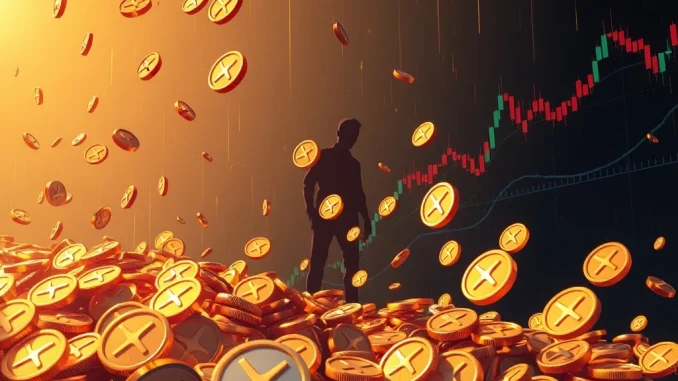
The recent XRP price drop wasn’t an isolated incident but rather coincided with a series of substantial transactions linked to Ripple co-founder Chris Larsen. On-chain data revealed that Larsen transferred approximately 50 million XRP, valued at around $175 million, between July 17 and July 23. A significant portion of this—roughly $140 million—was directed to exchanges or services, suggesting an intent to sell. The timing of these transfers was particularly striking, as XRP experienced its sharpest daily price decline since April 2025, briefly falling below the $3 mark. While no direct causation has been definitively established between Larsen’s sales and the immediate price plunge, the correlation has certainly fueled speculation and heightened market sensitivity.
Understanding the Chris Larsen XRP Sale and its Impact
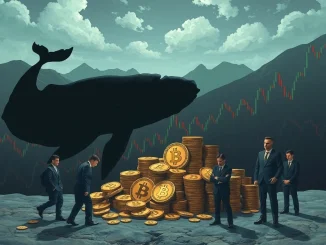
When a figure as prominent as Chris Larsen, a co-founder of Ripple, executes such a large-scale sale of Chris Larsen XRP holdings, it inevitably draws scrutiny. Larsen’s estimated 2.8 billion XRP tokens, allocated during Ripple’s 2012 pre-mine, position him as a major whale capable of influencing market dynamics. The $200 million sell-off represents a strategic reduction of his extensive portfolio. While Forbes reported his net worth at $10.8 billion, indicating his capacity to absorb such sales without immediate personal disruption, the market reaction tells a different story. Analysts, including J.A. Maartun of CryptoQuant, have warned that such whale activity could signal ‘exit liquidity,’ implying that large holders might be cashing out, potentially at the expense of less-informed retail investors. This raises critical questions about transparency and fair play in the volatile crypto markets.
The Broader Context: Ripple XRP and Market Concerns
The incident surrounding Larsen’s sales adds another layer of complexity to the ongoing narrative of Ripple XRP. The token’s utility as a bridge currency for cross-border payments remains a core part of Ripple’s strategy, but its market performance is constantly overshadowed by external factors. Beyond insider selling concerns, the broader crypto market has been grappling with instability, including increased scam activities and persistent regulatory uncertainties. The lingering U.S. Securities and Exchange Commission (SEC) legal case against Ripple is a prime example, casting a long shadow over XRP’s future. Larsen himself has been a vocal critic of the SEC’s approach, yet his silence on the recent sales leaves the intent behind the transfers open to various interpretations, from portfolio rebalancing to a more strategic market maneuver.
Navigating the Crypto Whale Sell-off Phenomenon
The concept of a crypto whale sell-off is not new to the digital asset space, but each instance serves as a potent reminder of the inherent risks. When large holders, or ‘whales,’ move significant amounts of tokens, it can create supply shocks and psychological impacts that lead to rapid price movements. For retail investors, understanding these dynamics is crucial. While whale activity can certainly influence market sentiment, it’s equally important to consider broader macroeconomic factors and ongoing regulatory developments. These overarching forces often play a more significant role in shaping a cryptocurrency’s long-term trajectory than isolated large sales. The recent XRP event underscores the need for investors to remain vigilant, conduct thorough research, and avoid making impulsive decisions based solely on short-term market fluctuations.
The recent XRP News concerning Chris Larsen’s substantial sales serves as a vivid illustration of the delicate balance between institutional confidence and retail investor perception in the cryptocurrency market. While the immediate impact was a significant price drop and heightened anxiety, it also provides valuable lessons. Investors are strongly advised to:
- Monitor Regulatory Updates: Keep a close eye on the SEC vs. Ripple case, as its outcome will significantly influence XRP’s regulatory status and market acceptance.
- Track Network Advancements: Understand Ripple’s ongoing developments and partnerships that enhance XRP’s utility.
- Analyze Token Distribution: Pay attention to whale movements and significant transfers, but interpret them within the broader market context.
- Diversify Portfolios: Avoid over-reliance on a single asset, especially one prone to such volatility.
- Conduct Due Diligence: Always verify information and be wary of FUD (Fear, Uncertainty, Doubt) or FOMO (Fear of Missing Out) driven narratives.
Ultimately, navigating XRP’s uncertain outlook requires a strategic and informed approach. The market will continue to assess whether the selling pressure persists or stabilizes, but informed decision-making remains the best defense against volatility.
Frequently Asked Questions (FAQs)
1. Who is Chris Larsen and why are his XRP sales significant?
Chris Larsen is a co-founder of Ripple. His sales are significant because he holds a massive amount of XRP (estimated 2.8 billion tokens), making him a “whale” whose actions can influence market sentiment and supply dynamics.
2. How much XRP did Chris Larsen sell and when?
Chris Larsen reportedly sold approximately $200 million in XRP tokens over a 10-day period in July 2025. On-chain data showed transfers of about 50 million XRP ($175 million) between July 17 and July 23, with $140 million going to exchanges.
3. Did Larsen’s sales directly cause the XRP price drop?
While Larsen’s sales coincided with XRP’s 17% price drop, no direct causation has been definitively established. Analysts suggest it contributed to investor concerns and potential “exit liquidity,” but broader market instability and regulatory uncertainties also played a role.
4. What does “exit liquidity” mean in the context of crypto sales?
“Exit liquidity” refers to a situation where large holders (whales) sell their assets into the market, often implying that retail investors are providing the necessary buying volume for these large exits. It can signal a potential top or a period of significant selling pressure.
5. How does the SEC lawsuit affect XRP’s market performance?
The ongoing U.S. Securities and Exchange Commission (SEC) legal case against Ripple adds significant regulatory uncertainty to XRP. This uncertainty can deter institutional investment and create volatility, influencing market performance and investor confidence.
6. What should investors do amidst such large whale sales?
Investors should monitor regulatory updates, track network advancements, analyze token distribution trends, diversify their portfolios, and conduct thorough due diligence. It’s crucial to avoid impulsive decisions based solely on short-term market fluctuations.