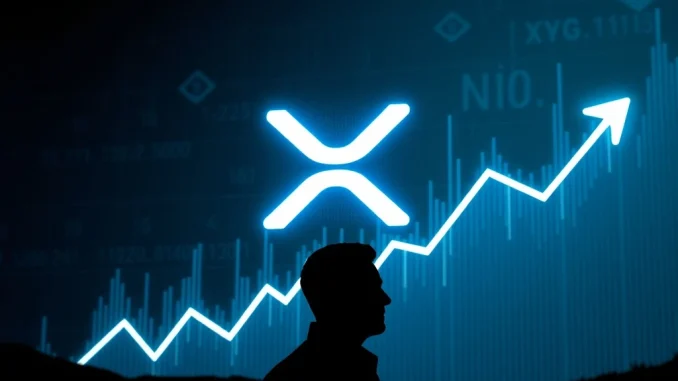
The cryptocurrency world is abuzz, and at its heart is XRP. A recent seismic event involving Ripple co-founder Chris Larsen has sent shockwaves through the market, pushing the XRP price to unprecedented levels. This isn’t just about a single transaction; it’s a testament to shifting tides in the broader crypto market and growing regulatory optimism.
What Sparked XRP’s Historic Surge? The Chris Larsen Connection
On July 24, 2025, the cryptocurrency community witnessed a significant event: Ripple co-founder Chris Larsen executed a massive transfer of 50 million XRP tokens, valued at an astonishing $175 million. This move occurred just days before XRP’s token hit a record high of $3.65, sparking widespread discussion and speculation across the industry. Blockchain tracking data revealed that approximately $140 million of these proceeds were directed to exchanges or third-party wallets, raising immediate questions about Larsen’s strategic intent and the potential implications for the XRP price.
The timing of this substantial transaction is particularly noteworthy. Analysts quickly pointed out that it coincided with a period of heightened market volatility and burgeoning regulatory optimism within the digital asset space. For some, Larsen’s move was perceived as a strong vote of confidence in XRP’s long-term prospects, signaling insider belief in the asset’s future. Others, however, cautioned about potential short-term sell pressures, especially from institutional players who might interpret such large transfers as opportunities for profit-taking.
A significant portion of the transferred tokens originated from a previously dormant wallet linked to Larsen, further fueling speculation. Was this a strategic liquidity play? A long-term portfolio adjustment? Or perhaps a calculated move designed to inject liquidity into the market at a pivotal moment? Regardless of the precise motivation, the action by a figure as prominent as Chris Larsen invariably acts as a barometer for market sentiment, drawing intense scrutiny to XRP’s immediate and future trajectory.
Regulatory Optimism: A New Dawn for XRP?
The backdrop to Larsen’s transfer and XRP’s surge is a palpable sense of regulatory optimism sweeping through the digital asset landscape. The U.S. SEC’s recent roundtable discussions on digital asset frameworks have been a critical factor, signaling a potential shift towards clearer guidelines and more favorable environments for cryptocurrencies. For XRP, this clarity is paramount, given Ripple’s long-standing legal battles with the SEC.
Ripple’s ongoing legal settlement with the SEC remains a pivotal influence on market sentiment. The company’s decision to drop its appeal to reduce penalties has been widely interpreted as a step towards resolving the protracted legal saga, paving the way for greater operational certainty. Furthermore, Ripple’s landmark 2023 legal victory, which ruled that programmatic XRP sales to retail investors were not securities, has already significantly bolstered investor confidence. This ruling established a crucial precedent, differentiating retail XRP sales from institutional ones, and provided a much-needed boost to the asset’s legitimacy.
The anticipation of clearer regulations fosters a more stable and predictable environment, which is highly attractive to both retail and institutional investors. As the regulatory fog begins to lift, the potential for wider adoption and integration of XRP into mainstream financial systems becomes more tangible, directly impacting the perceived value and stability of the XRP price.
Navigating the Volatile Crypto Market: Institutional Confidence in XRP
Despite the initial surge and the record high of $3.65, the XRP price experienced a brief dip to $3.25 shortly after Larsen’s transaction. However, this minor correction did little to derail the token’s broader bullish trend, which saw it rise nearly 50% within a month. This resilience underscores the underlying strength and sustained interest in XRP within the volatile crypto market.
Institutional investors, in particular, have demonstrated enduring confidence in XRP, often maintaining their holdings for extended periods. This long-term perspective highlights XRP’s appeal as a significant digital asset, driven by its utility in cross-border payments and Ripple’s strategic partnerships. Large token movements by high-profile figures like Chris Larsen are often viewed by these sophisticated players not just as isolated events, but as indicators of broader market dynamics and sentiment.
The overall crypto market, valued at over $40 billion at the time of the transaction, showed remarkable resilience. This stability, coupled with sustained institutional interest, suggests that despite short-term fluctuations, XRP continues to be a key player. Its performance is increasingly intertwined with broader macroeconomic shifts and the evolving regulatory landscape, making it a crucial indicator for the sector’s trajectory.
Ripple’s Strategic Vision: Beyond the Headlines
Beyond the immediate market movements and legal headlines, Ripple’s strategic efforts to integrate XRP into global cross-border financial systems continue to gain significant traction. The company’s focus on real-world utility for the XRP price and ecosystem is a cornerstone of its long-term vision. Partnerships in emerging markets, particularly those with high demand for efficient and low-cost remittances, underscore XRP’s growth potential and its role in revolutionizing traditional finance.
Ripple’s technology, which leverages XRP for instant and low-cost international payments, positions it as a formidable competitor to traditional banking rails. This utility-driven approach provides a fundamental value proposition for XRP, distinct from many other cryptocurrencies that primarily serve as speculative assets. The ongoing expansion of RippleNet, Ripple’s global payments network, demonstrates the company’s commitment to fostering a robust ecosystem around XRP.
The actions of key figures like Chris Larsen, while impactful in the short term, are ultimately part of a much larger narrative of Ripple’s strategic advancements and the increasing adoption of its technology. As regulatory optimism grows and more institutions explore blockchain-based solutions, Ripple’s foundational work in cross-border payments will continue to be a primary driver for XRP’s long-term value.
Challenges and the Road Ahead for XRP
While the recent developments paint a largely positive picture for XRP, the journey is not without its challenges. The increased scrutiny surrounding large token transfers can sometimes intensify concerns about market manipulation or potential sell-offs. Moreover, the broader crypto market remains susceptible to scams, including sophisticated YouTube-based impersonation schemes that have specifically targeted Ripple’s brand and the XRP price, preying on unsuspecting investors.
Investors must remain vigilant and conduct thorough due diligence. The inherent volatility of the cryptocurrency market means that even assets with strong fundamentals can experience rapid price swings. While regulatory optimism is a positive sign, the global regulatory landscape is still evolving, and new challenges or uncertainties could emerge.
The resilience demonstrated by XRP despite these challenges, particularly its ability to maintain a bullish trend after a significant insider transaction, speaks volumes about its underlying strength and community support. As regulatory clarity improves and institutional adoption deepens, XRP’s performance and Ripple’s strategic actions will remain pivotal indicators of the sector’s trajectory. The future of XRP will be shaped by a complex interplay of technological innovation, market dynamics, and the ongoing evolution of global financial regulations.
Conclusion
The recent surge in XRP price, coinciding with a monumental transfer by Ripple co-founder Chris Larsen, marks a significant moment for the digital asset. This event, set against a backdrop of growing regulatory optimism, highlights XRP’s enduring appeal and its pivotal role within the evolving crypto market. While large transactions can spark short-term volatility, the broader narrative points to a resilient asset benefiting from increasing clarity and strategic utility. As Ripple continues to push for global adoption of its cross-border payment solutions, XRP remains a key indicator of the cryptocurrency sector’s future trajectory, promising an exciting, albeit dynamic, path ahead.
Frequently Asked Questions (FAQs)
1. Who is Chris Larsen and why is his XRP transfer significant?
Chris Larsen is the co-founder of Ripple, the company behind the XRP digital asset. His recent transfer of 50 million XRP (valued at $175 million) is significant because large movements by high-profile figures like Larsen can signal insider confidence, influence market sentiment, and provide insights into liquidity strategies or long-term portfolio adjustments, especially when they precede major price movements.
2. What caused XRP to reach a record $3.65?
XRP’s surge to a record $3.65 was primarily driven by a combination of factors, including heightened market volatility, the strategic transfer by Chris Larsen which some viewed as a confidence booster, and crucially, growing regulatory optimism, particularly following the U.S. SEC’s roundtable discussions on digital asset frameworks and Ripple’s favorable legal developments.
3. How does regulatory optimism affect XRP’s value?
Regulatory optimism significantly impacts XRP’s value by reducing uncertainty and increasing investor confidence. Clearer regulations, like those discussed by the SEC, provide a more stable environment for digital assets. Ripple’s legal victories, such as the ruling that programmatic XRP sales are not securities, further legitimize XRP, making it more attractive to institutional and retail investors, thereby positively influencing its price.
4. What are Ripple’s ongoing legal issues with the SEC?
Ripple has been involved in a long-standing lawsuit with the U.S. SEC, which alleged that XRP was an unregistered security. While Ripple achieved a significant partial victory in 2023 regarding programmatic sales to retail investors, certain aspects of the case, such as institutional sales and potential penalties, have remained ongoing. Ripple’s recent decision to drop its appeal to reduce penalties suggests a move towards resolving the remaining legal aspects.
5. Is XRP a good long-term investment?
XRP’s potential as a long-term investment is often debated. Its utility in cross-border payments through RippleNet, coupled with increasing institutional adoption and growing regulatory clarity, presents a strong use case. However, like all cryptocurrencies, it carries inherent risks, including market volatility, regulatory changes, and competition. Investors should conduct thorough research and consider their risk tolerance before making investment decisions.
6. What are the main risks associated with investing in XRP?
The main risks associated with investing in XRP include market volatility, which can lead to rapid price fluctuations; ongoing regulatory uncertainties, despite recent positive developments; competition from other blockchain-based payment solutions; and the potential for scams targeting cryptocurrency investors. It’s crucial for investors to stay informed and exercise caution.