The world of digital assets is constantly evolving, but every so often, a shift occurs that demands immediate attention. For XRP, that moment is now. A dramatic surge in XRP Futures Open Interest, skyrocketing by an astonishing 143%, is more than just a number; it’s a clear signal that the financial titans of traditional finance are not just observing but actively reshaping the XRP ecosystem. This isn’t just about price speculation; it’s about a fundamental transformation that could redefine XRP’s role in the global financial landscape.
XRP Futures Open Interest: What’s Driving the Astronomical Surge?
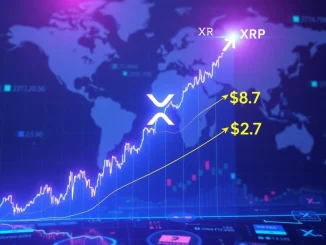
The recent data paints a compelling picture: XRP futures open interest has surged to an astounding $9.5 billion, marking a colossal 142.97% increase from $3.91 billion just a month prior. This isn’t mere coincidence; it’s a powerful indicator of intense capital inflows and heightened speculative activity surrounding XRP. But what exactly does this mean, and who are the key players behind this monumental shift?
- Definition of Open Interest: Open interest refers to the total number of outstanding derivative contracts, such as futures, that have not been settled. A sharp increase often signifies new money entering the market, rather than just existing positions being rolled over.
- Institutional Capital Inflows: The sheer volume suggests that large institutional players are increasingly confident in XRP’s future, committing significant capital to its derivatives markets. This move is typically driven by long-term strategies, hedging, or taking substantial directional bets.
- Market Sentiment Indicator: A rising open interest, especially when accompanied by stable or rising prices (despite a recent dip), indicates strong underlying demand and positive sentiment from sophisticated investors. It suggests that participants expect significant price movements or increased utility for XRP.
This surge in **XRP Futures** isn’t an isolated event; it’s intricately linked to a broader narrative of traditional finance making strategic inroads into the crypto space, particularly concerning the **XRP ecosystem**.
Institutional Adoption: How Traditional Finance is Embracing the XRP Ecosystem
Behind the impressive open interest figures lies a deeper story of **institutional adoption**. Major financial institutions, once wary of the volatile crypto market, are now actively integrating themselves into the XRP Ledger (XRPL) infrastructure. This isn’t just about holding XRP; it’s about leveraging its technology for real-world applications. Consider these pivotal developments:
- BNY Mellon’s Role: The oldest bank in the U.S., BNY Mellon, now custodies Ripple’s RLUSD stablecoin reserves. This move lends significant credibility and regulatory assurance to Ripple’s digital currency efforts, bridging the gap between traditional banking and the crypto world.
- ProShares’ Ultra XRP ETFs: The launch of Ultra XRP ETFs by ProShares on NYSE Arca signifies a critical step towards mainstream accessibility. ETFs provide institutional and retail investors with regulated, familiar vehicles to gain exposure to XRP without directly holding the asset, thereby embedding traditional finance further into the crypto infrastructure.
- Whispers of BlackRock: While not confirmed, persistent rumors of BlackRock’s potential involvement continue to fuel speculation. Given BlackRock’s history of pioneering crypto investment products, their entry would be a game-changer, potentially unleashing even greater capital into the **XRP ecosystem**.
- Ripple’s RLUSD Stablecoin: Designed for interoperability with both XRPL and Ethereum, RLUSD is becoming a critical tool for institutional adoption. Its support by regulatory oversight from the NYDFS further enhances its appeal to risk-averse financial entities looking for compliant digital payment solutions.
These strategic moves by financial giants are not just about speculation; they represent a fundamental shift in how traditional finance views and interacts with digital assets, with **XRP** positioned at the forefront of this evolution.
The Rise of Tokenized RWA: Redefining Value on the XRPL
Perhaps one of the most transformative trends driving institutional interest in the **XRP ecosystem** is the exponential growth of the tokenized real-world asset (RWA) market on the XRPL. This sector has seen an astonishing 2,260% expansion since January, with tokenized RWAs surging from $5 million to $118 million.
What exactly are tokenized RWAs, and why are they so significant?
- Definition: Tokenized RWAs are digital representations of tangible or intangible assets from the traditional world (like real estate, commodities, or government bonds) on a blockchain. This process fractionalizes ownership, enhances liquidity, and reduces transaction costs.
- Diverse Asset Classes: The growth on XRPL includes a wide range of assets, from tokenized real estate and commodities to U.S. Treasuries. This diversification highlights the versatility of the XRPL for various financial applications.
- Future Projections: This growth aligns perfectly with broader industry predictions of a staggering $30 trillion tokenized RWA market by 2034. The XRPL’s efficiency and low transaction fees make it an ideal platform for this burgeoning market, positioning **XRP** as a crucial settlement layer.
- Increased Utility for XRP: As more RWAs are tokenized on the XRPL, the demand for XRP, which is used for transaction fees and as a bridge currency, is likely to increase, cementing its utility beyond mere speculation. This further solidifies the **Crypto Ecosystem** as a whole.
The tokenization of real-world assets on the XRPL is not just a technological advancement; it’s a paradigm shift that promises to unlock immense value and liquidity in previously illiquid markets, with **XRP** playing a central role.
Navigating the Regulatory Landscape: Clarity and Challenges for XRP
The journey of **XRP** has been significantly influenced by regulatory scrutiny, particularly in the United States. However, recent developments are providing much-needed clarity, paving the way for further growth and mainstream adoption.
- The GENIUS Act: The newly enacted GENIUS Act is a crucial piece of legislation that aims to provide a clearer regulatory framework for digital assets. Such clarity is vital for institutional investors who require legal certainty before committing substantial capital. This act, alongside other regulatory efforts, is pushing **XRP** towards key resistance levels between $3.40 and $3.64.
- Insider Accumulation: Reports of insider accumulation of XRP further underscore confidence in its future. Those closest to the project, with intimate knowledge of its developments and regulatory progress, are increasing their holdings, signaling strong belief in its long-term value proposition.
- Regulatory Resilience: Despite a recent 0.73% dip to $3.14 in recent trading, XRP’s resilience amid ongoing regulatory scrutiny and broader market volatility highlights its strategic value. Its ability to withstand headwinds speaks volumes about its underlying strength and the conviction of its holders and institutional backers.
While regulatory clarity is a significant boon, it also raises important questions about decentralization. Critics argue that this increasing institutional dominance risks undermining the decentralized ethos of cryptocurrencies, as large players consolidate control over the **XRP ecosystem**. Balancing the benefits of institutional capital with the principles of decentralization will be a critical challenge moving forward for the entire **Crypto Ecosystem**.
What Does This Mean for the Future of Crypto Ecosystems?
The convergence of robust institutional infrastructure, the explosive growth of **Tokenized RWA**, and strategic stablecoin integration is fundamentally redefining XRP’s role in finance. It’s no longer just a digital asset; it’s becoming a foundational layer for a new era of financial services.
For retail investors, the implications are multifaceted:
- Increased Legitimacy: Institutional involvement often brings greater legitimacy and stability to a crypto asset, potentially reducing volatility over the long term.
- New Opportunities: As the **XRP ecosystem** matures, new products and services built on the XRPL will emerge, creating fresh investment and utility opportunities.
- Potential for Price Appreciation: Sustained institutional demand and increasing utility for transaction fees could drive long-term price appreciation for **XRP**.
- Concentration of Power: However, the concern about institutional dominance consolidating control and potentially impacting decentralization remains a valid point for discussion within the broader **Crypto Ecosystem**.
The current trajectory suggests a future where XRP acts as a vital bridge between traditional finance and the burgeoning digital economy, facilitating efficient, low-cost global transactions and asset tokenization. This profound transformation signals not just a new chapter for XRP, but a blueprint for how digital assets can integrate into the global financial system.
The story of XRP is far from over. With its growing utility, increasing institutional backing, and a clearer regulatory path, it stands poised to play a pivotal role in the future of finance. While challenges, particularly concerning decentralization, persist, the overwhelming momentum suggests that XRP is carving out an indispensable niche in the evolving digital asset landscape. The coming months will undoubtedly reveal just how transformative this institutional embrace will be for the entire crypto ecosystem.
Frequently Asked Questions (FAQs)
Q1: What is XRP Futures Open Interest and why is its surge significant?
XRP Futures Open Interest represents the total number of outstanding futures contracts for XRP that have not yet been settled. A 143% surge, as seen recently, indicates a significant influx of new capital into the market, suggesting increased institutional confidence, speculative activity, and an expectation of future price movements for XRP.
Q2: How are traditional financial institutions like BNY Mellon and ProShares involved with XRP?
BNY Mellon now custodies Ripple’s RLUSD stablecoin reserves, providing a crucial link between traditional banking and the crypto world. ProShares has launched Ultra XRP ETFs on NYSE Arca, offering regulated investment vehicles for institutions and retail investors to gain exposure to XRP, thus integrating traditional finance deeper into the XRP ecosystem.
Q3: What are Tokenized Real-World Assets (RWA) and why are they important for XRP?
Tokenized RWAs are digital representations of physical or intangible assets (like real estate, commodities, or U.S. Treasuries) on a blockchain. They are important for XRP because the XRPL is experiencing massive growth in this sector, and XRP is used for transaction fees and as a bridge currency, increasing its utility and demand as more RWAs are tokenized on the platform.
Q4: What role does the GENIUS Act play in XRP’s regulatory landscape?
The GENIUS Act is a newly enacted legislation aimed at providing clearer regulatory guidelines for digital assets. For XRP, this act is crucial as it brings much-needed legal certainty, which is a key factor for institutional investors to commit significant capital and helps push XRP towards key resistance levels by reducing regulatory uncertainty.
Q5: Does institutional dominance in the XRP ecosystem pose a risk to decentralization?
Critics argue that increasing institutional dominance and consolidation of control by large players could potentially undermine the decentralized nature of the XRP ecosystem. While institutional involvement brings legitimacy and capital, maintaining a balance between centralized control and decentralized principles remains a key challenge and a topic of ongoing discussion within the broader crypto community.