The world of cryptocurrency is often filled with spirited debates, and few tokens spark as much discussion as XRP. For years, skeptics have questioned its real-world usage, claiming that despite its potential, there’s a lack of genuine XRP adoption. However, recent insights from crypto researcher SMQKE have brought compelling evidence to light, directly challenging these long-standing narratives. Are claims of XRP’s non-adoption truly accurate, or is there a deeper, more nuanced story unfolding behind the scenes of global finance?
Debunking the Myth: Understanding XRP Adoption
Investor Fred Krueger recently ignited a fresh wave of debate with a concise social media post asserting that “not one actual human being is using XRP.” This statement, while brief, encapsulates a common misconception about XRP’s role in the financial ecosystem. Unlike cryptocurrencies designed for direct consumer use, XRP’s primary function is as a bridge currency within Ripple’s enterprise-level infrastructure. This distinction is vital for understanding its true utility.
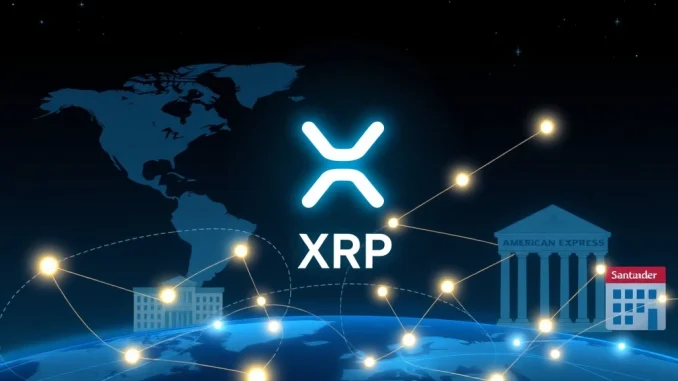
SMQKE’s powerful rebuttal provided documented evidence of institutional engagement, highlighting that major financial players like American Express (Amex), Bank of America (BAC), and Santander (SAN) are indeed utilizing the token. This isn’t about individuals buying coffee with XRP; it’s about backend financial operations that facilitate massive, high-value transactions. The evidence points to a robust, if less visible, form of XRP adoption that supports critical global financial networks.
Ripple Payments: The Backbone of Institutional Utility
At the core of XRP’s institutional use lies Ripple’s innovative technology. RippleNet, Ripple’s global payments network, leverages XRP to enable efficient and cost-effective cross-border transactions. Think of XRP as a highly efficient intermediary asset, allowing financial institutions to move value across borders almost instantly, without the need for pre-funded nostro/vostro accounts. This significantly reduces liquidity costs and settlement times.
Here’s how Ripple payments infrastructure benefits major financial institutions:
- On-Demand Liquidity (ODL): XRP powers ODL, allowing institutions to source liquidity for cross-border payments in real-time, eliminating the need to pre-fund accounts in destination currencies.
- Reduced Costs: Traditional correspondent banking can be expensive due to multiple intermediaries and fees. XRP streamlines this, leading to significant cost savings.
- Faster Settlements: Transactions settle in seconds, compared to days with traditional systems, improving efficiency for global businesses.
- Scalability: The XRP Ledger is built to handle high transaction volumes, making it suitable for enterprise-level demands.
SMQKE’s findings underscore that hundreds of financial institutions have partnered with Ripple, integrating XRP into their systems for real-time gross settlement and remittance flows. This enterprise-level integration showcases a tangible application of blockchain technology solving real-world financial problems.
Revolutionizing Cross-Border Payments with XRP
Traditional cross-border payments are notoriously slow, expensive, and opaque. They often involve multiple intermediary banks, leading to delays, high fees, and a lack of transparency regarding the exact arrival time and final amount. This outdated system presents significant challenges for businesses and individuals alike.
XRP offers a compelling alternative. By acting as a bridge currency, it enables direct, near-instantaneous value transfer between different fiat currencies. For example, a bank in the US wanting to send money to a bank in Mexico could convert USD to XRP, send the XRP across the ledger, and then convert XRP to MXN at the destination. This process bypasses the complex web of correspondent banks, reducing friction and cost.
The ability to facilitate low-cost, scalable international transactions is a critical function for banks and payment providers operating in a globalized economy. This efficiency isn’t just a theoretical benefit; it translates into competitive advantages for institutions and better services for their customers. The utility of XRP in this context is undeniable, addressing a multi-trillion-dollar market need.
Understanding Institutional XRP: Beyond Retail Speculation
One of the key misunderstandings about XRP stems from comparing its market behavior to retail-focused cryptocurrencies like Bitcoin (BTC) or Ethereum (ETH). While Bitcoin is often seen as digital gold and Ethereum as a platform for decentralized applications, institutional XRP is fundamentally different. It’s designed as an infrastructure asset, a tool for financial institutions to improve their backend operations, rather than a consumer-facing digital currency.
The researcher emphasized this distinction, positioning XRP as a utility token whose value is tied to its functional role in facilitating global liquidity. Its success hinges on its integration into operational workflows, a metric far less visible to the casual crypto observer but absolutely vital to enterprise stakeholders. This is why discussions about “people using XRP” often miss the point – it’s about systems using XRP to serve people more efficiently.
Beyond its core payment utility, Ripple’s broader credibility is enhanced by its collaborations with reputable entities like the Bill & Melinda Gates Foundation, working on financial inclusion initiatives. Furthermore, Ripple’s commitment to carbon neutrality by 2030 signals a responsible approach to blockchain technology, adding another layer of appeal for environmentally conscious institutional partners.
Unpacking XRP Utility in the Global Financial Network
The debate surrounding XRP’s adoption highlights a broader tension within the crypto sector: how do we accurately evaluate the success and impact of utility-driven tokens? For many, the perception of a cryptocurrency’s success is tied to its price action or widespread retail acceptance. However, for tokens like XRP, their functional impact on financial infrastructure is the true measure of their value.
SMQKE’s detailed rebuttal serves as a reminder that empirical evidence of integration and partnerships often speaks louder than broad, narrative-driven critiques. The focus on institutional frameworks illuminates that XRP’s value proposition is intrinsically linked to backend efficiency, a critical component for modernizing global finance. The continued expansion of Ripple’s network and the sustained interest from major banks underscore the growing recognition of XRP utility in solving real-world challenges.
In conclusion, the assertion that XRP lacks adoption has been robustly challenged by evidence pointing to its active use by major financial institutions. While it may not be a household name for everyday transactions, XRP’s role as a bridge currency within Ripple’s infrastructure is proving invaluable for efficient, low-cost cross-border payments. This distinction between retail and institutional utility is crucial for a complete understanding of XRP’s place in the evolving global financial landscape. As the financial world continues to digitize, the importance of efficient, scalable solutions like XRP is likely to grow, solidifying its position as a key player in the future of international finance.
Frequently Asked Questions (FAQs)
Q1: Is XRP used by everyday people?
A1: While individuals can hold and trade XRP, its primary design and adoption are focused on institutional use. It functions as a bridge currency for financial institutions to facilitate fast and low-cost cross-border payments, rather than being a direct consumer payment method like a credit card.
Q2: Which major banks are reportedly using XRP?
A2: According to researcher SMQKE’s findings, major financial institutions such as American Express, Bank of America, and Santander are among those utilizing XRP within Ripple’s infrastructure for their cross-border payment operations.
Q3: How does XRP facilitate cross-border payments?
A3: XRP acts as a bridge currency. Instead of traditional systems that require banks to pre-fund accounts in various currencies, institutions can convert their local currency to XRP, send the XRP across the XRP Ledger in seconds, and then convert it to the destination currency. This process significantly reduces costs and settlement times.
Q4: Why is there a debate about XRP’s adoption?
A4: The debate often arises from a misunderstanding of XRP’s intended utility. Critics sometimes compare it to consumer-facing cryptocurrencies, overlooking its role as an enterprise-level infrastructure asset. Its adoption by institutions for backend operations is less visible to the general public, leading to misconceptions.
Q5: What is the significance of Ripple’s partnerships with organizations like the Bill & Melinda Gates Foundation?
A5: Ripple’s collaborations with organizations like the Bill & Melinda Gates Foundation, focused on financial inclusion, demonstrate its commitment to leveraging its technology for broader societal impact. These partnerships enhance Ripple’s credibility and indicate a broader utility beyond just commercial banking.