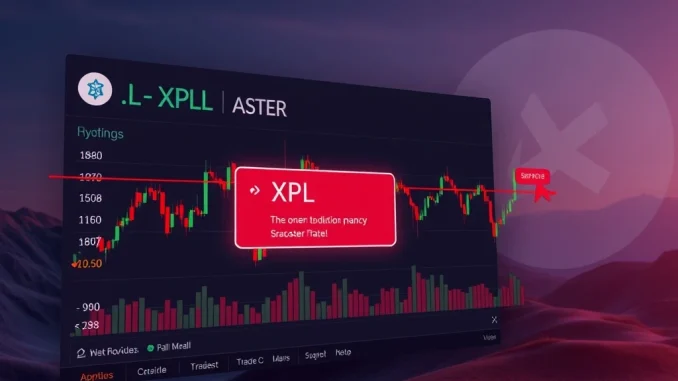
A **crucial** incident has unfolded within the cryptocurrency market, specifically involving the XPL token. Reports indicate a significant **XPL price error** on Aster DEX, a prominent decentralized perpetual futures exchange. This discrepancy saw XPL trading at $2, notably higher than its market rate of approximately $1.30 on major centralized exchanges like Binance. This immediate price divergence has sparked concerns among traders and highlights the inherent complexities of **cryptocurrency trading** on decentralized platforms.
Understanding the XPL Price Error on Aster DEX
The reported **XPL price error** on Aster DEX presents a stark contrast to the token’s valuation across broader markets. While XPL hovered around $1.30 on established platforms, its price surged to $2 on Aster. This substantial difference, amounting to nearly 54%, immediately raised red flags. Such discrepancies can arise from various factors, often stemming from technical malfunctions within the exchange’s infrastructure. Consequently, traders engaging with Aster DEX during this period faced potentially misleading price information.
Price anomalies are not uncommon in the volatile crypto landscape. However, a difference of this magnitude on a decentralized exchange warrants close examination. BWE News initially brought this issue to light, emphasizing the gravity of the situation. Users must always verify token prices across multiple, reputable sources before executing trades, especially on newer or less liquid platforms.
The Mechanics of Aster DEX and Decentralized Exchange Challenges
Aster DEX operates as a **decentralized exchange** (DEX) focused on perpetual futures. Unlike centralized exchanges, DEXs run on smart contracts and typically rely on automated market makers (AMMs) and oracle networks for price feeds. This architecture aims to offer greater transparency and user control. However, it also introduces unique vulnerabilities. A ‘system error’ on a DEX can manifest in several ways:
- Oracle Malfunction: External data providers (oracles) might feed incorrect price data to the DEX’s smart contracts.
- Smart Contract Bug: A flaw in the underlying code could misinterpret or miscalculate prices.
- Liquidity Pool Imbalance: Severe imbalances in liquidity pools can lead to temporary, exaggerated price swings.
- Front-End Display Glitch: Sometimes, the issue is merely a visual error on the user interface, not affecting the underlying smart contract logic.
Identifying the exact cause of the **system error** on Aster DEX is paramount for both the platform and its users. The decentralized nature means that rectifying such issues often requires specific governance proposals or pre-defined emergency procedures, which can take time.
Impact on Cryptocurrency Trading and User Experience
An **XPL price error** like this has immediate and significant implications for **cryptocurrency trading**. For those who traded XPL on Aster DEX at the inflated $2 price, potential losses are considerable if the price reverts to its true market value. Conversely, some sophisticated traders might attempt to exploit such discrepancies through arbitrage, buying low on one exchange and selling high on another. However, this carries its own risks, including transaction fees, slippage, and the possibility of the error being corrected before trades settle.
Furthermore, such incidents erode user trust in decentralized platforms. When a **decentralized exchange** experiences a glaring price discrepancy due to a **system error**, it raises questions about the robustness of its infrastructure and its ability to protect user assets. This can lead to reduced trading volume and a general reluctance among users to engage with the platform. Transparency from Aster DEX regarding the nature of the error and its resolution is therefore critical for restoring confidence.
Navigating Volatility and Price Discrepancies in DeFi
In the dynamic world of decentralized finance (DeFi), users must adopt a cautious and informed approach. Price discrepancies, though rare on well-established platforms, can occur. Here are some key considerations for users engaged in **cryptocurrency trading**:
- Verify Prices: Always cross-reference token prices across multiple reputable exchanges before making a trade.
- Understand DEX Mechanics: Familiarize yourself with how a specific **decentralized exchange** handles price feeds, liquidity, and potential error resolution.
- Monitor Official Channels: Stay updated with announcements from the exchange itself and reliable crypto news outlets like BWE News.
- Risk Management: Employ strategies such as stop-loss orders to limit potential losses in volatile conditions.
- Due Diligence: Research the token (XPL, in this case) and the platform (Aster DEX) thoroughly before committing significant capital.
The **system error** on Aster DEX serves as a potent reminder that even advanced decentralized systems are not immune to technical challenges. Vigilance and proactive information gathering are essential tools for any serious crypto trader.
Ensuring Trust and Security in Decentralized Finance
Incidents like the **XPL price error** on Aster DEX underscore the continuous need for robust security measures and reliable infrastructure within the DeFi ecosystem. For a **decentralized exchange** to thrive, it must prioritize system integrity and user protection. This involves:
- Thorough Audits: Regular and independent security audits of smart contracts and protocols.
- Redundant Oracles: Implementing multiple, diverse oracle networks to prevent single points of failure in price feeds.
- Emergency Protocols: Clear and efficient mechanisms for addressing and resolving critical system errors.
- Community Governance: Empowering users through governance models to contribute to the platform’s security and evolution.
The incident with XPL on Aster DEX, while concerning, provides valuable lessons for the broader industry. It highlights the ongoing evolution of DeFi and the collective effort required to build more resilient and trustworthy decentralized financial systems. The future of **cryptocurrency trading** hinges on platforms’ ability to minimize such errors and respond effectively when they occur.
In conclusion, the **XPL price error** on Aster DEX serves as a significant event in the ongoing narrative of decentralized finance. While the allure of DEXs lies in their decentralized nature and user autonomy, this incident reminds us of the technical complexities and potential pitfalls. Traders must remain vigilant, conduct thorough research, and always verify information from multiple sources to navigate the exciting yet unpredictable world of **cryptocurrency trading** safely. The quick reporting by BWE News helped bring this issue to the forefront, allowing traders to make more informed decisions.
Frequently Asked Questions (FAQs)
Q1: What exactly was the XPL price error on Aster DEX?
A1: The XPL token was reportedly trading at $2 on Aster DEX, a decentralized perpetual futures exchange, while its market price on major platforms like Binance was around $1.30. This significant discrepancy was attributed to a system error.
Q2: What is Aster DEX, and how does a decentralized exchange differ from a centralized one?
A2: Aster DEX is a decentralized perpetual futures exchange. Unlike centralized exchanges (CEXs) like Binance, DEXs operate on blockchain smart contracts, allowing peer-to-peer trading without an intermediary. They typically rely on automated market makers (AMMs) and oracle networks for price data.
Q3: What could cause a system error like this on a decentralized exchange?
A3: Potential causes for such a system error include oracle malfunctions (incorrect price feeds), bugs in the smart contract code, severe liquidity pool imbalances, or even a front-end display glitch that misrepresents actual trading prices.
Q4: What are the risks for traders involved in cryptocurrency trading during such a price error?
A4: Traders who bought XPL at the inflated price on Aster DEX face potential losses if the price corrects. While some might attempt arbitrage, this also carries risks like transaction fees, slippage, and the possibility of the error being resolved before trades are completed.
Q5: How can traders protect themselves from such price discrepancies on DEXs?
A5: Traders should always verify token prices across multiple reputable exchanges, understand the specific DEX’s mechanics, monitor official announcements from the platform, employ risk management tools like stop-loss orders, and conduct thorough due diligence on both the token and the exchange.