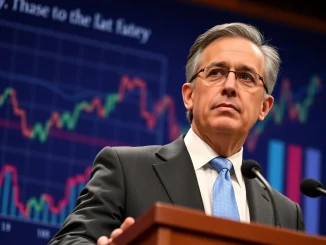
The potential introduction of a won stablecoin in South Korea has sparked a significant debate. Bank of Korea Governor Lee Chang-yong has voiced profound concerns. He fears its hasty launch could destabilize the nation’s financial landscape. This apprehension centers on potential capital flight and increased foreign exchange market volatility.
BOK Governor’s Urgent Concerns on Won Stablecoin Introduction
Bank of Korea (BOK) Governor Lee Chang-yong recently addressed a parliamentary audit. He clearly articulated his apprehension regarding a won-denominated stablecoin. According to a Yonhap News report, Lee highlighted significant risks. He specifically mentioned foreign exchange market volatility. Furthermore, he warned of potential capital flight if proper safeguards are absent. Many individuals, he suggested, might move such stablecoins overseas. This poses a direct challenge to South Korea’s financial stability. Consequently, the BOK chief advocates for extreme caution.
Understanding Capital Flight Risks with Won Stablecoin
The concept of capital flight is central to Governor Lee’s worries. It refers to the rapid outflow of assets or money from a country. This often happens due to economic or political instability. In the context of a won stablecoin, this risk is amplified. If people can easily convert their won into a digital stablecoin and transfer it internationally, traditional capital controls could weaken. Consequently, this could lead to a sudden depreciation of the Korean Won. Such an event would severely impact South Korea’s economy. It would also affect its international trade position. The Bank of Korea must carefully consider these ramifications before proceeding.
Phased Rollout: A Strategic Approach to Mitigate Forex Volatility
Governor Lee stressed the importance of a phased rollout. This strategic approach aims to manage the inherent risks. He advocated for an initial system centered around commercial banks. Under this model, banks would control the issuance and circulation of the won stablecoin. This structured introduction would allow authorities to monitor foreign exchange outflows effectively. If this initial phase demonstrates effective control over capital movements, then expansion could occur. This cautious strategy aims to prevent immediate, widespread forex volatility. It provides a testing ground for new digital currency mechanisms, ensuring stability.
The Bank of Korea’s Role in Digital Currency Regulation
The Bank of Korea plays a critical role in monetary policy and financial stability. Its cautious stance on a won stablecoin reflects this mandate. The BOK chief’s comments underscore the complexity of integrating digital assets. Central banks worldwide grapple with similar challenges. They seek to balance innovation with financial stability. The BOK’s primary objective remains safeguarding the national currency and economy. Therefore, any move towards a central bank digital currency (CBDC) or privately issued stablecoin requires extensive deliberation. It also necessitates robust regulatory frameworks and thorough risk assessment.
Safeguarding South Korea’s Financial Stability
The potential for a won stablecoin to trigger forex volatility is a serious concern. Uncontrolled outflows could deplete national reserves. This could also make the economy vulnerable to external shocks. Governor Lee’s warnings are a call for prudence. They emphasize the need for comprehensive risk assessments. The BOK intends to implement measures that protect against market disruptions. This includes stringent oversight of stablecoin issuers. It also involves establishing clear guidelines for cross-border transactions. Ultimately, the goal is to harness the benefits of digital currencies. However, this must occur without compromising South Korea’s economic integrity. The BOK chief is committed to this careful balance.
The debate surrounding a won stablecoin highlights critical challenges for central banks globally. Bank of Korea Governor Lee Chang-yong’s cautionary remarks are timely. He underscores the need for robust safeguards to prevent capital flight and forex volatility. A gradual, bank-centered introduction could offer a path forward. This approach would allow for careful monitoring and adjustment. South Korea’s financial future depends on a well-considered strategy for digital currency integration. The Bank of Korea remains vigilant in this evolving landscape.
Frequently Asked Questions (FAQs)
- What is a won stablecoin?
A won stablecoin is a digital cryptocurrency designed to maintain a stable value, typically pegged to the South Korean Won at a 1:1 ratio. This means its value should not fluctuate like volatile cryptocurrencies. - Why is the Bank of Korea concerned about capital flight?
The Bank of Korea fears that without proper safeguards, individuals could easily convert their Won into these digital assets and transfer them overseas. This rapid outflow of money, known as capital flight, could destabilize the foreign exchange market and weaken the national currency. - What is forex volatility?
Forex volatility refers to the degree of fluctuation in the exchange rates between different currencies. High volatility means exchange rates can change rapidly and unpredictably, negatively impacting international trade, investments, and a country’s economic stability. - What solution did Governor Lee propose for a won stablecoin rollout?
Governor Lee proposed a phased rollout, starting with a bank-centered system. This approach would allow authorities to effectively control foreign exchange outflows, with potential expansion only after demonstrating success in managing capital movements. - What is the Bank of Korea’s primary role in this context?
The Bank of Korea’s primary role is to maintain monetary and financial stability in South Korea. Its cautious stance on won stablecoins reflects its commitment to safeguarding the national currency and economy from potential risks associated with new digital financial instruments.