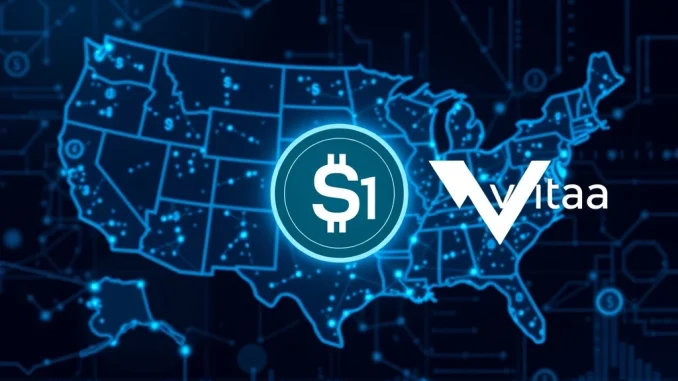
Are you ready for a seismic shift in how we interact with money? The world of finance is constantly evolving, and at its forefront is the exciting realm of Web3 Banking. A groundbreaking announcement has just hit the wires, signaling a pivotal moment for this transformation: World Liberty Financial (WLFI) and Vaulta, a leading Web3 banking technology firm, have joined forces. This strategic alliance aims to integrate WLFI’s USD1 stablecoin with Vaulta’s robust decentralized infrastructure, setting the stage for a new era of financial services in the United States.
Unpacking the WLFI Vaulta Partnership: A Bridge to the Future
The collaboration between WLFI and Vaulta isn’t just another tech announcement; it’s a deliberate stride towards dismantling the traditional barriers between conventional financial systems and the burgeoning decentralized platforms. At its core, this WLFI Vaulta Partnership leverages the inherent stability of USD1 and Vaulta’s advanced technological prowess to achieve several critical objectives:
- Enhanced Liquidity: By creating a seamless flow between traditional and decentralized assets, the partnership aims to unlock greater liquidity across the financial ecosystem.
- Streamlined Capital Flows: Imagine capital moving effortlessly between different sectors, reducing friction and delays that plague current systems. This partnership seeks to make that a reality.
- Addressing Adoption Barriers: Longstanding hurdles like regulatory complexity and interoperability challenges have slowed the mainstream embrace of digital assets. WLFI and Vaulta are directly tackling these issues, paving a smoother path for broader adoption.
This initiative represents a significant commitment to building a more integrated and efficient financial landscape, where the benefits of blockchain technology can be fully realized by a wider audience.
The Power of USD1 Stablecoin in Decentralized Finance
At the heart of this transformative partnership lies the USD1 Stablecoin. For those new to the crypto space, stablecoins are digital currencies designed to minimize price volatility, typically by being pegged to a stable asset like the U.S. dollar. Unlike highly volatile cryptocurrencies such as Bitcoin or Ethereum, USD1 offers a reliable and stable medium for transactions, making it an ideal candidate for institutional and everyday use.
Integrating USD1 into Vaulta’s ecosystem is a game-changer for Decentralized Finance (DeFi). Here’s why stablecoins are increasingly seen as foundational tools for Web3 finance:
- Stability: Their dollar peg means users can transact without fear of sudden price swings, crucial for commerce and financial planning.
- Efficiency: By embedding USD1 into Vaulta’s infrastructure, the partnership facilitates faster and significantly lower-cost transactions compared to traditional banking rails.
- Accessibility: Stablecoins, through platforms like Vaulta, can expand access to decentralized financial services globally, fostering greater financial inclusion.
This approach aligns perfectly with broader industry trends where stablecoins are increasingly positioned as essential bridges between the traditional fiat economy and the innovative crypto economy. They offer the best of both worlds: the stability of conventional currency with the efficiency and transparency of blockchain technology.
Advancing Digital Asset Adoption in the U.S.
What does this mean for the everyday consumer and businesses in the United States? The potential benefits of this partnership are substantial, particularly in driving Digital Asset Adoption. For U.S. consumers, the implications could include:
- Reduced Transaction Fees: Say goodbye to hefty charges on transfers and payments.
- Faster International Payments: Cross-border transactions, often slow and expensive, could become near-instant and more affordable.
- Access to Innovative Financial Products: Users could gain access to exciting new offerings like automated lending protocols, decentralized insurance, and yield-generating opportunities previously unavailable through traditional channels.
Beyond convenience, this collaboration also champions financial inclusion. Decentralized platforms, by requiring only an internet connection, have the potential to serve unbanked and underbanked populations, offering them access to vital financial services. However, the path isn’t without its challenges. The evolving U.S. regulatory frameworks pose a constant navigation test. Ensuring robust security against cyber threats is paramount, as is simplifying user interfaces to make Web3 banking accessible for mainstream adoption. Vaulta and WLFI’s ability to effectively address these hurdles will be crucial for the widespread scalability and success of their solution.
The Broader Landscape of Web3 Banking: A Paradigm Shift
The WLFI-Vaulta initiative reflects a broader, undeniable shift in the financial sector towards decentralized models. Web3 Banking, characterized by peer-to-peer transactions, blockchain-based smart contracts, and user-centric control, stands in stark contrast to traditional banking’s reliance on intermediaries. Consider the key differences:
| Feature | Traditional Banking | Web3 Banking |
|---|---|---|
| Intermediaries | Banks, Payment Processors | None (Peer-to-Peer) |
| Transparency | Limited (Centralized Ledgers) | High (Public Blockchains) |
| Fees | Often High, Hidden | Significantly Lower |
| Control | Bank-Centric | User-Centric (Self-Custody) |
| Transaction Speed | Can be Slow (especially international) | Near-Instant |
While regulatory clarity and technical scalability are ongoing concerns for the entire Web3 space, the WLFI-Vaulta initiative demonstrates how stablecoin integration can effectively mitigate risks associated with crypto volatility while enabling practical and powerful use cases for everyday finance.
Navigating the Future: Success Factors for the WLFI Vaulta Partnership
Analysts closely watch how such partnerships unfold, noting that their success largely hinges on their capacity to demonstrate tangible utility and unwavering compliance with existing financial frameworks. The U.S. market, known for its cautious approach to digital assets, demands that projects prioritize several key areas to build trust and ensure longevity:
- Security: Robust measures against cyber threats and fraud are non-negotiable.
- Interoperability: Seamless integration with diverse platforms and systems is crucial for widespread adoption.
- User Education: Simplifying complex Web3 concepts and providing clear guidance will be vital for onboarding new users.
Vaulta’s infrastructure, combined with WLFI’s stablecoin, provides a robust framework for testing these principles in a real-world scenario. However, their long-term impact will depend on how effectively they adapt to evolving regulatory landscapes and dynamic market demands. The ability to pivot and innovate while maintaining compliance will be the true test of their pioneering spirit.
A Glimpse into Tomorrow’s Finance
The strategic alliance between WLFI and Vaulta is more than just a business deal; it’s a significant leap forward in the journey towards mainstream Web3 Banking. By integrating the USD1 stablecoin into Vaulta’s decentralized infrastructure, this partnership promises to enhance liquidity, streamline capital flows, and accelerate Digital Asset Adoption in the U.S. While challenges like regulatory navigation and user experience remain, the collaborative efforts to leverage the stability of the USD1 Stablecoin within Decentralized Finance are setting a powerful precedent. This initiative not only addresses current pain points in traditional finance but also lays the groundwork for a more inclusive, efficient, and transparent financial future for everyone.
Frequently Asked Questions (FAQs)
1. What is Web3 banking?
Web3 banking refers to financial services built on decentralized blockchain technology, enabling peer-to-peer transactions, smart contracts, and user control over assets without relying on traditional financial intermediaries like banks. It emphasizes transparency, lower fees, and greater accessibility.
2. How does the USD1 stablecoin work?
The USD1 stablecoin is a digital currency designed to maintain a stable value, typically by being pegged 1:1 to the U.S. dollar. This means that one USD1 token is always intended to be worth one U.S. dollar. Its stability makes it suitable for transactions, savings, and institutional use within decentralized finance, avoiding the volatility often associated with other cryptocurrencies.
3. What are the main benefits of the WLFI Vaulta partnership?
The partnership aims to enhance liquidity, streamline cross-sector capital flows, and overcome barriers to digital asset adoption in the U.S. For consumers, this could mean reduced transaction fees, faster international payments, and access to innovative decentralized financial products like automated lending and insurance.
4. What challenges does Web3 banking face in the U.S.?
Key challenges include navigating the evolving and often complex U.S. regulatory frameworks, ensuring robust security against cyber threats and fraud, and simplifying user interfaces to make decentralized platforms intuitive and accessible for mainstream adoption.
5. How do stablecoins bridge traditional and crypto finance?
Stablecoins act as a crucial link by providing a stable digital asset that mimics the value of fiat currency. This stability makes them palatable for traditional institutions and individuals who are hesitant about crypto volatility, allowing them to engage with decentralized applications and services while retaining the familiarity of a dollar-pegged asset.
6. Is this partnership safe for users?
The partnership emphasizes security and compliance. While all digital asset initiatives carry inherent risks, WLFI and Vaulta are focused on building a robust and secure infrastructure. However, as with any financial technology, users should always exercise due diligence and understand the associated risks.