The cryptocurrency market is no stranger to volatility, but the recent dramatic plunge of the VIRTUAL token has sent ripples through the digital asset community. A sharp 20% sell-off has left many investors questioning the token’s immediate future and long-term viability. This significant downturn wasn’t an isolated event; it was a confluence of factors, including substantial liquidity outflows, waning bullish momentum reflected in declining open interest, and a pervasive weakness across the broader crypto market. Understanding these dynamics is crucial for anyone navigating the unpredictable waters of digital asset trading.
Decoding the VIRTUAL Token Plunge: What Triggered the Sell-off?
The immediate cause for VIRTUAL’s precipitous drop can be traced to a series of concerning indicators within its derivatives markets. Traders, seemingly spooked by shifting sentiment, pulled nearly $9 million from derivatives, leading to a notable 5.51% fall in open interest, which now stands at $172.21 million. This reduction in open interest is a clear signal of waning bullish conviction, as fewer new positions are being opened, and existing ones are being closed out. Adding to the pressure, liquidations amounted to a significant $564,000, further exacerbating the downward spiral.
Funding rates, a key metric indicating the sentiment between long and short positions in perpetual futures markets, edged closer to zero. This compression often precedes or accompanies significant price movements, as it signals a lack of strong directional bias and can make short positions more attractive. When funding rates approach zero or turn negative, it implies that short-sellers are gaining an advantage, potentially setting the stage for further declines.
Broader Crypto Market Weakness: A Contagion Effect?
VIRTUAL’s woes aren’t entirely unique; they’re symptomatic of a wider malaise affecting certain segments of the digital asset landscape. The memecoin category, for instance, experienced a 2.8% weekly decline, with VIRTUAL notably underperforming this already struggling sector by an additional 3.45%. This underperformance highlights VIRTUAL’s particular vulnerability to market corrections and raises questions about its resilience compared to its peers.
The general sentiment across the crypto market has been cautious, with investors showing increased risk aversion. When broader market conditions are unfavorable, tokens that lack strong fundamental support or robust use cases often bear the brunt of selling pressure. This ‘contagion effect’ means that weakness in one sector or asset class can quickly spread, pulling down even seemingly unrelated tokens.
Unpacking Liquidity Outflows: The Vanishing Volume
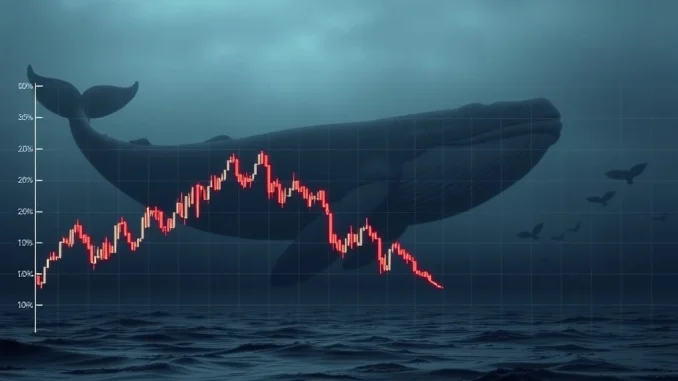
Perhaps one of the most alarming indicators of VIRTUAL’s struggles is the dramatic collapse in spot trading volume. In a matter of days, spot volume on decentralized exchanges (DEXs) and within the broader DeFi ecosystem plummeted from a healthy $6.5 million to a mere $650,000. This tenfold decrease is a stark reflection of vanishing trader confidence and significant liquidity outflows. When liquidity dries up, it becomes incredibly difficult for large orders to be executed without significantly impacting the price, leading to sharper price swings and making recovery efforts much harder.
The technical breakdown on VIRTUAL’s charts further underscores this concern. The critical support trendline established on June 22nd was decisively breached, a classic bearish signal. With this key level broken, analysts are now eyeing $1.27 as the next crucial support level. A failure to hold this level could open the door to even steeper declines, as panic selling might ensue among remaining holders.
Whale Movements: Accumulation or Distribution?
Amidst the turmoil, large-scale movements of VIRTUAL tokens have added another layer of complexity to the narrative. Arkham Intelligence, a prominent blockchain analytics firm, tracked approximately $67 million worth of VIRTUAL being moved onto centralized exchanges like Binance and Bybit. These significant transfers, often attributed to ‘whales’ (large holders), have sparked intense speculation among market participants.
There are two primary interpretations of these substantial whale movements:
Accumulation by Institutional Investors: One optimistic view suggests that these whales could be institutional investors or savvy traders accumulating VIRTUAL at a discounted price. If this is the case, it could precede a ‘supply squeeze,’ where increasing demand meets a decreasing available supply on exchanges, potentially leading to a sharp price rebound.
Preparation for a Larger Sell-off: Conversely, a more bearish interpretation posits that these movements are in preparation for a massive sell-off. Moving tokens to exchanges makes them readily available for liquidation, and an influx of supply could overwhelm buying demand, driving the price down further. The increase in exchange holdings often precedes significant selling pressure, especially if these whales are looking to exit their positions.
The ambiguity of whale activity makes predicting VIRTUAL’s next move particularly challenging. Their actions often dictate short-term market trends, and their intentions remain a closely guarded secret.
Assessing VIRTUAL’s Token Price Recovery Potential
The path forward for VIRTUAL appears fraught with challenges. Beyond the immediate selling pressure, the token’s struggles are compounded by several structural weaknesses within its ecosystem. The continued funding rate compression, coupled with negative market breadth (meaning more assets are declining than advancing), and persistently weak trading volume, all point to a fragile ecosystem. This environment gives short-sellers a strategic advantage, and any significant shift towards negative funding rates could trigger cascading liquidations, creating a vicious cycle of price depreciation.
While the token’s 33% monthly sector performance offers a glimmer of optimism, VIRTUAL’s individual 3.45% decline against this backdrop underscores its unique vulnerability to market corrections. Market observers caution that a clear recovery trajectory remains elusive. If the whale activity is indeed accumulation, a rebound for the token price could materialize swiftly once buying pressure resumes. However, without a significant broad market catalyst or a direct intervention from the project’s development team – perhaps through new partnerships, product launches, or token burns – the risk of further declines looms large. The coming weeks will be a critical test for VIRTUAL, determining whether it can stabilize and consolidate or if this sell-off marks the beginning of a deeper, more prolonged correction.
Challenges and Risks for VIRTUAL
- Sustained Liquidity Drain: The primary risk remains the continued withdrawal of liquidity, making it harder for the token to recover and increasing price volatility.
- Whale Dominance: The sheer size of whale holdings means their collective actions can overpower retail buying, creating unpredictable price swings.
- Weak Market Sentiment: Negative sentiment, fueled by poor performance and technical breakdowns, can create a self-fulfilling prophecy of further declines.
- Lack of Catalysts: Without new developments or market-wide positive shifts, VIRTUAL may struggle to find the momentum needed for a strong rebound.
Actionable Insights for Traders
- Monitor Key Support Levels: Keep a close eye on the $1.27 level. A break below this could signal further downside.
- Watch Funding Rates: Pay attention to funding rates on perpetual futures. A sustained move into negative territory could indicate increasing short pressure.
- Track Whale Movements: Utilize blockchain analytics tools (like Arkham Intelligence) to monitor large transfers to and from exchanges. While not definitive, patterns can emerge.
- Assess Broader Market Conditions: VIRTUAL’s fate is closely tied to the overall crypto market. A general market recovery could provide a much-needed lift.
- Risk Management: Given the high volatility, employ strict stop-loss orders and consider smaller position sizes if trading VIRTUAL.
In conclusion, VIRTUAL’s recent 20% plunge is a complex interplay of liquidity drying up, waning investor confidence, and significant whale activity. While the possibility of accumulation by savvy investors offers a sliver of hope for a future rebound, the current technical and on-chain indicators suggest a challenging road ahead. The coming days will be pivotal in determining if VIRTUAL can defy the bearish sentiment and reclaim its lost value, or if it will succumb to the intense selling pressure that has gripped its market.
Frequently Asked Questions (FAQs)
Q1: What caused the recent 20% plunge in VIRTUAL token’s price?
The plunge was primarily driven by significant liquidity outflows from derivatives markets, declining open interest signaling waning bullish momentum, and broader weakness across the memecoin and DeFi sectors. Technical breakdowns and a sharp drop in spot trading volume also contributed.
Q2: What are ‘liquidity outflows’ and how do they impact VIRTUAL’s price?
Liquidity outflows refer to funds being withdrawn from a market, in this case, from VIRTUAL’s derivatives and spot trading pairs. When liquidity dries up, it becomes harder to buy or sell the token without causing significant price impact, leading to sharper declines during sell-offs and making recovery more difficult.
Q3: How do ‘whale movements’ affect VIRTUAL’s price, and what are the interpretations?
Whale movements involve large holders transferring significant amounts of tokens, often to exchanges. These can be interpreted in two ways: either as accumulation by institutions preparing for a price rebound (a supply squeeze) or as preparation for a large sell-off, which would increase available supply and potentially drive the price down further.
Q4: Is a recovery for VIRTUAL token still possible?
A recovery is possible, especially if the recent whale movements indicate accumulation by large investors, which could lead to a rebound when buying resumes. However, structural weaknesses like funding rate compression, negative market breadth, and low volume present significant challenges. A broad market catalyst or direct intervention from the project team would likely be needed for a sustained recovery.
Q5: What technical levels should VIRTUAL traders watch?
After breaching the June 22nd support trendline, the next critical level to monitor for VIRTUAL is $1.27. A failure to hold this level could signal further downside potential.