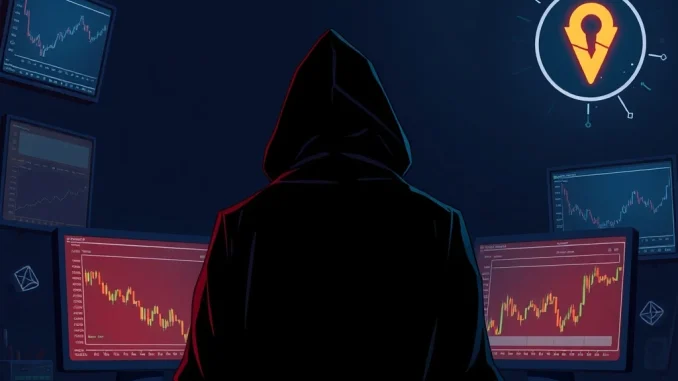
The cryptocurrency world witnessed a startling turn of events recently. A hacker, who previously stole a significant amount of **UXLINK tokens**, became the victim of a sophisticated **phishing scam**. This incident resulted in a staggering $48 million loss for the perpetrator. The saga underscores the constant threats within the digital asset space. It also highlights that even experienced bad actors are vulnerable. This unexpected twist quickly grabbed the attention of blockchain observers.
The Initial UXLINK Exploit and Hacker’s Actions
The story began with a major **UXLINK exploit**. A hacker successfully compromised a significant amount of **UXLINK tokens**. Specifically, this individual gained control of 542 million UXLINK tokens. These tokens represented a substantial sum. Blockchain analytics firm **Lookonchain** tracked these movements. Approximately three hours before the phishing incident, the hacker initiated further transactions. They swapped 2.49 billion UXLINK for 6,732 ETH. This exchange occurred across various **decentralized exchanges (DEXs)**. The value of this ETH stood at $28.1 million at the time. This initial maneuver demonstrated the hacker’s operational expertise. It also showed their attempt to convert stolen assets into more liquid forms. The UXLINK tokens were then moved, setting the stage for the subsequent event.
A Hacker Falls Victim: The $48 Million Phishing Scam
In a stunning development, the **UXLINK** hacker then suffered a massive setback. The perpetrator themselves fell prey to a devastating **phishing scam**. This attack led to the loss of 542 million of the **stolen UXLINK** tokens. The total value of these tokens reached $48 million. This particular incident demonstrates a profound irony. A cybercriminal, adept at exploiting vulnerabilities, became vulnerable. **Lookonchain** first reported this significant loss. They highlighted the unexpected turn in the saga. Phishing scams remain a pervasive threat in crypto. Even those familiar with digital exploits can be caught. This event serves as a stark reminder. No one is entirely safe from these malicious tactics. The stolen UXLINK tokens vanished from the hacker’s control.
Understanding Crypto Phishing Scams
A **phishing scam** involves deceptive attempts to acquire sensitive information. Attackers often pose as legitimate entities. They send fraudulent messages or create fake websites. Their goal is to trick victims into revealing **private keys** or approving malicious transactions. In the crypto world, these scams are especially dangerous. They can lead to irreversible loss of digital assets. Common tactics include fake exchange login pages or malicious smart contract approvals. Users must exercise extreme caution. They should always verify sources. This incident proves that even a hacker can be fooled. The lure of quick gains or urgent actions often drives these schemes. Therefore, vigilance is paramount for all participants in the blockchain ecosystem.
Broader Implications for Crypto Security
This incident offers crucial lessons for overall **crypto security**. It underscores the universal threat of phishing attacks. It also highlights the constant need for vigilance. If a sophisticated hacker can lose millions, everyday users are even more at risk. The event showcases the double-edged sword of decentralization. While it offers freedom, it also places full responsibility on the individual. There are no central authorities to reverse fraudulent transactions. Therefore, personal security practices become paramount. Wallets must be protected with strong, unique passwords. **Two-factor authentication (2FA)** adds another layer of defense. Users should always double-check transaction details. This event acts as a powerful warning. The UXLINK saga reveals the relentless nature of cyber threats. It urges everyone to prioritize digital safety.
Bolstering Your Blockchain Security Measures
Protecting digital assets requires proactive steps. Firstly, always use **hardware wallets** for significant holdings. These devices offer robust offline storage. Secondly, be suspicious of unsolicited messages or links. Verify the sender and the URL before clicking. Thirdly, enable **two-factor authentication (2FA)** on all accounts. This adds a critical security layer. Fourthly, never share your **private keys** or **seed phrases**. These are the ultimate access to your funds. Fifthly, regularly update your software and operating systems. Patches often fix security vulnerabilities. Finally, educate yourself about common scam tactics. Knowledge is your best defense against **blockchain security** threats. Even minor lapses can lead to substantial losses. This incident involving **stolen UXLINK** serves as a powerful cautionary tale for all.
The hacker’s loss of $48 million in **stolen UXLINK** tokens to a **phishing scam** is truly remarkable. It adds a complex layer to the ongoing narrative of cryptocurrency exploits. This incident demonstrates that no one is immune to digital deception. It also emphasizes the critical importance of robust security practices for all participants. From individual investors to sophisticated hackers, vigilance remains the ultimate defense. The **UXLINK** saga provides a stark, ironic lesson in the volatile world of blockchain assets.
Frequently Asked Questions (FAQs)
- Q1: What exactly happened in the UXLINK incident?
A1: A hacker initially stole a large sum of UXLINK tokens. Subsequently, this same hacker lost $48 million of those stolen UXLINK tokens to a separate phishing scam. - Q2: How much UXLINK did the hacker initially acquire and then lose?
A2: The hacker initially acquired 542 million UXLINK tokens. They then lost this entire amount, valued at $48 million, to the phishing scam. - Q3: What is a phishing scam in the context of cryptocurrency?
A3: A phishing scam involves tricking individuals into revealing sensitive information, like private keys or approving malicious transactions, by impersonating a trustworthy entity through fake websites or messages. - Q4: Who reported this incident?
A4: The blockchain analytics firm Lookonchain reported the details of both the initial UXLINK exploit and the subsequent phishing scam that targeted the hacker. - Q5: What lessons can be learned from this crypto security event?
A5: This event highlights that everyone, including experienced cybercriminals, is vulnerable to phishing. It underscores the critical need for strong personal crypto security practices, such as using hardware wallets and verifying all transactions and links. - Q6: Did the hacker convert any UXLINK tokens before the phishing attack?
A6: Yes, approximately three hours before the phishing attack, the hacker swapped 2.49 billion UXLINK tokens for 6,732 ETH, valued at $28.1 million, on various decentralized exchanges.