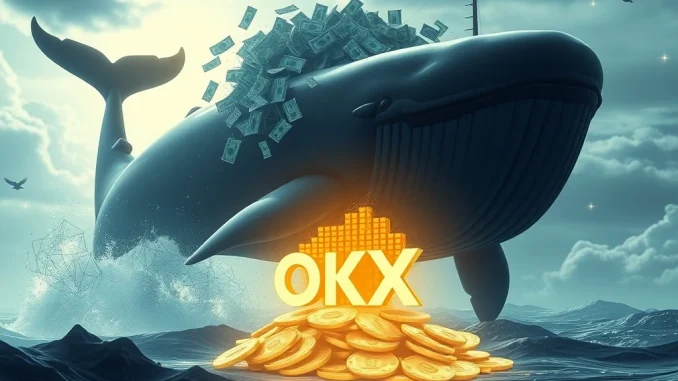
In a move that has sent ripples across the digital asset landscape, a staggering $307 million in USDT (Tether), the world’s most widely used stablecoin, was recently transferred to OKX, one of the largest cryptocurrency exchanges globally. This **USDT transfer**, confirmed by blockchain tracking service Whale Alert, represents one of the most substantial stablecoin movements in recent memory, immediately igniting fervent speculation about its implications for market dynamics and future trading strategies. For anyone invested in or observing the crypto space, understanding the nuances of such massive transactions is paramount, as they often precede significant market shifts.
What Does This Massive USDT Transfer Signify?
The sheer scale of this $307 million **USDT transfer** immediately raises questions. USDT, pegged 1:1 to the U.S. dollar, acts as a crucial bridge between traditional finance and the volatile cryptocurrency markets. Unlike volatile assets like Bitcoin or Ethereum, stablecoins are primarily used for liquidity, trading, and as a temporary safe haven. Therefore, a large inflow of USDT to an exchange rarely signals a desire to simply hold the stablecoin; rather, it often indicates an imminent strategic maneuver.
Historically, such significant stablecoin movements can point to several potential outcomes:
- Readiness to Trade: Large amounts of stablecoins on an exchange suggest a readiness to deploy capital into other cryptocurrencies, potentially signaling bullish sentiment for assets like Bitcoin or Ethereum.
- Liquidity Provision: The funds might be intended to provide liquidity for new token listings or upcoming projects, supporting their initial trading phases.
- Market Rebalancing: Institutional entities or large liquidity providers frequently move funds between exchanges to optimize their capital allocation and manage risk.
The anonymity of the sender, typical in blockchain transactions, only adds to the mystery, fueling the ongoing debate among analysts and traders.
Decoding Crypto Whale Activity on OKX
The term “crypto whale” refers to an individual or entity holding substantial amounts of cryptocurrency. When these whales make significant moves, the market pays attention. This particular **crypto whale activity** on the **OKX exchange** aligns with several plausible scenarios, each carrying different implications:
- Preparing for Large-Scale Purchases: One dominant theory suggests the whale is positioning to execute massive purchases of major cryptocurrencies. If true, this could indicate strong bullish expectations, potentially driving up demand and prices for assets like Bitcoin, Ethereum, or other altcoins. Such a move would typically involve placing large buy orders, absorbing available supply, and influencing market sentiment positively.
- Over-The-Counter (OTC) Deals: Large transactions often occur off-exchange to minimize market disruption and price slippage. An OTC deal involves a private agreement between two parties, with the exchange acting as an escrow or facilitator. The $307 million USDT could be used to settle such a private trade, perhaps for a large block of tokens acquired directly from a project or another whale, bypassing the public order books.
- Institutional Rebalancing or Liquidity Management: Major institutional players, hedge funds, or market makers constantly manage their capital across various platforms. This transfer could simply be an operational rebalancing act, moving funds to OKX to leverage its deep liquidity and advanced trading tools for more efficient execution of their broader strategies.
- Anticipating New Listings or Partnerships: Exchanges often require significant liquidity for new token listings. The **USDT transfer** could be a precursor to an upcoming announcement of a major new token listing or a strategic partnership, with the stablecoin serving as the initial liquidity for trading pairs. This could generate significant trading volume and interest.
Understanding these scenarios is crucial for anyone trying to interpret the market signals emanating from such large transfers.
The OKX Exchange: A Hub for High-Volume Trades
OKX’s role in this event underscores its significance as a major player in the cryptocurrency ecosystem. Known for its robust infrastructure, deep order books, and a wide array of trading products—including spot, futures, options, and perpetual swaps—the **OKX exchange** is a frequent destination for high-volume traders and institutional participants. Its ability to handle large transactions with minimal price slippage makes it an attractive venue for **crypto whale activity**.
The influx of such a substantial amount of USDT to OKX also reflects broader trends in the market. Many participants, especially during periods of market uncertainty or evolving regulatory landscapes, prefer to consolidate their liquidity on centralized platforms like OKX. These platforms offer enhanced security features, regulatory compliance (in some jurisdictions), and the tools necessary for sophisticated trading strategies, making them reliable hubs for managing significant digital assets.
Navigating the Stablecoin Market and Its Ripple Effects
The **stablecoin market** has grown exponentially, becoming a cornerstone of the crypto economy. While designed for stability, large movements within this market can indeed have ripple effects. The $307 million **USDT transfer** highlights the dual nature of stablecoins: they are both a reliable medium for transactions and a powerful barometer for speculative activity. When such a massive amount of USDT moves, it can amplify market sentiment, leading to either a surge in buying pressure or, if interpreted negatively, increased selling pressure on other assets.
The transparency of blockchain allows us to track these movements, but the anonymity of wallets means the precise motives often remain shrouded in speculation. This constant interplay between visible data and hidden intent is what makes the crypto market so dynamic and, at times, unpredictable. Regulators worldwide are increasingly scrutinizing stablecoin operations, aiming to mitigate risks like market manipulation and ensure financial stability. While the pseudonymous nature of wallets remains a challenge, exchanges like OKX are implementing more stringent KYC (Know Your Customer) and AML (Anti-Money Laundering) procedures to enhance market integrity.
Actionable Insights for Retail Investors Amidst Crypto Liquidity Shifts
For retail investors, large **USDT transfer** events and subsequent **crypto liquidity** shifts can be both intriguing and daunting. While it’s tempting to follow the perceived moves of whales, a cautious and well-informed approach is always recommended. Here are some actionable insights:
- Avoid Impulsive Decisions: Do not make hasty trading decisions based solely on a single whale alert. Large transfers do not inherently signal bullish or bearish trends; their implications are nuanced and context-dependent.
- Cross-Reference Data: Always cross-reference whale activity with broader market indicators. Look at macroeconomic news, overall market sentiment, on-chain analytics, funding rates, and technical analysis of specific assets.
- Understand the “Why”: Instead of just seeing the transaction, try to understand the potential reasons behind it. Is there an upcoming event? Are there rumors of a major listing?
- Risk Management is Key: Implement robust risk management strategies. Use stop-loss orders, manage your position sizing, and never invest more than you can afford to lose.
- Diversify Your Portfolio: Do not put all your eggs in one basket. A diversified portfolio can help mitigate risks associated with sudden market shifts influenced by large players.
The market is a complex ecosystem, and while whale movements offer a glimpse into potential institutional strategies, they are just one piece of a much larger puzzle.
The record $307 million **USDT transfer** to OKX is a powerful reminder of the ever-evolving dynamics within the cryptocurrency market. While the exact motives behind this massive stablecoin movement remain speculative, it undoubtedly signals a significant strategic play by a major participant. Whether it foreshadows a bullish surge, facilitates a discreet OTC deal, or represents a large-scale rebalancing, its impact on **crypto liquidity** and sentiment is undeniable. For investors, this event underscores the importance of staying informed, exercising caution, and relying on a comprehensive analysis rather than reacting to isolated data points. As the crypto landscape matures, such transparency in transactions, coupled with intelligent interpretation, will continue to shape how we understand and navigate this exciting frontier.
Frequently Asked Questions (FAQs)
What is USDT and why is its transfer significant?
USDT, or Tether, is a stablecoin pegged 1:1 to the U.S. dollar. Its transfer is significant because, unlike volatile cryptocurrencies, large USDT movements usually indicate an intent to trade or deploy capital into other assets, rather than simply holding it. It acts as a bridge for large-scale market operations.
Who are “crypto whales” and what is their impact?
Crypto whales are individuals or entities holding vast amounts of cryptocurrency. Their large transactions can significantly influence market sentiment, liquidity, and price trends due to the sheer volume of assets they control. Their moves are often watched closely for potential market direction signals.
What are the common reasons for large USDT transfers to exchanges like OKX?
Common reasons include preparing for large-scale cryptocurrency purchases, settling Over-The-Counter (OTC) deals, institutional operational rebalancing, or providing liquidity for new token listings and partnerships on the exchange.
How does OKX’s infrastructure handle such large transfers?
OKX is known for its robust infrastructure, deep liquidity, and advanced trading tools. These features allow it to handle high-volume transactions with minimal price slippage, making it an attractive platform for large-scale trades by institutional and sophisticated retail traders.
Should retail investors react immediately to large whale transfers?
Retail investors are generally advised against making impulsive decisions based solely on whale activity. It’s crucial to cross-reference such events with broader macroeconomic indicators, market sentiment, and personal risk management strategies. Whale moves are just one piece of a larger market puzzle.
What is the role of stablecoins in crypto market liquidity?
Stablecoins like USDT are vital for crypto market liquidity as they provide a stable medium for trading, facilitate quick entry and exit from volatile assets, and act as a temporary safe haven. Large stablecoin movements indicate shifts in available capital for trading within the ecosystem.