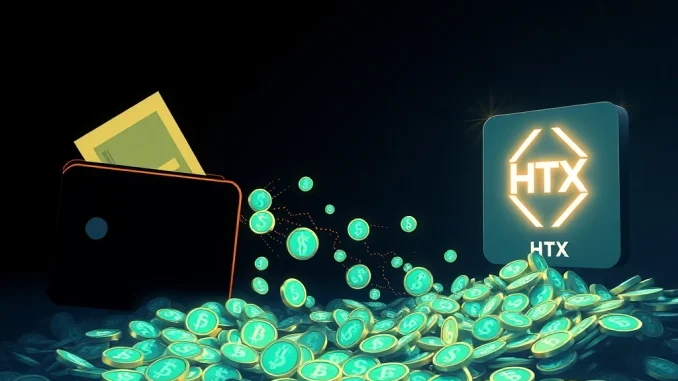
A colossal **USDT transfer** has captured the crypto world’s attention. Recently, an astonishing 447,500,725 **USDT** — equivalent to approximately $448 million — moved from an unknown wallet to the **HTX exchange**. This significant transaction, reported by blockchain tracker **Whale Alert**, immediately sparked discussions across the digital asset community. Such a large movement often signals potential market shifts or strategic maneuvers by a major player, commonly known as a **cryptocurrency whale**. Understanding the implications of this event is crucial for market participants.
Unpacking the Massive USDT Transfer
The reported **USDT transfer** represents one of the largest single stablecoin movements observed recently. Specifically, 447,500,725 units of **Tether USDT** left an unidentifiable address and landed in a wallet associated with HTX. This movement highlights the substantial capital held and moved by large investors in the crypto space. When such a considerable sum changes hands, it typically attracts scrutiny. Analysts immediately begin to speculate on the motivations behind the transaction. Was it for trading purposes, liquidity provision, or perhaps a strategic shift in portfolio? The sheer volume involved suggests a sophisticated entity is at play.
Blockchain data confirms the precise amount and destination. Furthermore, the transaction occurred swiftly, as is common with stablecoin transfers. Observers widely monitor these large movements. They often provide early indicators of market sentiment or upcoming volatility. Therefore, this particular **USDT transfer** warrants careful consideration.
The Role of Whale Alert in Tracking Cryptocurrency Whales
**Whale Alert** serves as a vital tool for tracking significant blockchain transactions. This automated system monitors large movements of cryptocurrencies across various networks. Its reports provide transparency into the activities of major holders, often referred to as **cryptocurrency whales**. These whales possess enough capital to influence market prices. Consequently, their movements are closely watched by traders and investors alike.
The platform broadcasts alerts in real-time. This helps market participants stay informed about potential shifts. For instance, a large influx of stablecoins to an exchange could suggest an intent to buy other cryptocurrencies. Conversely, a large outflow might indicate a desire to hold assets off-exchange. **Whale Alert** notifications, like the recent **USDT transfer** to HTX, therefore offer valuable insights into market dynamics. They empower users with data to make informed decisions.
HTX Exchange: A Destination for Large Transactions
**HTX exchange**, formerly known as Huobi, stands as one of the largest and oldest cryptocurrency trading platforms globally. It supports a vast array of digital assets and boasts significant trading volumes. Consequently, it is a frequent destination for substantial capital movements. The recent **USDT transfer** of nearly $448 million into **HTX exchange** wallets is consistent with its status as a major liquidity hub. Exchanges like HTX provide the infrastructure for converting stablecoins into other cryptocurrencies or fiat currency. They also facilitate various trading strategies.
Large deposits into an exchange can serve multiple purposes. These include preparing for large-scale buying orders, providing liquidity for specific trading pairs, or simply consolidating funds. Given HTX’s extensive offerings, the possibilities are diverse. The presence of such a significant amount of **Tether USDT** on the platform could influence its liquidity and trading depth. This makes HTX a critical player in the global crypto ecosystem.
Understanding Tether (USDT) and Its Significance
**Tether USDT** is the largest stablecoin by market capitalization. It is pegged 1:1 to the US dollar. This stability makes it an indispensable tool in the volatile cryptocurrency market. Traders use USDT to:
- Hedge against market downturns without converting to fiat.
- Facilitate quick transfers between exchanges.
- Lock in profits from other cryptocurrencies.
The high liquidity and widespread acceptance of **Tether USDT** make it the preferred stablecoin for large transactions. A **USDT transfer** of this magnitude underscores its pivotal role in enabling significant capital flows within the crypto economy. It acts as a bridge between traditional finance and the decentralized world. This stability is crucial for sophisticated investors. They need reliable ways to manage their positions and execute strategies efficiently. Therefore, its movements are highly indicative of market sentiment.
Potential Market Implications of Such a Large USDT Transfer
A **USDT transfer** of this size inevitably raises questions about its potential impact on the broader market. Firstly, a substantial deposit of stablecoins into an exchange often precedes significant buying activity. The whale might be preparing to acquire a large amount of Bitcoin, Ethereum, or other altcoins. Such an action could drive up prices, especially if executed rapidly. Secondly, the funds could be intended for providing liquidity. This would enhance trading efficiency for certain pairs on **HTX exchange**. This action could stabilize prices rather than cause immediate upward pressure.
Conversely, the funds might be held in preparation for a major market event. The whale could be positioning itself to capitalize on future price movements. The sheer volume ensures any subsequent action will be notable. Market participants will closely monitor HTX’s order books and overall market trends for clues. The direction of this capital will undoubtedly shape short-term market sentiment. Therefore, understanding the potential implications is vital for investors.
Historical Context of Cryptocurrency Whale Movements
The crypto market has a rich history of **cryptocurrency whale** movements dictating trends. Historically, large transfers of funds, whether stablecoins or volatile assets, have often preceded significant market events. For example, substantial Bitcoin movements to exchanges have sometimes signaled impending sell-offs. Conversely, large stablecoin deposits have frequently led to buying rallies. These patterns establish a precedent for interpreting the current **USDT transfer**.
Observing these historical trends helps in understanding current events. A single **cryptocurrency whale** can hold immense power. Their actions can create ripples across the entire ecosystem. Therefore, the **Whale Alert** notification about the HTX deposit is not merely a data point. It is a potential harbinger of future market activity. This context adds another layer of significance to the recent transaction. It reinforces the need for vigilance among market participants.
Ultimately, the massive **USDT transfer** to **HTX exchange** underscores the dynamic and often opaque nature of the cryptocurrency market. While the immediate intent of the unknown wallet remains speculative, the transaction itself is a clear indicator of significant capital at play. As the crypto landscape evolves, monitoring these **cryptocurrency whale** movements through services like **Whale Alert** will remain essential. The coming days will likely reveal the true purpose and impact of this substantial flow of **Tether USDT**.
Frequently Asked Questions (FAQs)
Q1: What does a ‘USDT transfer’ of this size typically indicate?
A **USDT transfer** of this magnitude often suggests a major player, or ‘whale,’ is preparing for significant market activity. This could involve large-scale buying of other cryptocurrencies, providing liquidity for trading pairs, or consolidating funds for strategic purposes. It rarely goes unnoticed by market observers.
Q2: Who is ‘Whale Alert’ and why are their reports important?
**Whale Alert** is a blockchain tracking service that monitors and reports large cryptocurrency transactions in real-time. Their reports are crucial because they provide transparency into the movements of major holders (**cryptocurrency whales**), whose actions can significantly influence market prices and sentiment.
Q3: What is HTX exchange, and why would such a large amount of USDT go there?
**HTX exchange** is a prominent global cryptocurrency trading platform. Large amounts of **Tether USDT** are often sent to exchanges like HTX to facilitate high-volume trading, convert stablecoins into other assets, or manage liquidity. HTX’s deep liquidity makes it a preferred venue for such large transactions.
Q4: What is Tether (USDT) and why is it used for large transfers?
**Tether USDT** is a stablecoin pegged 1:1 to the US dollar. Its stability and high liquidity make it ideal for large transfers. Traders use it to move significant capital efficiently, hedge against market volatility, and execute complex trading strategies without needing to convert to fiat currency frequently.
Q5: How might this cryptocurrency whale movement affect the market?
This **cryptocurrency whale** movement could have several effects. It might signal an impending buying spree, potentially driving up the prices of other cryptocurrencies. Alternatively, the funds could be used to provide liquidity, or they might simply be consolidated. The market will closely watch for subsequent actions from the HTX wallets involved.
Q6: Is it possible to identify the ‘unknown wallet’ owner?
While blockchain transactions are public, the identity of the wallet owner remains ‘unknown’ unless they choose to disclose it or if the wallet is directly linked to a regulated entity that has undergone Know Your Customer (KYC) procedures. For private individuals or entities, their identity often remains anonymous.