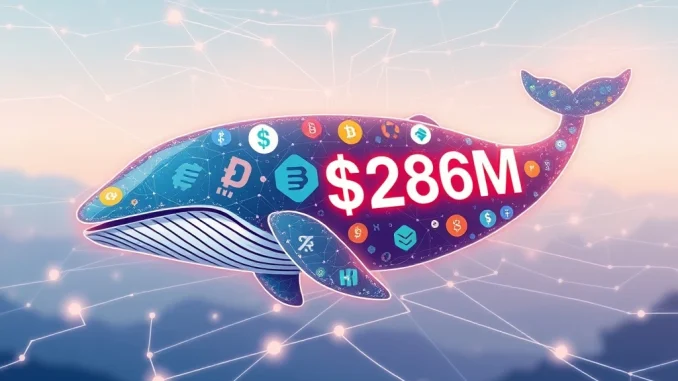
In the dynamic world of cryptocurrency, where every large movement of digital assets can ripple through the market, a recent USDT transfer has captured significant attention. Whale Alert, the renowned blockchain tracker, reported an astounding movement of 250,000,001 USDT, valued at approximately $250 million, from the HTX exchange to the Aave protocol. This substantial transaction is more than just a number; it’s a critical indicator of evolving strategies among major crypto holders and the ongoing interplay between centralized exchanges and decentralized finance. What does such a monumental shift signify for the broader crypto ecosystem and for participants in the DeFi space?
The Anatomy of a Mega-Transfer: $250 Million USDT in Motion
The core of this significant event is the USDT transfer itself. Tether (USDT) is the largest stablecoin by market capitalization, designed to maintain a 1:1 peg with the U.S. dollar. Its stability makes it a preferred asset for large-scale transfers, especially for those looking to move substantial value without exposure to crypto market volatility. A quarter of a billion dollars is a staggering sum in any financial market, but in the relatively nascent crypto world, it represents a profound amount of capital.
This single transaction highlights the immense liquidity that flows within the digital asset ecosystem. It demonstrates the capacity of blockchain networks to facilitate the transfer of vast sums of money efficiently and transparently. The ability to move such an amount with minimal fees and in a short timeframe is a testament to the underlying technology powering cryptocurrencies.
HTX Exchange: The Departure Point for Crypto Whales
The journey of this 250 million USDT began at the HTX exchange, formerly known as Huobi. HTX stands as one of the oldest and largest centralized cryptocurrency exchanges globally, offering a wide array of trading pairs and services. For many large holders, or ‘whales,’ centralized exchanges like HTX serve as initial entry points into the crypto market, providing fiat on-ramps and deep liquidity for trading various digital assets.
Funds are often held on centralized exchanges for several reasons:
- Trading: Immediate access to diverse trading pairs and high liquidity for quick execution of large orders.
- Security (Perceived): Some users prefer the custodial security offered by established exchanges, despite the inherent risks of not holding one’s own keys.
- Fiat Access: Easier conversion between crypto and traditional currencies.
The decision to move such a large sum from a centralized platform like HTX to a decentralized one like Aave often signals a shift in strategy, potentially from active trading or holding to seeking yield or participating in DeFi protocols.
Aave Protocol: The Destination for Critical DeFi Liquidity
The recipient of this colossal USDT transfer was the Aave protocol, a leading decentralized lending and borrowing platform built on various blockchains, predominantly Ethereum. Aave allows users to lend out their crypto assets to earn interest or borrow assets by providing collateral. It operates without intermediaries, relying on smart contracts to manage all transactions.
The arrival of 250 million USDT on Aave has immediate and significant implications for its ecosystem. This influx of capital directly contributes to the protocol’s DeFi liquidity, meaning:
- Increased Borrowing Capacity: More USDT available in Aave’s pools allows for larger loans to be taken out by borrowers.
- Potential for Lower Borrowing Rates: Higher liquidity can lead to more competitive interest rates for borrowers due to increased supply.
- Enhanced Lending Opportunities: While interest rates for lenders might slightly decrease due to increased supply, the sheer volume means more opportunities for large lenders to deploy capital.
- Market Stability: A deeper liquidity pool makes the protocol more robust against large withdrawals and reduces slippage for large transactions.
This move underscores the growing confidence among large capital holders in the security and yield-generating capabilities of established DeFi protocols like Aave. It also highlights the continuous migration of capital from centralized entities to decentralized ones, driven by the promise of greater control and potentially higher returns.
The Indispensable Role of Whale Alert in Tracking Large Moves
How do we even know about such a specific and massive transaction? This is where services like Whale Alert come into play. Whale Alert is a prominent blockchain tracking and analytics service that monitors large cryptocurrency transactions across various blockchains. It provides real-time notifications on significant movements, often involving ‘whales’ – individuals or entities holding vast amounts of cryptocurrency.
The transparency offered by Whale Alert and similar on-chain analytics tools is invaluable for the crypto community. It allows market participants to:
- Gauge Market Sentiment: Large movements can sometimes precede significant price action or signal a shift in investor confidence.
- Identify Potential Trends: Consistent movements to or from exchanges, or into specific DeFi protocols, can indicate emerging trends in capital allocation.
- Enhance Transparency: While the identity of the ‘whale’ remains anonymous, the movement of funds is public, fostering a more transparent financial system.
The ability to track these transactions provides a unique window into the otherwise opaque world of institutional and large-scale crypto holdings, offering insights that traditional markets often lack.
Why This Whale Move Matters: Unpacking the Profound Implications
The transfer of such a substantial sum from the HTX exchange to the Aave protocol carries several layers of implications for the broader crypto market:
1. Confidence in Decentralized Finance: This transaction reinforces the narrative that large capital holders are increasingly comfortable with the security and functionality of leading DeFi protocols. It’s a vote of confidence in the maturity and reliability of platforms like Aave, despite their inherent smart contract risks.
2. Shifting Yield Strategies: Whales are constantly seeking the best risk-adjusted returns. Moving 250 million USDT to Aave suggests that the perceived yield opportunities in decentralized lending currently outweigh those available through centralized avenues or simply holding funds on an exchange.
3. Liquidity Distribution: Such a large injection of DeFi liquidity into Aave has a tangible impact on the protocol’s ability to facilitate more loans and borrowing activity. This contributes to the overall health and functionality of the DeFi ecosystem.
4. Market Speculation: While USDT is a stablecoin, the movement itself can trigger speculation. Is the whale preparing to borrow other assets against their USDT? Are they positioning for a specific market event? Such large movements always invite scrutiny and analysis.
5. Interoperability Between CeFi and DeFi: This transaction is a prime example of the ongoing interaction between centralized finance (CeFi) and decentralized finance (DeFi). Funds often flow between these two realms as participants optimize for yield, security, or access to specific services.
Challenges and Considerations in Large-Scale DeFi Participation
While the influx of DeFi liquidity is generally positive, large-scale participation in DeFi also comes with its own set of challenges and considerations:
- Smart Contract Risk: Despite rigorous audits, smart contracts are not immune to vulnerabilities. A bug or exploit in Aave’s code could put deposited funds at risk.
- Governance Risks: As decentralized protocols, Aave’s future development and parameter changes are subject to governance votes. Large token holders can exert significant influence, which might not always align with smaller participants’ interests.
- Regulatory Uncertainty: The regulatory landscape for DeFi is still evolving. Large movements of stablecoins and participation in DeFi protocols could attract scrutiny from financial regulators.
- Market Volatility (Indirect): While USDT itself is stable, the assets borrowed against it or the overall market conditions can still introduce volatility risks for borrowers and lenders managing their collateral.
These factors underscore the importance of due diligence and understanding the mechanics of DeFi protocols before committing significant capital.
Actionable Insights for Crypto Enthusiasts
For individuals tracking the crypto market, this USDT transfer offers several key takeaways:
- Monitor Whale Movements: Services like Whale Alert provide valuable, real-time data. Understanding where large sums of capital are moving can offer clues about market sentiment and potential future trends.
- Understand DeFi Opportunities: Explore protocols like Aave to understand how lending and borrowing work. While a $250 million deposit is unique, the underlying mechanisms are accessible to all.
- Assess Risk Carefully: Always balance potential returns with the inherent risks of smart contracts and market volatility. Diversification and understanding the specific protocol are paramount.
- Stay Informed: The crypto landscape evolves rapidly. Keeping up with news on major exchanges like HTX and leading DeFi protocols like Aave is crucial for informed decision-making.
Conclusion: The Enduring Saga of Crypto Capital
The massive USDT transfer of 250 million from the HTX exchange to the Aave protocol is far more than just a large transaction. It is a powerful illustration of the evolving dynamics within the cryptocurrency ecosystem. It highlights the growing trust in decentralized finance, the continuous search for optimal yield by large capital holders, and the critical role of on-chain analytics services like Whale Alert in providing unprecedented transparency.
This movement of substantial DeFi liquidity into Aave not only strengthens the protocol’s lending capabilities but also serves as a potent reminder of the transformative power of blockchain technology. As the lines between centralized and decentralized finance continue to blur, tracking such significant capital flows will remain indispensable for understanding the pulse of the crypto market and anticipating its next major shifts. The saga of crypto capital continues, driven by innovation, opportunity, and the relentless pursuit of efficiency in a global, digital economy.