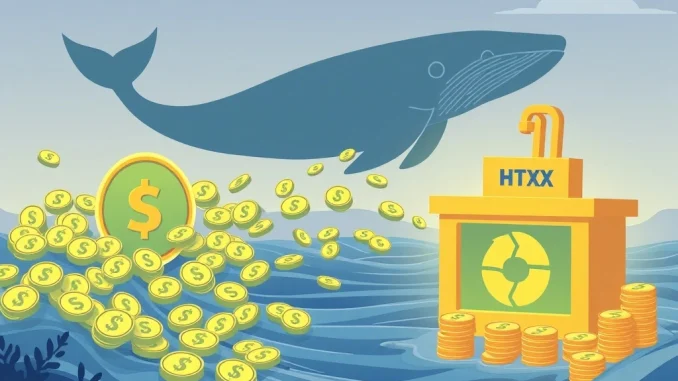
A colossal USDT transfer has recently captivated the cryptocurrency market. Specifically, a staggering 700,000,000 USDT moved from Aave to HTX. This significant on-chain event, valued at approximately $700 million, immediately drew attention. Whale Alert, a prominent blockchain tracking service, first reported this massive transaction. Therefore, understanding the implications of such a large movement becomes crucial for market participants. This article explores the details, potential reasons, and broader market impact of this monumental transfer.
Unpacking the 700 Million USDT Transfer
The recent USDT transfer involved a truly enormous sum. Precisely, 700,000,000 units of Tether’s stablecoin shifted wallets. This movement originated from Aave, a leading decentralized finance (DeFi) protocol. It concluded at HTX, formerly known as Huobi, a major centralized cryptocurrency exchange. Whale Alert, known for tracking significant blockchain transactions, flagged this event. Consequently, the crypto community quickly began discussing its potential ramifications. Such large transfers often signal strategic moves by major market players, commonly referred to as ‘whales’.
To put this into perspective, $700 million represents a substantial amount of capital. It impacts liquidity dynamics and market sentiment. Investors and analysts closely monitor these transactions. They seek clues about market direction or impending shifts. For instance, a move from DeFi to a centralized exchange might indicate a desire for increased liquidity or a shift in investment strategy. Alternatively, it could prepare for large-scale trading activities. Ultimately, the exact motivations remain speculative without direct confirmation from the wallet owner.
Aave: A Cornerstone of Decentralized Finance
The transaction’s origin point, Aave, holds significant importance in the DeFi ecosystem. Aave operates as a non-custodial liquidity protocol. It allows users to lend and borrow cryptocurrencies. This protocol uses a system of liquidity pools. Users deposit assets into these pools. They then earn interest on their contributions. Borrowers, conversely, can access funds by providing collateral. Aave’s innovative approach has made it a leader in the DeFi space. It facilitates billions of dollars in loans and deposits daily. Therefore, a large withdrawal from Aave often reflects a strategic decision by a significant holder. It might indicate a shift away from DeFi lending or a re-evaluation of current market conditions.
The protocol’s smart contracts manage all transactions securely. This ensures transparency and immutability. Aave’s growth underscores the increasing maturity of the DeFi sector. It provides crucial financial services outside traditional banking systems. However, even within DeFi, large movements can create ripples. This particular USDT transfer highlights the interconnectedness of DeFi and centralized exchanges. It demonstrates how funds can flow between these distinct financial environments.
HTX: A Centralized Exchange Powerhouse
The destination of this massive fund movement was HTX. HTX stands as one of the world’s largest and oldest cryptocurrency exchanges. It offers a wide array of trading services. These include spot trading, derivatives, and various other crypto-related products. Formerly known as Huobi Global, HTX rebranded to reflect its evolving global presence. Centralized exchanges like HTX serve as vital on-ramps and off-ramps for fiat currency. They also provide deep liquidity for major cryptocurrencies and stablecoins.
The transfer of such a large sum to HTX suggests a potential intent to engage with the exchange’s services. This could involve selling USDT for other cryptocurrencies or fiat. It might also mean preparing for significant trading operations. Centralized exchanges offer robust infrastructure and regulatory compliance in many jurisdictions. Consequently, large institutions and individual whales often prefer them for substantial transactions. This move to HTX signals a potential strategic pivot by the owner of these funds.
The Significance of a Crypto Whale Movement
When a crypto whale moves substantial assets, the market pays attention. A ‘whale’ refers to an individual or entity holding a significant amount of cryptocurrency. Their actions can influence market dynamics. This particular 700 million USDT transfer exemplifies a whale movement. Such large transactions often precede significant market events. For example, a whale might move funds to an exchange to sell a large position. This could potentially increase selling pressure. Conversely, they might move funds to buy other assets, indicating bullish sentiment.
Analyzing whale movements provides valuable insights. It helps gauge overall market sentiment and potential future price action. While this specific transfer does not guarantee a particular outcome, it warrants close observation. Market participants consider these movements as potential indicators. They can signal a shift in a major player’s strategy. Therefore, the crypto community will continue to monitor the wallet associated with this transaction for further activity.
Understanding USDT: The Premier Stablecoin
The asset involved in this transfer is USDT, Tether’s flagship stablecoin. USDT maintains a peg to the US dollar. Each USDT token aims to be backed by an equivalent amount of fiat currency or other assets. This stability makes USDT a crucial tool in the volatile crypto market. Traders use it to lock in profits, hedge against price fluctuations, and facilitate quick transfers between exchanges. It acts as a bridge between traditional finance and the crypto world. Its widespread adoption makes it the largest stablecoin by market capitalization.
The immense liquidity of USDT allows for transfers of this magnitude. It minimizes slippage and market impact. The reliability and broad acceptance of this stablecoin make it ideal for large-scale operations. When such a significant amount of USDT moves, it underscores its role as a fundamental pillar of the crypto economy. It facilitates large capital flows, underpinning various trading and investment strategies across the globe. Therefore, monitoring USDT movements offers a window into broader market sentiment and capital allocation.
Potential Reasons Behind the Aave to HTX Transfer
Several factors could explain this substantial USDT transfer from Aave to HTX. Firstly, the whale might be de-risking from DeFi protocols. Despite Aave’s security, some investors prefer the perceived stability and regulatory oversight of centralized exchanges during uncertain times. Secondly, the funds could be preparing for a large-scale trading operation. HTX offers deep liquidity, making it suitable for executing significant buy or sell orders for other cryptocurrencies. This could be an arbitrage opportunity. The whale might exploit price differences between various exchanges or assets.
Furthermore, the move might represent a consolidation of funds. The owner could be gathering assets from different DeFi protocols into a single, easily accessible location. This simplifies management. Lastly, it could be a strategic move to convert USDT into fiat currency. Centralized exchanges provide direct fiat off-ramps. While the exact reason remains unknown, these possibilities highlight the diverse strategies employed by large crypto holders. Each potential reason carries different implications for the broader market.
Broader Market Implications and Future Outlook
A 700 million USDT transfer inevitably generates discussion about market implications. Such a large movement can signal a shift in institutional or major investor sentiment. If the funds are intended for selling, it could increase selling pressure on other assets. Conversely, if they are poised for buying, it could indicate upcoming bullish activity. The sheer volume ensures its relevance. The market will closely watch for subsequent moves from this wallet. Any further transactions could provide clearer signals regarding the whale’s intentions.
This event also highlights the ongoing evolution of the crypto landscape. The interplay between DeFi and centralized finance continues to shape market dynamics. As more capital flows between these sectors, understanding the underlying motivations becomes paramount. Ultimately, this transaction serves as a reminder of the significant capital present in the cryptocurrency market. It emphasizes the importance of on-chain analytics in understanding market behavior. The future trajectory of these funds will offer further insights into the broader market’s direction.
Conclusion: Monitoring Crypto Whale Activity
The monumental 700,000,000 USDT transfer from Aave to HTX represents a critical event. It underscores the dynamic nature of the cryptocurrency market. Whale Alert’s timely report brought this significant transaction to light. While the exact motivations behind this move remain unconfirmed, it prompts important questions. Is it a strategic de-risking? Is it preparation for a major trade? Regardless, such large movements by a crypto whale always warrant close attention. They provide valuable insights into market sentiment and potential future trends. The ongoing monitoring of these substantial fund transfers remains essential for informed participation in the crypto ecosystem. This ensures investors stay ahead in a constantly evolving financial landscape.
Frequently Asked Questions (FAQs)
What is USDT?
USDT, or Tether, is the largest stablecoin by market capitalization. It is pegged to the US dollar, meaning its value aims to remain stable at $1.00. This makes it a crucial asset for traders to store value, execute transactions, and hedge against crypto market volatility.
What is Aave?
Aave is a decentralized finance (DeFi) protocol. It allows users to lend and borrow cryptocurrencies without intermediaries. Users deposit assets into liquidity pools to earn interest, while borrowers can access funds by providing collateral. Aave operates entirely on smart contracts.
What is HTX?
HTX is a major centralized cryptocurrency exchange, formerly known as Huobi Global. It provides a wide range of services including spot trading, derivatives, and fiat on/off-ramps. HTX serves millions of users globally and offers deep liquidity for numerous crypto assets.
Why is a 700,000,000 USDT transfer significant?
A transfer of this magnitude is significant because it represents a massive movement of capital by a ‘crypto whale.’ Such large transactions can influence market sentiment, liquidity, and potentially signal strategic shifts by major investors. They are closely watched for insights into future market direction.
What are the potential reasons for moving funds from Aave to HTX?
Potential reasons include de-risking from DeFi, preparing for large-scale trading or arbitrage opportunities on a centralized exchange, consolidating funds for easier management, or converting USDT into fiat currency. The exact motive is often speculative without direct confirmation.
How does a crypto whale transaction impact the market?
A crypto whale transaction can impact the market by affecting liquidity, signaling changes in market sentiment (e.g., preparing to sell or buy large amounts), and influencing short-term price movements. While not always a direct cause, these movements often precede notable market activity.